50 Hours in the Iranian Mountains: Thrilling Details of the Largest Rescue Operation in U.S. Military History - Sarmad
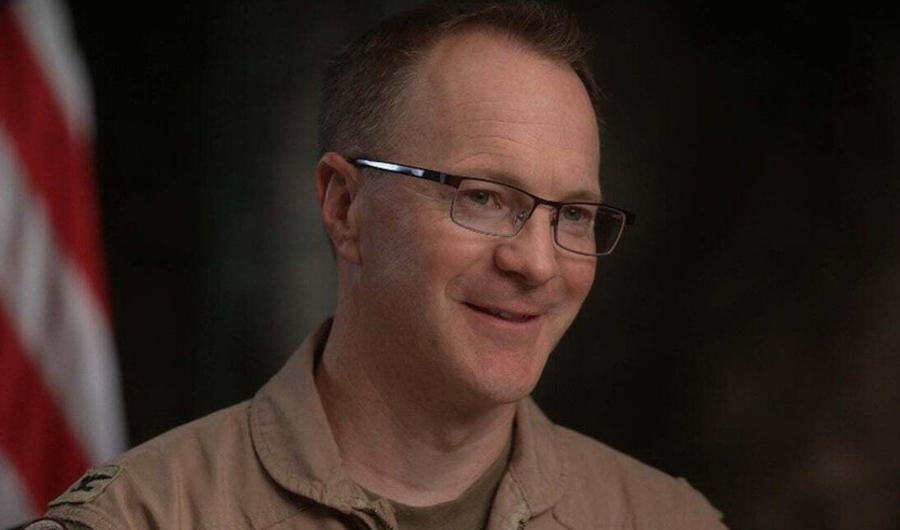
A U.S. Air Force colonel revealed details of a rescue operation described as the largest in the history of the U.S. military, after an Iranian missile shot down his F-15E fighter jet over a mountainous area south of Isfahan.
The colonel broke his back, arm, and shoulder after free-falling at speeds between 70 and 100 miles per hour over the mountainous terrain south of Iran’s Isfahan city. He provided this account in his first public testimony on the “60 Minutes” program, following the downing of his F-15E fighter by a shoulder-fired missile on April 2.
Known by the callsign “Dude 44 Bravo,” the colonel served as the weapons systems officer in a two-person crew. The callsign “Dude 44” referred to the aircraft, while the pilot was known as “Alpha.” The Iranian missile damaged Bravo’s parachute, causing him to free-fall until he struck the ground approximately five miles away from Alpha.
In his testimony, Bravo said that at one point during his fall, he looked up and saw no parachute, describing it as the most terrifying sight of his life. He recalled pausing at that moment, surrendering to God’s will, and praying for help if he were to survive.
He explained that the moment the missile struck the aircraft felt like being hit by a freight train. He and Alpha did everything they could to save the fighter, valued at $30 million, but it quickly became clear that the plane could not be salvaged, prompting both men to eject.
According to Admiral Brad Cooper, the U.S. commander of Central Command, which leads U.S. forces in the Middle East, Dude 44’s mission that night was to strike industrial facilities linked to Iran’s drone and missile programs, near the location where Iran stored most of its highly enriched nuclear materials.
Cooper stated that the U.S. military had conducted approximately 13,000 missions so far in the conflict with Iran. While U.S. forces enjoyed air superiority, he noted they were not flying over Kansas.
Alpha ejected safely and was rescued before Bravo. He returned to flying with the Air Force but declined to appear on the program for security reasons. In a statement submitted to the show, Alpha expressed ongoing astonishment at the professionalism and skill of the combat search and rescue specialists and joint force members who executed his rescue and that of Dude 44 Bravo, both in the field and behind the scenes. He said words could not convey the depth of gratitude his family and he felt, nor his pride in serving alongside each of them.
Despite his injuries, Bravo moved away from his crash site after landing. As dawn broke, he realized that the highest ground offered the best chance of rescue. Ignoring his broken bones, he climbed a 7,000-foot mountain range. He said he moved as fast as he could despite his injuries and found himself in a valley with steep cliffs on both sides. He emphasized that a lack of motivation should never lead someone to appear on Iranian television.
Iranian media published evidence of wreckage, and videos surfaced online showing armed groups searching for the downed crew. U.S. military sources indicated that Iranians came within a few hundred meters of Bravo. General Dan Caine, Chairman of the Joint Chiefs of Staff and a former fighter pilot, stated there was a clear intent by Iran’s ground forces to come and capture the two men.
U.S. forces tracked the Iranians’ movements in the area in a race against time, and after six hours managed to rescue Alpha in a daytime air operation during which U.S. helicopters came under fire. Defense Secretary Pete Hegseth said it was a firefight the whole way there and back, but they brought Alpha home. The rescue force for Alpha was unable to locate Bravo, so it withdrew, leaving the mission only half accomplished.
As night fell on the first day, Bravo sent a message to his homeland saying, “God is good,” expressing gratitude for everything that had saved him, after reaching a moment when he could reflect on everything he had endured. He informed the U.S. military that he was injured but mobile, and a rescue force was about to be dispatched shortly afterward. However, Hegseth said conditions were not favorable, that it was an extremely difficult decision, and that he would never forget being in the operations room and hearing that Bravo would remain there for roughly another 24 hours. Bravo survived for another full day with little or no water or food, in the wind and cold in a high-mountain desert.
The Central Intelligence Agency played a pivotal role in Bravo’s rescue, launching a multifaceted deception campaign to confuse Iranian forces searching for him and employing highly classified technology to pinpoint his location with precision. To pave the way for his extraction, recently declassified videos showed U.S. bombers and drones striking Iranian Revolutionary Guard forces near the location where he was hiding, before the time came to return and bring Bravo home.
Admiral Cooper said more than 90 U.S. personnel were on the ground—the first U.S. troops to set foot on Iranian soil in 46 years—with several hundred in the air and thousands providing support for the rescue mission. General Kin said what people need to understand is that the United States would have sent more forces to retrieve Bravo.
The force arrived aboard two large search-and-rescue aircraft that landed on a temporary desert runway, then deployed small Little Bird helicopters capable of reaching Bravo on a mountain range several miles away.
Bravo said seeing his rescuers was among the greatest moments of his life, and that when they first reached him he told them, “Let’s go,” without sharing the precise details of their conversation. Neither Bravo nor the others on the ground were out of danger yet, as the landing gear of the rescue aircraft became stuck in the sand on the temporary runway, preventing takeoff. More than 90 of the personnel, described by Admiral Cooper as the military’s most elite, remained trapped until an Air Force rescue unit arrived.
The United States destroyed the two stranded aircraft, each valued at around $100 million, along with the Little Bird helicopters, to prevent the technology from falling into Iranian hands. Fifty hours after he was shot down, Bravo was safe, rescued at dawn on a Friday. Shortly after leaving Iran, he called his wife in the United States and said he was truly proud of her and grateful for the strength she had shown.
The officer said he wanted the American people to know that the rescue operation was about more than just what he had endured; it was a story of teamwork, training, faith, decisions, and leadership—doing something that would remain in history as an example of what America is prepared to do to honor its promise and leave no one behind.
