Global Organization: Wildfires and Heatwaves Threaten to Deteriorate Air Quality - Sarmad
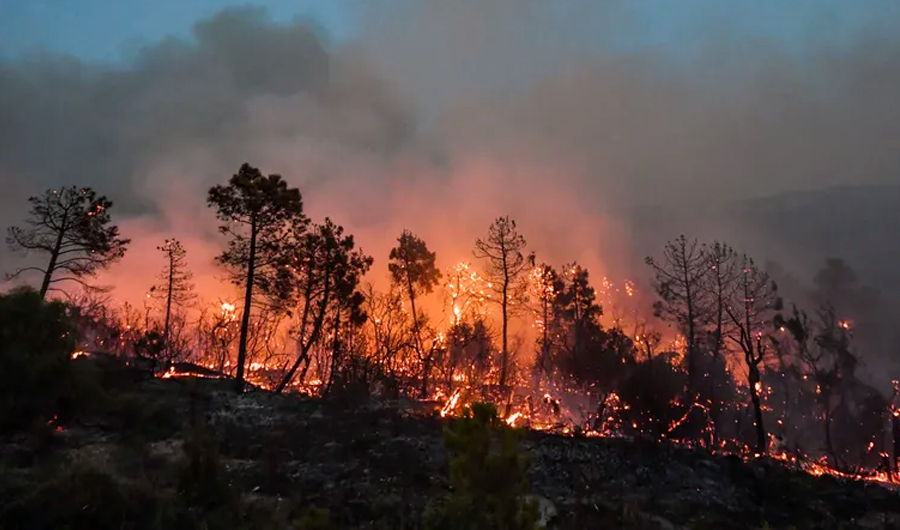
The World Meteorological Organization (WMO) stated that pollution caused by increasing wildfires and heatwaves could undermine global efforts to improve air quality and protect human health, warning that climate change is exacerbating the difficulty of achieving international air quality targets.
The UN-affiliated organization noted in its annual report on air quality and climate that air pollution and climate change are closely linked and should be addressed through coordinated policies rather than in isolation.
The WMO warned that compliance with World Health Organization (WHO) guidelines on air quality will become more challenging, as the likelihood of severe wildfires is expected to increase in the future.
The report highlighted that wildfires have become an increasingly significant source of harmful air pollution, even as regulatory rules have succeeded in reducing emissions from industry and the transport sector in several developed countries.
Lorenzo Labrador, a scientific officer at the WMO, told Reuters, “Regardless of how clean your city or region is… if wildfires cause significant pollution, it can negatively affect air quality in those areas as well.”
The report underscores the growing impact of fine particulate matter known as “PM2.5” and ground-level ozone, two pollutants linked to respiratory and cardiovascular diseases.
The WMO also called for improved monitoring of pollutants and aerosols, including black carbon and microplastics, which it said are not adequately monitored despite their widespread presence in the atmosphere.
This year saw severe heatwaves and devastating wildfires in parts of Europe, including Spain, France, and Greece. The organization noted that extreme heatwaves are becoming more frequent and intense as the planet warms.
The new report stated that PM2.5 concentrations in 2025 were higher than long-term averages in northern Canada, parts of Russia, and western and central Africa due to increased fire activity, while northwestern Spain became a hotspot of severe pollution following exceptional wildfires in late summer.
A study cited by the WMO in the report concluded that severe wildfire smoke events have tripled globally since the 1990s and may have contributed to approximately 100,000 additional deaths annually between 2010 and 2018.
Labrador added that particles from wildfires are particularly harmful because they contain a wide range of toxic chemicals; inhaling them can cause inflammation throughout the body and lead to lung diseases.
