Panama Canal begins reducing ship transits due to 'El Niño' - Sarmad
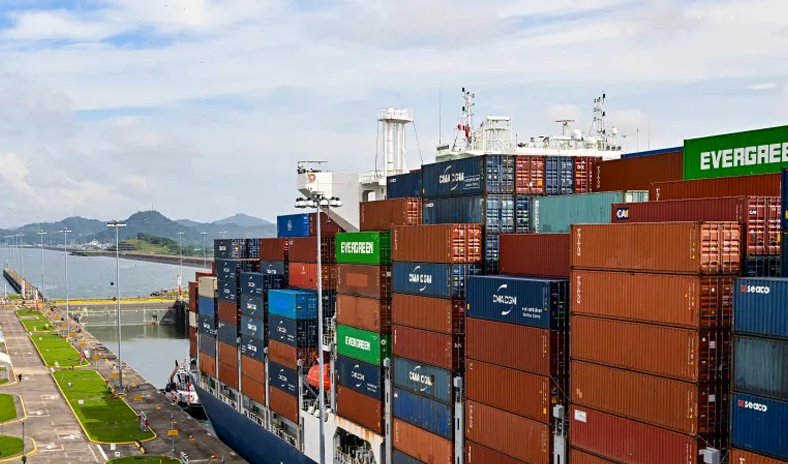
The Panama Canal has begun reducing the number of ships permitted to transit, amid declining rainfall and falling water levels in the lakes that supply the canal, as the impacts of the El Niño climate phenomenon intensify.
The Panama Canal Authority plans to gradually reduce the number of daily transits from approximately 36 ships to 34, before lowering it further to 32 ships per day starting in mid-September, in an effort to conserve water resources and ensure the sustainable operation of the waterway.
The canal relies primarily on water stored in Gatun and Alajuela lakes to operate its locks, raising and lowering ships during transits between the Atlantic and Pacific Oceans. Consequently, reduced rainfall in the canal basin poses a direct challenge to navigation.
The authority’s measures are not limited to reducing the number of ships. Earlier, it implemented water conservation measures, including imposing restrictions on the maximum draft of large vessels, which affects the amount of cargo some ships can carry. The authority also announced additional procedures to regulate daily transit slots as rainfall rates continue to fall below expected levels.
These measures come as Central America experiences a drought linked to El Niño, which causes significant changes in wind patterns, atmospheric pressure, and rainfall, increasing the likelihood of higher temperatures and dry conditions in parts of the region.
The water crisis at the Panama Canal carries significance beyond Panama’s borders, as approximately 5% of global maritime trade passes through the waterway. A large share of container traffic bound for the United States is also linked to it. Reducing the number of ships or imposing additional restrictions on their cargo loads could lead to higher shipping costs and longer waiting times for vessels.
The current crisis highlights the sensitivity of one of the world’s most important maritime routes to climate change. The canal does not rely on seawater to operate its locks; instead, it requires large quantities of fresh water from its reservoirs and lakes to facilitate transit operations.
This is not the first time the Panama Canal has faced challenges due to drought. During the 2023–2024 crisis, low water levels forced a reduction in daily transits to approximately 22 ships at one stage, compared to much higher levels before the drought.
Concerns are growing this time with forecasts from the World Meteorological Organization that El Niño will intensify in the coming months, potentially lasting until February 2027. The organization warned that it could become stronger than any similar phenomenon observed in the past four decades.
While the Panama Canal Authority continuously monitors water levels and rainfall rates, authorities do not rule out imposing additional restrictions on ship movements if the drought persists and water supplies do not improve in the coming weeks.
