Kuwaiti humanitarian diplomacy has established an approach that makes giving a bridge of connection with the world - Sarmad
When Kuwaiti aid crosses borders, it carries not only food, medicine, and relief supplies, but also a humanitarian message forged through decades of standing alongside peoples in times of hardship and crisis. This message has cemented an approach that turns giving into a bridge for connection and solidarity into a space where Kuwait meets the world to protect humanity and preserve human dignity.
Over a journey that has spanned multiple regions around the globe, Kuwaiti humanitarian initiatives have evolved into one of the channels of diplomacy that foster closeness among peoples and open doors for cooperation with governments and international organizations. Kuwait’s presence in crisis and disaster zones has contributed to building partnerships that extend beyond immediate relief toward supporting recovery, stability, and development, while reinforcing trust and joint action.
On the occasion of the International Day of Charity, observed annually on September 5, Kuwaiti humanitarian diplomacy highlights the fruits of integrating official and charitable efforts. These combined efforts have helped open new pathways for humanitarian work, strengthened international partnerships, and consolidated Kuwait’s standing and humanitarian mission on the global stage.
In this context, Acting Assistant Minister of Foreign Affairs for Development and International Cooperation, Counselor Reham Al-Ghanim, affirmed that Kuwaiti humanitarian diplomacy contributes to enhancing the State of Kuwait’s presence and status at both the regional and international levels. This is achieved through a steadfast approach based on supporting affected populations, responding to humanitarian needs, and cooperating with the international community in confronting crises and disasters.
Al-Ghanim stated that this approach reflects Kuwait’s commitment to humanitarian principles and values, and reinforces its role as an active partner in international efforts aimed at achieving stability, mitigating the impacts of crises and disasters, and supporting affected communities.
She added that the Ministry of Foreign Affairs plays a coordinating role in supporting Kuwaiti humanitarian efforts and engaging with countries and regional and international organizations, thereby helping to organize cooperation channels and facilitate the implementation of humanitarian initiatives and programs.
She clarified that the Ministry works in coordination with official authorities, Kuwaiti institutions, and charitable associations to strengthen partnerships and integrate efforts, in alignment with Kuwait’s humanitarian priorities and international commitments, and to enhance the efficiency of responses to humanitarian needs.
She noted that Kuwaiti humanitarian work has, over decades, contributed to building bridges of cooperation and communication with many countries and peoples. Humanitarian initiatives and aid have formed one of the channels for positive engagement with the international community, while partnerships with governments and international organizations have helped build trust and open broader fields for joint action on issues of mutual interest.
Al-Ghanim emphasized that the Ministry of Foreign Affairs views humanitarian diplomacy as one of the pathways supporting Kuwait’s foreign policy, consistent with the State’s approach based on cooperation, dialogue, and multilateral action.
She mentioned that future orientations focus on strengthening coordination and international partnerships, developing crisis response mechanisms, and supporting initiatives that deliver sustainable humanitarian and developmental impact, alongside continuing cooperation with international organizations and relevant Kuwaiti entities.
For his part, Khaled Al-Mughams, Chairman of the Board of Directors of the Kuwait Red Crescent Society, stated that Kuwaiti humanitarian work has contributed to opening wide avenues of cooperation with countries and humanitarian organizations, enabling access to affected communities. He affirmed that the integration of efforts between official authorities and the charitable sector enhances Kuwaiti humanitarian diplomacy and translates the country’s approach of building bridges of cooperation and solidarity with peoples.
Al-Mughnas added that the association’s efforts extended to Palestine, Syria, Yemen, Sudan, and Lebanon, along with several Asian and African countries. These initiatives included food, medical, and shelter assistance, as well as water, education, and health projects, coordinated with the Kuwaiti Ministry of Foreign Affairs, national associations, and regional and international humanitarian organizations. This coordination aims to unify efforts and expand the reach of Kuwaiti aid to its intended beneficiaries.
He clarified that the association implemented approximately 27 projects in Yemen during 2022 and 2023, alongside performing 200 surgeries. In 2024, it carried out around 15 projects, conducted 300 surgeries, and treated 1,247 patients. Its efforts in Syria included the “Loaf” project for approximately 3,500 families, and the “Warm Winter” campaign for roughly 30,000 Syrian displaced persons in Lebanon. Furthermore, the association responded to the 2023 earthquake by allocating $2 million to support relief efforts.
He noted that air and sea bridges to Sudan, support for the health sector, recovery projects, and the rehabilitation of schools and health centers, alongside assistance to Rohingya refugees, reflect the capacity of Kuwaiti humanitarian work to open new avenues that go beyond emergency relief toward recovery and development. He emphasized that these partnerships enhance Kuwait’s presence and support its role in humanitarian diplomacy.
For his part, Dr. Abdulrahman Al-Muhilan, Chairman of the Board of Directors of the Direct Aid Association, stated that Kuwaiti humanitarian and charitable work has become a cornerstone for sustainable development and a pathway to enhance humanitarian diplomacy and build bridges of cooperation among peoples. Through initiatives that go beyond responding to emergency needs to empowering individuals and creating lasting developmental impact, the sector continues to evolve.
Al-Muhilan said that growing humanitarian challenges require unified efforts and strengthened partnerships between the charitable sector, government entities, and international organizations. This collaboration opens new pathways for humanitarian action, contributing to an expanded response and more efficient, transparent access to the most needy communities, based on institutional foundations and clear governance standards.
He added that Direct Aid focuses on projects that ensure sustainability and empower communities. In 2025, educational programs topped the association’s field project expenditures, accounting for 23 percent, valued at 9.8 million Kuwaiti dinars. Construction and water projects followed at 21 percent, valued at 8.9 million dinars, alongside health, awareness, and development programs.
He explained that diversifying work areas and developing humanitarian partnerships enhance the ability of Kuwaiti charitable institutions to reach the most vulnerable and open broader horizons for development. He affirmed that joint institutional efforts help highlight Kuwait’s role and consolidate its external presence as an active partner in supporting individuals and communities.
For his part, Saad Al-Otaibi, Chairman of the Union of Charitable Associations and Orphanages, emphasized that the charitable sector represents a vital pillar of Kuwaiti humanitarian diplomacy. Through its extensive experience, it has contributed to enhancing the country’s presence and building bridges of trust and communication with peoples, through initiatives based on solidarity, cooperation, and support for needy and affected communities.
Al-Otaibi stated that Kuwaiti charitable associations and orphanages work in coordination with official authorities and in partnership with international humanitarian organizations and entities. This collaboration unifies efforts, opens new pathways for cooperation, and enhances the effectiveness of Kuwaiti initiatives and their ability to reach intended beneficiaries within organized frameworks.
He added that the diversity of Kuwaiti projects in the fields of relief, education, health, water, and development has contributed to expanding the scope of Kuwait’s humanitarian presence, shifting charitable work from merely providing aid to building sustainable partnerships and human relations that enhance convergence and cooperation with various communities.
He pointed out that the upcoming phase requires continued integration between official bodies and the charitable sector, the development of international partnerships, and the coordination of initiatives, all of which strengthen the unity of humanitarian efforts, preserve Kuwait’s standing, and broaden the impact of its humanitarian diplomacy in serving humanity and supporting the most vulnerable communities.
For his part, Dr. Jaber Al-Wandah, Director General of Al-Najah Charitable Society, stated that the international expansion of the Kuwaiti charitable sector has supported humanitarian diplomacy, opened new pathways for charitable work, and facilitated access to the most needy communities, thereby enhancing Kuwait’s presence and embodying its approach to providing indiscriminate relief and support to humanity.
Al-Wandah added that the number of beneficiaries from the Society’s projects in 2025 exceeded 5 million, through collaboration with 57 partners accredited by the Kuwaiti Ministry of Foreign Affairs. He emphasized that expanding partnerships and coordinating with relevant authorities enhance the capacity of Kuwaiti charitable work to unify efforts and reach broader segments and regions.
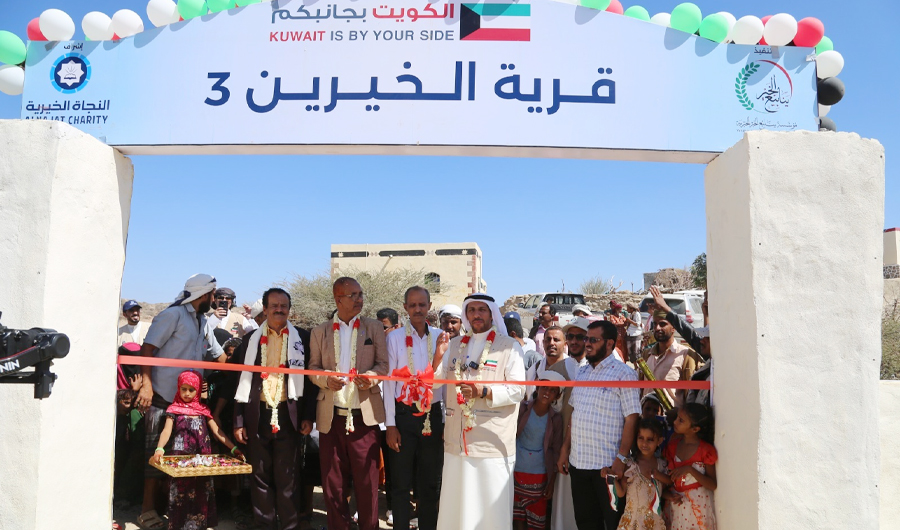
He noted that the Society sponsors more than 8,200 orphans in over 12 countries and 1,311 students of religious knowledge. In recent years, it completed 24 residential villages in Yemen, comprising more than 850 homes, along with 11 schools and 17 mosques, reflecting the diversity of Kuwaiti efforts across relief, development, education, and social care.
He clarified that the Society’s efforts in the Gaza Strip included establishing charitable kitchens, installing prosthetic limbs, providing insulin for diabetic patients, and sponsoring orphans and families. He affirmed that the diversity and continuity of these interventions reflect the Kuwaiti charitable sector’s ability to respond to various needs and open new humanitarian avenues that contribute to enhancing Kuwait’s presence and building bridges of solidarity with peoples.
These efforts, across their various pathways, reflect a model of Kuwaiti humanitarian diplomacy that combines urgent response, sustainable development, and partnership building. Coordination between official bodies, charitable institutions, and their international partners has helped unify work pathways, expand the scope of initiatives, and reach more needy communities and groups.
Furthermore, the diversity of projects and their geographical reach highlight the Kuwaiti charitable sector’s ability to open new horizons for humanitarian work, transforming generosity into bridges of cooperation and convergence among peoples. This reinforces Kuwait’s leading role, preserves its humanitarian legacy, and cements its presence as an active partner in efforts to alleviate suffering and support stability and development.
