Minister of Education Approves New “Tracks” Curriculum System for Secondary Education - Sarmad
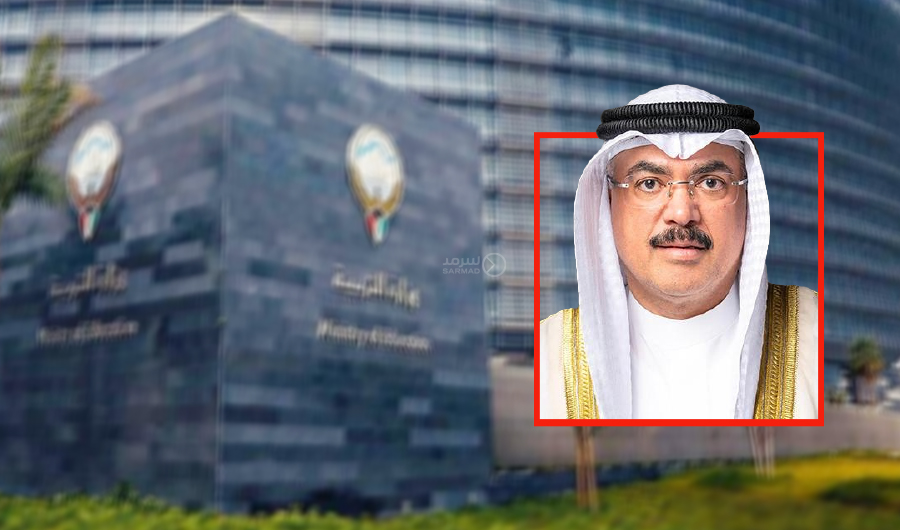
Kuwait’s Minister of Education, Sayyid Jalal Al-Tabatabai, approved a new “Tracks” curriculum system for the secondary stage today, Thursday, with its pilot implementation set to begin in the 2026–2027 academic year across 12 schools distributed throughout all educational districts.
In a statement, the Ministry of Education said that Minister Al-Tabatabai issued a decree assigning the Deputy Minister of Education to oversee the preparatory measures for launching the “Tracks” curriculum system, take necessary executive actions regarding it, and submit any items requiring the minister’s approval.
The ministry added that this would be achieved through coordination among the ministry’s sectors, educational districts, and relevant authorities, ensuring the readiness of the educational and administrative systems for implementation based on clear and well-considered foundations.
The decree emphasized that its provisions apply only to students wishing to enroll in the “Tracks” curriculum system, while the existing secondary education system continues to apply to students not covered by the new system, meaning the decree entails no changes to their current study arrangements.
The ministry clarified that the adoption of the system aligns with its direction toward developing secondary education by creating a more flexible model that places the learner at the center of the educational process, offering them a genuine opportunity to discover their abilities and interests at an early stage before deciding on the academic track that best suits their potential and future aspirations.
It noted that the “Tracks” curriculum system spans three academic years, divided into six semesters, totaling 54 academic units. The tenth grade serves as a common foundational year for all students, during which learners study a set of general courses alongside participating in “Exploration 1” and “Exploration 2” experiences, helping them gain a deeper understanding of their interests, abilities, and academic inclinations.
The ministry stated that the system offers students eight educational tracks: “Languages,” “Law,” “Social Sciences,” “Commercial,” “Mathematics,” “Sciences,” “Industrial,” and “Technology and Artificial Intelligence,” providing diverse educational options that reflect students’ varied abilities and interests and support their future directions.
The ministry affirmed that track selection is not based solely on academic grades but relies on a comprehensive set of criteria including academic achievement, abilities, interests, and results from the exploration courses, thereby enhancing the accuracy of choices and giving students the opportunity to join the track most suitable for their potential and aspirations.
The ministry pointed out that the “Masar” platform will provide integrated electronic services for students, including registration, academic monitoring, and academic record documentation, thereby strengthening digital transformation in managing educational tracks and providing students and educational authorities with more effective tools for tracking academic progress.
It stressed that the minister’s directives emphasize that educational development must be based on scientific and well-considered foundations, focusing on the student’s best interests, enhancing their capabilities, and better preparing them for subsequent educational stages and professional life, while also highlighting the importance of measuring the impact of any educational project and continuously evaluating its outcomes.
