Jaber Hospital Successfully Repairs and Replaces 'Artificial' Hip Joint Using 3D Printing - Sarmad
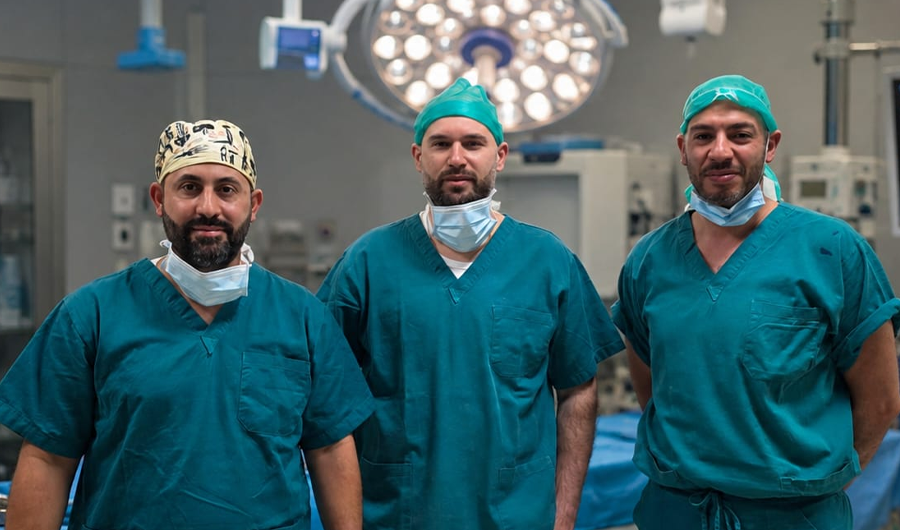
A medical team at Jabir Hospital, led by Dr. Hashem Al-Ali, Head of the Orthopedic Surgery Department, successfully performed a unique and complex procedure to reconstruct and replace a patient’s artificial hip joint, utilizing 3D printing technology for precise preoperative planning.
The surgery marks the first of its kind at Jabir Hospital to employ the “Cup-Cage Construct” technique. The 48-year-old patient had previously suffered hip joint failure and complications arising from metallosis (metal deposition), alongside significant bone loss in the pelvic region. These factors necessitated advanced surgical planning tailored to the complexity of the case.
The medical team relied on computed tomography (CT) scans and 3D printing technology to produce an exact replica of the patient’s pelvis prior to the operation. This enabled precise assessment of bone loss areas and osseous defects, allowing the team to determine the most appropriate surgical approach before commencing the actual intervention.
Based on this preoperative planning, the team performed an advanced reconstructive surgery that included bone grafting and the use of the “Cup-Cage Construct” technique. This approach aims to provide necessary joint stability and support long-term bone integration.
The procedure was successful. The patient was able to stand, move, and begin walking on the second day post-surgery, indicating a positive sign of early recovery following the surgical intervention.
This achievement underscores the importance of leveraging modern technologies, particularly 3D printing, in preoperative planning for complex surgeries. Such tools provide medical teams with a more accurate understanding of anatomical challenges, thereby enhancing the precision of surgical interventions and improving clinical outcomes.
Furthermore, this accomplishment reflects the expansion of advanced medical technologies and expertise localization within Kuwait’s healthcare services, as well as the capacity-building of national cadres to manage complex cases and deliver specialized care domestically in accordance with the latest medical practices.
