Venezuela's Acting President: Energy Deal with US to Last 25 Years - Sarmad
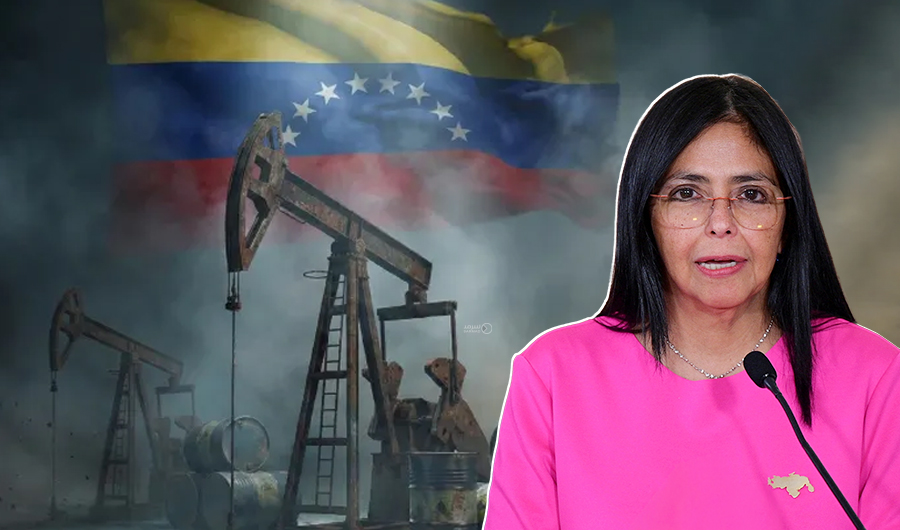
Venezuela’s interim president, Delcy Rodriguez, said that the energy agreement signed with the United States will remain in effect for 25 years, aiming to increase crude oil production to 1.5 million barrels per day while preserving the country’s sovereignty over its natural resources.
Rodriguez praised the agreement in a late-night address, describing it as a “historic” deal that would help revive the economy and boost government revenues, stating that it would help shape the country’s future.
Speaking on state television channel VTV, Rodriguez said, “This bilateral project, spanning 25 years, includes a vision to develop 17 strategic oil fields with the goal of producing more than 1.5 million barrels per day.”
She added that the agreement’s target of 1.5 million barrels per day was only an initial goal, and that the broader plan also included developing eight new oil fields as part of a larger expansion of the country’s energy sector.
President Donald Trump announced on Friday plans for the United States to gain partial control over Venezuela’s vast oil reserves, relying on the belief that U.S. companies could help revive the struggling energy sector in this South American country, while providing a new source of crude oil to help lower fuel prices in the United States.
Trump provided few details about the agreement, merely stating that the United States had obtained a controlling majority stake in more than 65 billion barrels of Venezuela’s proven oil reserves through a partnership with private companies.
Rodriguez said the agreement could generate revenues of approximately $209 billion for the Venezuelan government, based on a reference oil price of $65 per barrel, although she acknowledged that crude oil prices could fluctuate. She explained that about $19 of every barrel produced and sold under this arrangement would go directly to Venezuela, providing a significant boost to government revenues.
She clarified that the country retained ownership and sovereignty over its natural resources, “while simultaneously leveraging capital, technology, and operational expertise to support the recovery of a strategic sector severely damaged by sanctions.”
On Saturday, dozens of pro-government groups gathered in the capital, Caracas, to protest the U.S. presence in Venezuela.
Rodriguez welcomed the agreement following Trump’s announcement, saying it would strengthen economic growth and increase government revenues.
