Study: Intensive use of social media linked to increased depression indicators - Sarmad
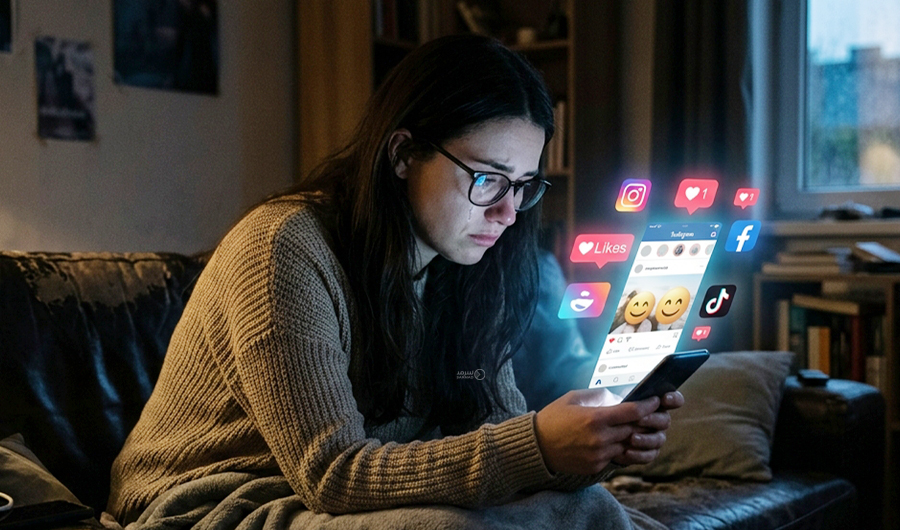
A recent study has shown that the time people spend on social media is among the most prominent factors associated with reporting symptoms of depression, compared to a number of other digital and recreational activities,
Translated by Qiyas from سرمد — Original source
A recent study has shown that the time people spend on social media is among the most prominent factors associated with reporting symptoms of depression, compared to a number of other digital and recreational activities, such as playing video games, browsing the internet, and watching television.
The scientific website Medical Xpress reported that researchers from the University of Cincinnati and Northwestern University in the United States reached these conclusions after analyzing 183,300 anonymous questionnaires from individuals aged 18 to 70. The data were collected over 11 years as part of an annual study examining media usage behaviors and their impacts.
The researchers used a machine learning model to identify the factors most strongly associated with depression. The results revealed an increasing relationship between the time individuals spend on social media and the likelihood of reporting depressive symptoms.
The researchers observed this pattern throughout all 11 years covered by the analysis, with the association appearing more pronounced among individuals who used social media for at least 150 minutes per day.
Hans Przybylski, a professor at the University of Cincinnati and the study’s corresponding author, stated that the relationship between social media use and depression remained clear in tests conducted during the study years. He noted that the findings warrant further research into the potential effects of intensive use of digital platforms.
The study also showed that the significance of social media as an indicator linked to depression increased over the years, while other factors, such as watching television and browsing the internet, were less important in explaining this association.
The researchers clarified that many previous studies focused on adolescents and young adults or examined total screen time without distinguishing between social media and other digital activities. In contrast, the new study sought to examine the relationship across different age groups and over a long period.
The researchers pointed out that the nature of social media use has changed significantly since its emergence, shifting from a focus on communicating with known individuals to consuming large amounts of content produced by people users may not know, which may contribute to spending longer periods browsing.
The researchers suggested taking steps to limit intensive use, such as setting a daily time limit for browsing and turning off notifications. They emphasized that the goal is not necessarily to stop using social media, but rather to promote mindful and balanced use.
It should be noted that the results do not prove that social media use directly causes depression, but rather reveal a stable relationship between the intensity of use and the depressive symptoms reported by participants, necessitating additional studies to determine the nature of this relationship.
