Iran's Fuel Crisis: Bezhgan Calls for Rationalizing Gasoline Consumption - Sarmad
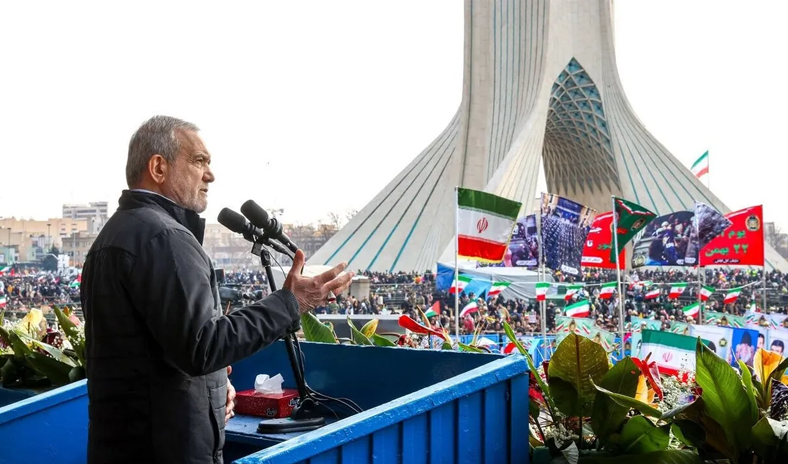
Iranian President Masoud Pezeshkian has called for the rationalization of gasoline consumption, amid reports of a fuel crisis gripping Iran following U.S. President Donald Trump’s declaration of what he described as an “economic war” against Tehran.
Pezeshkian urged that the rationalization of consumption begin with officials and government institutions, noting that the government continues to work on increasing gasoline production and distributing it according to production levels, as reported by the Iranian Tasnim News Agency.
He added, “We are still working to increase gasoline production, and at the same time, we distribute it in proportion to what we produce. Citizens will continue, as before, to cooperate based on their correct understanding of the circumstances, but the principle of rationalization must start with us, the officials, and government institutions.”
The Iranian president called for plans to reduce the use of government vehicles and cut consumption by government agencies, stating, “Plan how to reduce the use of government vehicles, lower consumption by government bodies, and decrease the movement of these vehicles.”
Earlier on Sunday, Pezeshkian defended a “memorandum of understanding” with the United States, describing it as “the best path” for the country to overcome what he termed a “no war, no peace” situation in the conflict that has lasted for about six months. This came after he called for ending the war while Iran is “in a position of strength,” according to his own words.
While emphasizing that Tehran “does not intend to back down from its adversaries,” Pezeshkian linked the agreement to Iran’s economic situation, stating that the country “cannot attract investments under these stalled conditions.” He said, “Capital and money are extremely sensitive to risks. We must eliminate these risks.”
Pezeshkian’s remarks come amid growing economic pressure in Iran. The Axios website previously reported that several senior U.S. officials said the Trump administration believes that stringent financial sanctions, along with restrictions on Iranian trade and oil shipments, have begun to have tangible effects on the Iranian economy.
The website also cited U.S. sources indicating growing concerns within Iran about pressure on banks and shortages in gasoline supplies, despite Tehran possessing one of the world’s largest oil and gas reserves.
Sources said that intelligence available to U.S. agencies indicates an increase in complaints within Iran regarding difficulties in financing certain activities linked to groups allied with Tehran in the region.
