Abdul Rahman Siddiq's opponent in the Michigan election asks AIPAC not to publicly endorse him - Sarmad
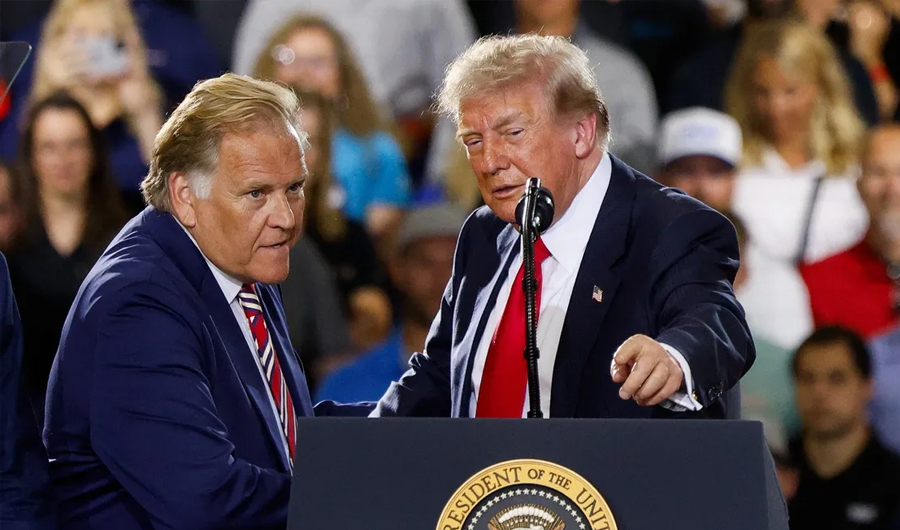
Allies of Republican U.S. Senate candidate Mike Rogers in Michigan, who is challenging Democrat Abdul El-Sayed, asked the American Israel Public Affairs Committee (AIPAC) not to air ads funded by the group in his favor, creating a rift between his campaign and the pro-Israel organization that has become increasingly divisive in the United States.
Axios reported that Rogers spoke with AIPAC president Michael Tushing in Los Angeles last week. The following day, AIPAC halted a video ad it had already produced targeting his Democratic opponent, the anti-Israel Abdul El-Sayed.
Axios noted that these exceptional tensions highlight AIPAC’s declining political standing amid growing anger among American voters over the war in Gaza. Rogers, a staunchly pro-Israel Republican, fears that public support from the group could become a liability in the November 3 election.
Rogers’ team’s move angered AIPAC officials, who had spent more than $30 million trying to defeat Abdul El-Sayed in the Democratic primary and were preparing to spend millions more to help elect Rogers, according to people familiar with the discussions.
Abdul El-Sayed made AIPAC a central focus of his successful primary campaign, using the group’s spending against him to portray his Democratic rival, Haley Stevens, as being “under the control of the pro-Israel lobby.”
El-Sayed described Israel as a “rogue state” and accused it of committing genocide and establishing an apartheid system. Axios reported that AIPAC made defeating Abdul El-Sayed a “priority.”
Axios noted that Rogers’ team warned AIPAC before the Democratic primary on August 4 that El-Sayed would defeat Stevens, while AIPAC remained hopeful for Stevens’ victory.
After El-Sayed won by a narrow margin, AIPAC informed Rogers’ allies of its desire to continue its attack advertising during the general election on November 3. However, Rogers’ team expressed the view that AIPAC’s ads during the primary had backfired.
People familiar with the matter told Axios that Rogers’ allies asked AIPAC to engage in the race without putting its name in the spotlight.
They indicated that one option was to direct AIPAC donors to an independent pro-Rogers political action committee, rather than having the group run its own ads, or to a joint fundraising committee established by Rogers’ campaign and the national Republican Party.
Rogers’ team also proposed leveraging AIPAC’s political experts to help guide his campaign.
However, sources indicated that AIPAC officials were dissatisfied with this arrangement, as the group wanted a public role in defeating Abdul El-Sayed. They argued that since Rogers is strongly pro-Israel, El-Sayed would link him to the group anyway.
Sources noted that direct talks between Rogers’ team and AIPAC have currently halted, prompting broader efforts by the Republican Party to mediate between the two sides.
People familiar with the discussions said that some Republican Jewish donors with ties to both sides are currently mediating.
Some national Republicans now fear that AIPAC may refrain from participating in the general election entirely, despite its independent political action committee ending July with approximately $60 million in its accounts.
Others, however, believe that AIPAC has significant stakes in the race, making it unlikely that the group will remain neutral, and they expect the organization to ultimately reach a reconciliation with Rogers’s camp.
AIPAC suffered a series of prominent defeats in the Democratic primary elections. Its latest setback came on Tuesday, when a candidate opposed by the group won a special election for a U.S. House seat representing northern California.
Rogers is competing in a swing state that is home to one of the largest Arab-American communities in the country, giving him reason to handle the issues of Israel and Gaza with caution.
A recent Fox News poll showed that 55% of Michigan voters oppose the continuation of U.S. aid to Israel.
