Spain: Dozens of migrants buried in Ceuta amid ongoing efforts to identify them - Sarmad
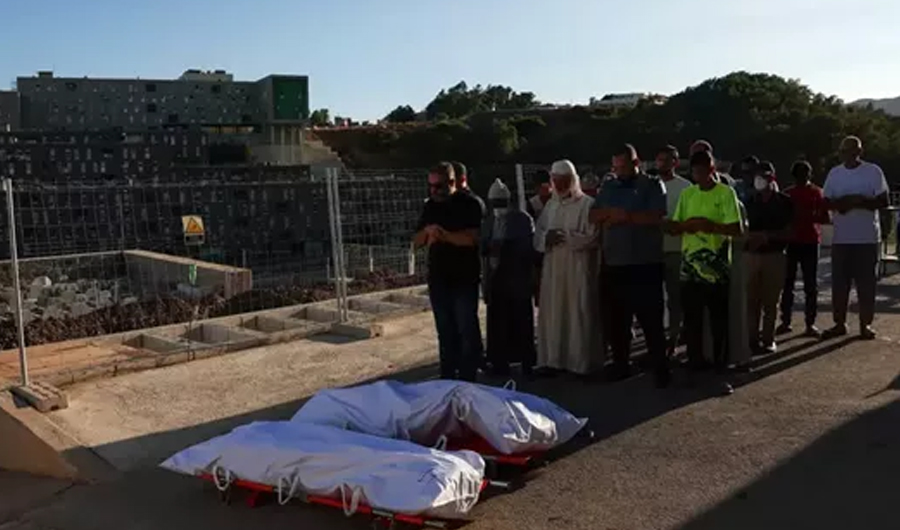
Spanish authorities in Ceuta have begun burying the bodies of dozens of migrants who died during a mass crossing attempt about three weeks ago, amid ongoing efforts to identify them.
Gravediggers lowered the first four bodies, wrapped in white bags, into adjacent graves in a Muslim cemetery, in the presence of a limited number of residents and about 12 journalists. Burial ceremonies were conducted in accordance with Islamic rites, while vehicles designated to transport additional bodies arrived at the cemetery.
Said Mohamed, the acting cemetery manager, said authorities plan to bury around 70 bodies in the coming days, at a rate of 10 to 12 per day.
He noted that approximately 95% of the bodies have not yet been identified, adding that numbered stones have been placed on the graves to facilitate future identification if relatives come forward to claim the remains and repatriate them to their home countries.
According to authorities, between 5,000 and 8,000 migrants remain in Ceuta, following the crossing of at least 72,000 people from Morocco on July 30. The migrant influx resulted in 82 deaths on the Spanish side of the border, while Moroccan authorities announced 14 additional deaths.
Mohamed said the bodies were buried in accordance with Islamic teachings, which require orienting the deceased toward the qibla and covering them with soil.
Latest data from the Ceuta court showed that authorities have so far been able to identify only six migrants, all adult Moroccan men. Families of missing Moroccan migrants continue to seek information about their relatives through appeals on social media and contacts with border officials.
Major Carlos Atuch, an official in the Spanish Civil Guard’s crimes division who leads a team of nine officers in Ceuta, said authorities have compared migrants’ fingerprints with Spanish and Moroccan databases and conducted DNA matching with samples provided by relatives searching for their loved ones.
