Kuwaiti Generosity: Bridges of Compassion Cross Borders to Sow the Foundations of Life and Hope - Sarmad
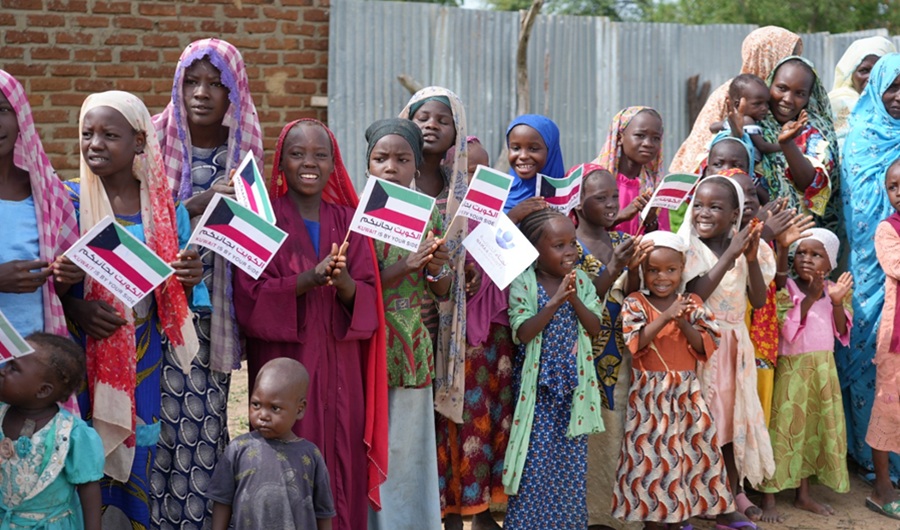
(KUNA) – As part of the “Kuwait is by Your Side” campaign and under high-level directives, Kuwaiti humanitarian efforts continue to transcend borders, carrying a message that goes beyond mere assistance to building a safer and more stable life. Projects in education, health, water, and relief converge to reflect a firmly entrenched Kuwaiti approach of standing by people wherever they are.
From Zanzibar to Yemen, Gaza, Chad, Palestine, India, and the African continent, the circles of Kuwaiti benevolence expand to address diverse needs and open new windows of hope. A well that restores water to a village, a school that lights the path for a child, a health center that alleviates a patient’s pain, and food reaching a family are all images that encapsulate the meaning of giving when it transforms from temporary aid into a lasting impact on communities.
In Zanzibar, Tanzania, Namaa Charity, affiliated with the Al-Islah Social Association, continued its developmental path through educational and humanitarian projects, including the KAF and Namaa Educational Complex, orphanages, the Namaa School, and one of the Quranic schools, alongside food distribution to beneficiary families. These efforts, spanning education, water, health, and relief, have also extended their impact to Yemen, Gaza, and Chad.
Abdulaziz Al-Kandari, Deputy Chief Executive Officer of Namaa Charity, told the Kuwait News Agency (KUNA) that the association’s humanitarian and developmental projects are driven by its mission to create sustainable impact, combining immediate relief with development and human capacity building. He noted that field monitoring allows for assessing beneficiaries’ needs, ensuring aid reaches its intended recipients, and achieving objectives on the ground.
Al-Kandari added that the association laid the foundation for a comprehensive educational complex in cooperation with KAF Humanitarian in the Kingdom of Bahrain. The complex includes a mosque, a school, an artesian well, a health center, and a Quran memorization house, integrating the components of education, health, water, and community care into a single project serving the local community for years to come.
He pointed out that the field tour also witnessed the inauguration of an artesian well in one of the needy villages, providing a water source for its residents. He emphasized that water projects represent one of the pathways with direct and sustainable impact on communities, as they address a basic need linked to life, health, and stability.
He clarified that humanitarian work extended to Yemen with the opening of the Nora Health Center, built on an area of 205 square meters. The center includes clinics for women, men, and children, an emergency room, a pharmacy, a laboratory, a reception area, and service facilities, aiming to serve approximately 4,000 beneficiaries annually and bring medical care closer to areas suffering from limited health services.
Al-Kandari stated that Namaa continues in the Gaza Strip to implement the “Goodness Quenches Their Thirst” campaign by distributing water containers to displaced persons in the northern part of the Strip, responding to the growing need for water amid difficult humanitarian conditions. Meanwhile, the association completed the Wadha Al-Anzi Islamic Center project in Chad, which includes a mosque and a Quran memorization center, alongside distributing copies of the Quran to beneficiaries.
He affirmed that the diversity of projects across water, education, health, relief, and Quranic work reflects the comprehensiveness of the Kuwaiti charitable sector and its commitment to transitioning assistance from direct response to creating extended developmental impact. He noted that the generosity of Kuwaitis translates on the ground into a school where a child learns, a well that quenches a village’s thirst, a health center where a patient finds care, and a family that receives a helping hand.
For its part, the Al-Manaber Al-Quraniya Association continued to chart multiple courses of humanitarian action through projects ranging from supporting widows and needy families in Palestine to providing drinking water to those in need across the African continent and drilling wells in India, alongside its Quranic programs. These initiatives combine immediate relief with efforts to build more sustainable impact within beneficiary communities.
In a statement to KUNA, the association’s General Director, Dr. Mohammed Al-Omran, reiterated that Al-Manaber has continued implementing its humanitarian and charitable projects, driven by its responsibility toward needy communities. He emphasized that charitable work is not limited to providing immediate assistance but extends to creating sustainable solutions that contribute to improving the lives of beneficiaries.
Al-Omran added that the association implemented a project supporting widows in Palestine, alongside distributing food baskets to needy families, aiming to alleviate their living burdens and strengthen their capacity to cope with the difficult circumstances they face.
He noted that water provision projects included distributing 60,000 liters of water across the African continent to supply drinking water to beneficiaries, addressing one of the most fundamental needs related to human life. Additionally, the association opened 30 wells in India to provide more sustainable water sources and serve beneficiary communities in the long term.
Al-Omran clarified that the association also continued its programs dedicated to serving the Book of God and promoting Quran memorization, notably through the late Mutlaq Al-Qarawi Quran Memorization Competition. He stressed that the diversity of projects—spanning relief, water provision, and Quranic work—reflects the association’s commitment to ensuring that the fruits of charity reach those entitled to them and to meeting the actual needs of beneficiary communities.
He affirmed that the generosity and giving spirit demonstrated by Kuwaiti people constitute a fundamental pillar for the continuity and expansion of these projects’ impact. He pointed out that every contribution can make a real difference in an individual’s life, and that the association remains committed to executing its charitable, humanitarian, and Quranic projects, while reinforcing values of compassion and solidarity.
These projects, with their geographical and thematic diversity, reveal a renewed image of Kuwaiti generosity, whose scope is measured not merely by the number of projects but by the transformation they bring to the details of daily life. The path to stability may begin with a drop of water, a school seat, medicine reaching a patient, or food that preserves a family’s dignity.
Thus, under the umbrella of the “Kuwait is by Your Side” campaign and guided by high directives, this humanitarian journey continues, making Kuwait’s name a companion to the needy in many places. It has entrenched the meaning that when charity extends with awareness and sustainability, it does not end with the conclusion of a project; rather, it remains a school that illuminates the future, a well pulsating with life, a center that heals pain, and a human legacy passed down through generations.
