Trump demands Iran compensate for casualties as hopes for a Strait of Hormuz deal fade - Sarmad
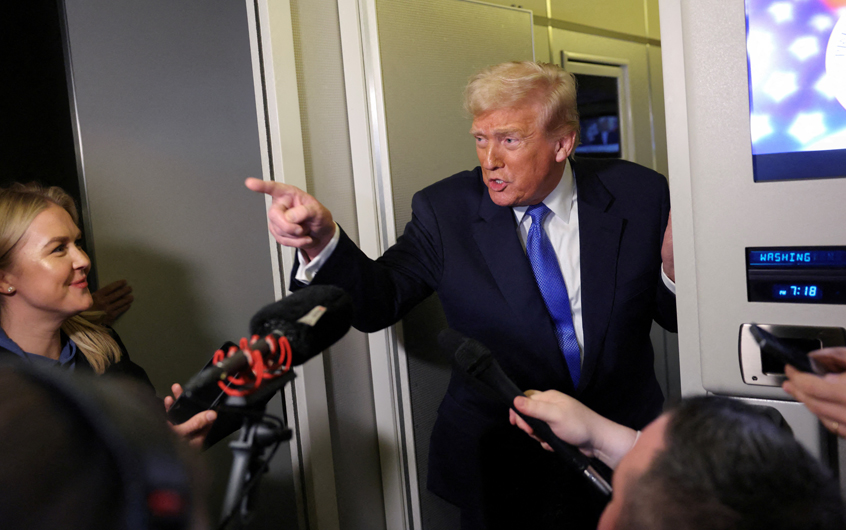
(Royters) – U.S. President Donald Trump on Monday demanded that Iran pay compensation for people he said Tehran caused to be killed in wars, attacks, and protests, escalating rhetorical tensions with Iran at a time when
Translated by Qiyas from سرمد — Original source
(Royters) – U.S. President Donald Trump on Monday demanded that Iran pay compensation for people he said Tehran caused to be killed in wars, attacks, and protests, escalating rhetorical tensions with Iran at a time when hopes for a near-term deal to open the Strait of Hormuz are fading.
Trump said he was responding to Iran’s earlier demand that Washington meet certain conditions, including compensation for damages suffered by Tehran during the war waged by the United States and Israel against it for more than five months.
Trump wrote on the Truth Social platform, “I, in turn, demand that Iran provide compensation for all the people it killed and severely injured through its roadside bombs and in numerous conflicts.”
This new, unexpected U.S. demand was not raised in any previous talks. Trump said he would include it in all future negotiations with Iran, along with demands for compensation to the families of hundreds of thousands of protesters he said Iran killed.
He also pointed to the need for Iran to compensate the families of those killed aboard the U.S. destroyer Cole, referring to the attack on the warship in Yemen on October 12, 2000, which killed 17 U.S. sailors. The attack was attributed to al-Qaeda, not Iran.
Iran said it was close to finalizing an agreement with the Sultanate of Oman to establish new shipping routes through the Strait of Hormuz, but reiterated that the United States must meet other conditions, including compensation, the lifting of sanctions, and an end to military threats, before opening the strategic waterway.
Iran has effectively closed the strait since the start of the U.S.-Israeli war against it on February 28, leading to rising oil prices and inflation rates. Before the war, about 20 percent of the world’s oil and liquefied natural gas supplies passed through the strait.
Oil prices surged after comments by Iranian Foreign Ministry spokesperson Esmaeil Baqaei, as initial optimism about reaching a deal on the strait faded due to Iran’s insistence on its conditions.
Brent crude continued its gains, rising 4.3 percent by 1717 GMT. Dutch and British gas prices for delivery in the nearest contract month also rose by more than 10 percent.
Pressure on Trump
Trump, who said the attacks on Iran targeted preventing the Islamic Republic from manufacturing nuclear weapons and undermining its ability to threaten the region, is facing pressure to end the unpopular war within the United States ahead of the midterm congressional elections in November.
Washington and Tehran agreed to a ceasefire in June, but the United States reimposed a blockade on Iranian shipping in the Gulf in July, which Tehran said constituted a violation of the agreement, which had already collapsed by that time.
The Yemeni Houthi group announced last month a naval blockade against Saudi Arabia in the Red Sea in response to what it described as a Saudi blockade on Yemen, an accusation denied by Riyadh, which supports the internationally recognized Yemeni government.
Fighting between the Houthis and government forces in Yemen has intensified. The Yemeni army said on Monday that seven people, including soldiers and civilians, were killed in a Houthi attack on the coastal city of Mokha on the Red Sea.
The army said air defenses intercepted and shot down 11 Houthi drones involved in the attack.
