Israeli media: Statue of Ramses II linked to the story of the Children of Israel in Egypt - Sarmad
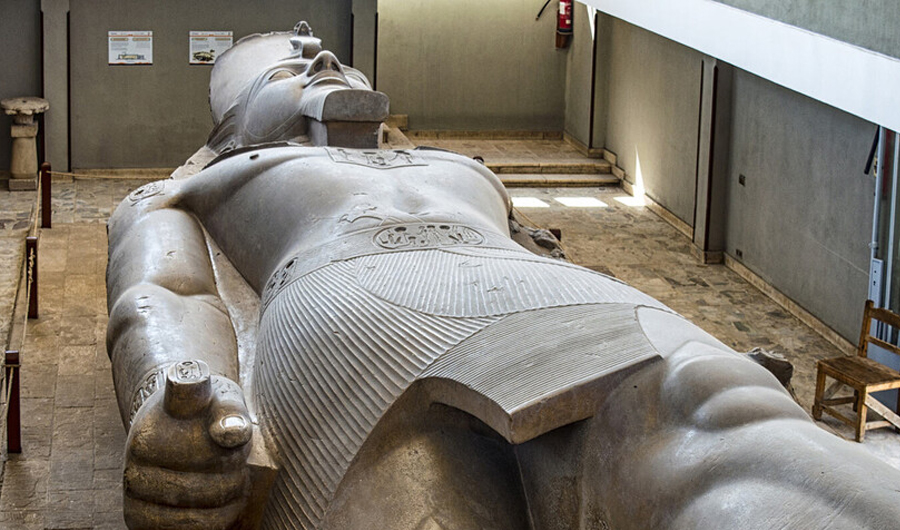
Israeli media claimed that a new archaeological discovery in Egypt’s Nile Delta—a colossal statue of Ramses II—has reignited historical and religious debates over the identity of the pharaoh who lived during the time of the Prophet Moses.
Channel 14 Israel reported that a striking archaeological find in northern Egypt has sparked widespread controversy among historians and Torah scholars in Tel Aviv, following the unveiling of a massive statue of Pharaoh Ramses II at the site of Tell el-Fara’un.
The channel noted that this exciting discovery, which many associate with the king regarded as the pharaoh of the Exodus story, opens a new window for historical discussion about the era that altered the fate of the Children of Israel.
The Hebrew-language channel added that the colossal granite statue, estimated to weigh six tons and standing approximately eight feet (about 2.4 meters) tall, was recently uncovered at Tell el-Fara’un in the Nile Delta.
It stated that Ramses II, who ruled in the 13th century BCE, is considered by many researchers the leading candidate for the title of the pharaoh confronted by Moses and Aaron. The report highlighted his unprecedented impact on Egypt and his reputation for erecting more monuments than any other pharaoh.
The channel pointed out that the statue depicts Ramses II wearing the traditional royal headgear alongside other figures. It quoted archaeologist Hisham Hussein, the excavation supervisor, as saying that the moment the royal features emerged from beneath the sand was thrilling for everyone. It further noted that the city of Pi-Ramesses, where the statue was originally placed, corresponds in scholarly research to the city of Ramses mentioned in the Book of Exodus as the place where the Children of Israel were enslaved, citing the biblical text that refers to the construction of the cities of Pithom and Raamses.
The report clarified that scholars have indicated the statue underwent a planned process of reuse: it was originally carved in Aswan, then transported to the capital Pi-Ramesses, and later moved to Tell el-Fara’un, underscoring how historical memory and royal traditions were preserved in ancient Egypt.
Notably, ongoing historical and archaeological debates continue regarding the historicity of the Exodus of the Children of Israel from Egypt and the identity of the pharaoh who lived during that period.
While some biblical and Western narratives link the pharaoh to Ramses II or his son Merneptah, Egyptian archaeologists and Egyptologists assert that there is no archaeological evidence or documented pharaonic inscriptions confirming the enslavement of the Children of Israel or the occurrence of the Exodus as described in religious tradition. They emphasize that these accounts remain within the realm of religious texts and are not supported by archaeological excavations in Egypt.
