Discovery of an ancient cemetery and remains of a residential area in the Nile Delta - Sarmad
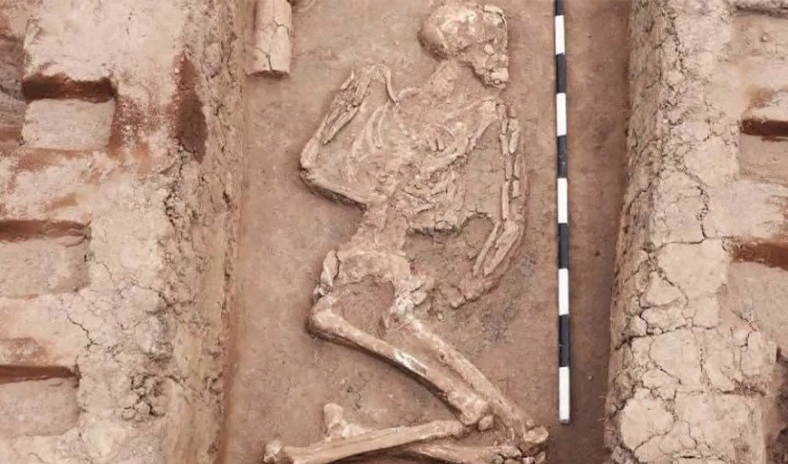
The Egyptian Ministry of Tourism and Antiquities announced on Saturday that a mission from the Supreme Council of Antiquities had uncovered an ancient cemetery dating back to the Predynastic period and continuing through the Greek and Roman eras, alongside a residential area from the Second Intermediate Period. The discovery was made during excavation work at the Kom el-Kharag archaeological site in Dakahlia Governorate, in Egypt’s Nile Delta.
In a statement, the ministry noted that the new finding “highlights the civilizational and settlement development in the eastern Delta region over thousands of years,” adding that it underscores the archaeological significance of Kom el-Kharag as one of the promising sites in the eastern Delta.
The statement quoted Mohamed Abdel Badii, head of the Egyptian Antiquities Sector at the Supreme Council of Antiquities, saying that “the oldest discoveries at the site date back to the Lower Egyptian civilization of First and Second Buto, which belong to the first half of the fourth millennium BC. A number of graves with simple oval pits carved into the sandy layer were found, containing burials in various funerary positions that reflect differences in burial rituals during that period.”
He added that “these graves were characterized by the simplicity of their funerary goods, which were limited to small handmade pottery vessels and some marine seashells. The density of burials indicates the presence of a large population at the site during this early era.”
He pointed out that the mission also uncovered a residential area and a group of tombs dating to the Second Intermediate Period, extending into the New Kingdom. These remains include mudbrick building structures, grain silos, ovens, and hearths, reflecting aspects of daily life and economic activities of the site’s inhabitants at that time.
Additionally, a series of curved walls surrounding the residential and funerary buildings were discovered. These are distinctive architectural elements that became widespread from the Middle Kingdom through the New Kingdom.
The statement noted that the mission found several tombs dating from the Fifteenth through Seventeenth Dynasties and the early New Kingdom, confirming settlement in the area during the Hyksos period, given its proximity to their capital, Avaris, in the eastern Delta.
