Of Egyptian origin: Abdul Sidik wins Democratic Party nomination for Michigan Senate seat - Sarmad
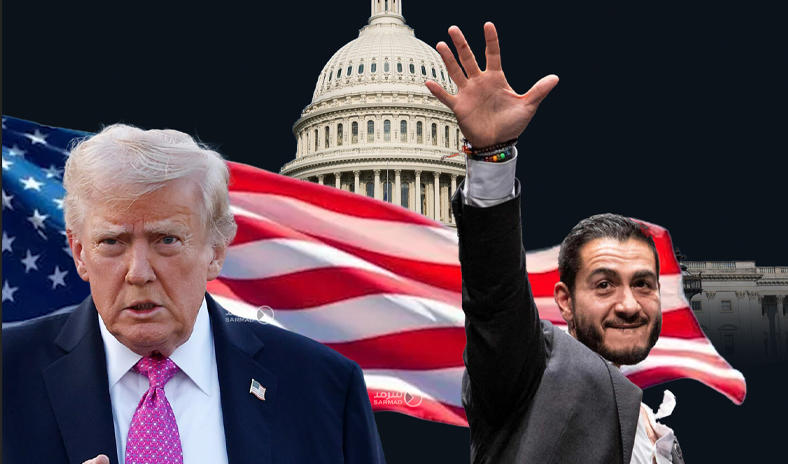
Abdul (Abdulrahman) El-Sayed won the Democratic primary for the U.S. Senate seat representing Michigan, securing the nomination after a tight race with Representative Haley Stevens and providing the party’s progressive w
Translated by Qiyas from سرمد — Original source
Abdul (Abdulrahman) El-Sayed won the Democratic primary for the U.S. Senate seat representing Michigan, securing the nomination after a tight race with Representative Haley Stevens and providing the party’s progressive wing with a significant foothold in the Midwest during the current midterm elections.
Mr. El-Sayed, who is of Egyptian descent, overcame a massive spending campaign by his pro-Israel opponent, Stevens, which totaled nearly $65 million, including more than $30 million from a group linked to the American Israel Public Affairs Committee (AIPAC), while also facing the party establishment that rallied behind Stevens.
Trump Attacks ‘Abdul El-Sayed,’ Questions Voting Integrity in Michigan
U.S. President Donald Trump escalated his attacks on the Democratic candidate for the U.S. Senate from Michigan, Abdul (Abdulrahman) El-Sayed, questioning the integrity of the state’s elections following El-Sayed’s victory in the party’s primary, according to Politico magazine.
On Wednesday, Trump described El-Sayed on the Truth Social platform as a “communist who is unpopular in Detroit,” and alleged, without providing evidence, that widespread voting fraud had occurred in Michigan.
Trump stated, “Wayne County (Detroit) in Michigan is one of the most corrupt voting areas in the United States, if not in the world,” adding, “It’s like a Third World country... Miracles happen in Wayne County, including votes cast exceeding the number of voters, by a large margin.”
CNN and NBC News networks announced El-Sayed’s victory in the race following vote counting that began on Tuesday evening and continued into Wednesday morning. NBC declared El-Sayed the winner on Tuesday evening, but other television networks delayed their announcements until more votes were counted.
Michigan Governor Gretchen Whitmer endorsed Stevens late last month, a move seen as a final attempt to halt El-Sayed’s rapid rise.
El-Sayed, a former public health official, will face former Republican Representative Mike Rogers in the November general election, after Rogers secured the Republican nomination unopposed on Tuesday.
This contest is expected to be one of the most competitive Senate races in the country and could determine which party controls the chamber.
The winner will succeed Democratic Senator Gary Peters, who decided not to seek a third term and had endorsed Stevens during the primary.
Four Seats Needed to Regain Majority
Republicans currently hold 53 seats in the Senate, and Democrats are seeking to flip some Republican-leaning states to win the four seats needed to regain the majority. However, the Democratic Party also faces the challenge of defending its seats in several swing states, including Georgia and Michigan.
President Donald Trump, whose early endorsement of Mike Rogers helped end the competition within the Republican Party, won Michigan in the 2016 and 2024 elections, while losing it to Joe Biden in 2020.
Rogers and national Republicans had indicated that they considered El-Sayed an easier opponent than Stevens. The National Republican Senatorial Committee went so far as to produce a digital ad highlighting El-Sayed’s progressive positions and his endorsement by Senator Bernie Sanders, an independent from Vermont, a move many viewed as an attempt to boost his chances in the primary and set him up as a target in the general election.
Massive Spending from AIPAC to Support Stevens
Echoing several Democrats who have run in recent elections to push the party further left, Mr. Israel accused himself of committing genocide against Palestinians in Gaza. This stance carries particular significance in Michigan, which is home to one of the largest American Muslim and Arab communities in the United States.
Mr. Israel also repeatedly criticized Stevens for the funds she received from corporate political action committees, as well as for the media support provided by her allies among major spenders, including more than $30 million from a group linked to the American Israel Public Affairs Committee (AIPAC).
Many of that group’s advertisements focused on promoting Stevens positively, while some ad messages attacked Mr. Israel. Overall, Stevens and her allies spent nearly nine times as much on advertising as Mr. Israel and his supporting groups, according to AdImpact, a firm that tracks advertising spending.
During a debate held last week in Detroit, Mr. Israel said, “If you need a $60 million crutch, you’re probably not going to win an election on your own,” referring to Haley Stevens’s massive spending.
