WHO: Ebola Outbreak in the Democratic Republic of Congo Spirals Out of Control - Sarmad
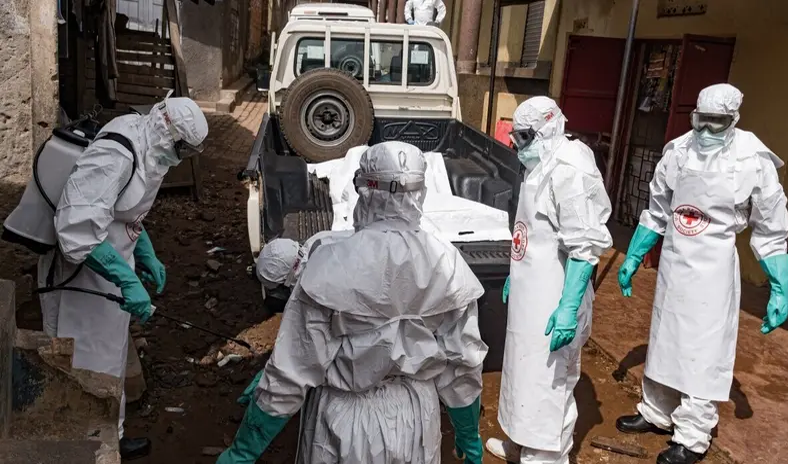
The World Health Organization (WHO) said on Saturday that the Ebola outbreak in Central Africa remains out of control despite weeks of efforts, and is worsening in the Democratic Republic of the Congo, with an increasing
Translated by Qiyas from سرمد — Original source
The World Health Organization (WHO) said on Saturday that the Ebola outbreak in Central Africa remains out of control despite weeks of efforts, and is worsening in the Democratic Republic of the Congo, with an increasing risk of spillover into neighboring countries.
The UN health agency added that this is the largest outbreak the country has ever experienced.
In a statement released on Saturday, the organization said: “A significant expansion of response activities is needed to contain the outbreak.”
It further noted that 567 cases and 296 deaths were recorded during the past week, the highest single-week toll since the outbreak began. In total, there have been 3,605 laboratory-confirmed cases, including 1,587 deaths, while 651 patients have recovered from the infection.
The previous largest Ebola outbreak in the Congo occurred between 2018 and 2020, when 3,317 confirmed cases were recorded.
Complex security situation
The organization explained that the rise in numbers is partly due to improved surveillance and increased laboratory testing.
However, it added: “Most of the increase reflects the widening scope of the outbreak.” Only about 80% of contacts of infected individuals are followed up for three weeks, whereas experts stress that the required rate for disease control should reach 95%.
Public health workers face difficult security conditions due to conflicts with rebel groups, the presence of hundreds of thousands of displaced persons, and deep-seated mistrust between the population and health authorities.
Few infected individuals reach treatment centers
Experts believe the true number of infected people far exceeds the number of confirmed cases. Many individuals infected with the Ebola virus are not transported to treatment centers, and relatives of the deceased often believe the death resulted from another illness.
Funeral rites are among the most sensitive stages, as the deceased remain highly infectious even after death, exposing relatives to infection during washing of the bodies. Relief organizations provide families with safe burial services that preserve the dignity of the deceased, using protective suits and other health precautions.
