New York Post: Iran's war turns into a trap threatening Trump, shaking his popularity, and reviving the ghost of Iraq - Sarmad
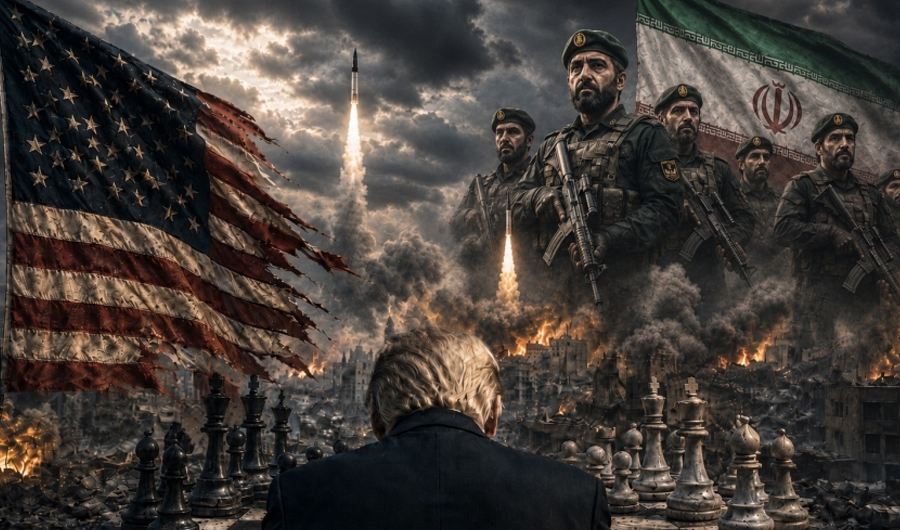
American writer Rich Lowry has argued that the war waged by U.S. President Donald Trump against Iran is beginning to transform into an internal challenge, imposing increasing political and economic costs on his administr
Translated by Qiyas from سرمد — Original source
American writer Rich Lowry has argued that the war waged by U.S. President Donald Trump against Iran is beginning to transform into an internal challenge, imposing increasing political and economic costs on his administration.
In an article published by the New York Post, the American writer pointed to similarities with the path faced by former U.S. President George W. Bush during the Iraq War.
Lowry clarified that the war with Iran differs from the Iraq War, as it does not involve a ground invasion, regime change, military occupation, or counterinsurgency operations, and the scale of human losses is much lower. However, he considered the political trajectory to be similar, noting that an unpopular war is eroding public support for the Republican president.
He noted that major polls currently place Trump’s approval rating below 40%, explaining that a Fox News poll gave him 39%, while a CNN poll recorded 34% and an Associated Press poll showed 33%—levels close to Bush’s popularity during the same period of his second term.
The writer added that the current war imposes a direct economic cost on Americans that was not present in the same way during the Iraq War, pointing out that the average price of a gallon of gasoline rising above four dollars has made the war’s repercussions felt within the United States, as tensions in the Strait of Hormuz continue to affect energy markets.
Citing a CNN poll, he noted that only 28% of respondents approve of Trump’s handling of the Iranian file, compared to 25% who support his performance in combating inflation and 21% regarding his handling of fuel prices, considering these issues interconnected.
Lowry observed that Trump sought to leave a political legacy through major decisions, such as imposing tariffs and engaging in war with Iran. However, according to his article, these policies have contributed to rising prices and weakened his image in managing the economy. He pointed out that the latest Fox News poll showed only 33% approval for his economic performance, compared to 67% opposition.
He added that Trump had hoped to reopen the Strait of Hormuz after signing a memorandum of understanding with Iran to avoid broader economic repercussions. However, the writer stated that the strait has returned to a state of de facto closure, placing the U.S. administration before two difficult choices: either military escalation or continuing a low-intensity conflict, neither of which enjoys public support.
The article noted that a CNN poll showed nearly three-quarters of Americans believe Trump has not given sufficient attention to more pressing domestic issues. It added that Iran was not among voters’ priorities before the war broke out, and the White House failed to make it so.
Lowry concluded that the end of the war remains unclear. He considered that Trump might manage to reach a satisfactory settlement and regain some of his popularity, but he urged any future Republican president to exercise greater caution when deciding to launch large-scale military operations and to assess the worst-case scenarios before engaging in new wars.
