"The Telegraph": Netanyahu and Trump discussed imposing a "land blockade" on Iran - Sarmad
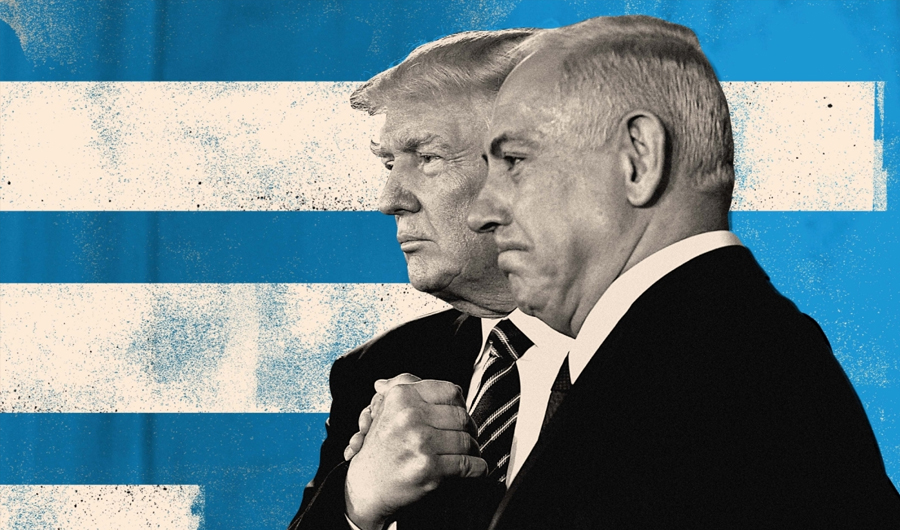
The Telegraph reported that the United States and Israel are discussing the possibility of imposing a land blockade on Iran amid recent developments in the region. According to the newspaper, this proposal is one of seve
Translated by Qiyas from سرمد — Original source
The Telegraph reported that the United States and Israel are discussing the possibility of imposing a land blockade on Iran amid recent developments in the region.
According to the newspaper, this proposal is one of several options being considered by U.S. President Donald Trump and Israeli Prime Minister Benjamin Netanyahu to increase economic pressure on the regime, after months of strikes and a protracted campaign failed to subdue it.
According to reports, the two leaders discussed increasing economic pressure on Iran “through kinetic and non-kinetic means” during their meeting in the Oval Office on Tuesday.
Such a plan would likely require the United States and Israel to pressure Iran’s neighbors and regional partners to tighten or close border crossings, thereby restricting the flow of exports and imports.
A senior Israeli official told The Telegraph, outlining one of the scenarios discussed by the two countries: “What if you cut off the land only? Assume Iran cannot bring anything in or take anything out. See what happens.”
According to Sean MacFarland, a retired U.S. general, while a land blockade would be “almost impossible,” he noted that “if you deprive Iran of its ability to trade… you isolate it economically. That is the way to knock it down.”
MacFarland added: “The economic approach is the concise one, but it must include kinetic elements,” noting that “Iran shares land borders with a large number of countries, and Iraq is very aligned with Iran. This would make it extremely difficult to stop any support from reaching them.”
The land blockade could target major border crossings such as Incheh Borun and Sarakhs, which connect Iran and Turkmenistan.
Iran shares land borders with Iraq, Turkey, Pakistan, Afghanistan, Turkmenistan, Armenia, and Azerbaijan, meaning the two leaders would have to persuade these countries—some of which are not allies—to cooperate.
The report suggested that Washington might view Pakistan and Iraq, which are not considered close allies in the region, as weak links. If any of the seven countries bordering Iran agreed to cooperate, they would face their own economic repercussions and the threat of retaliatory strikes from the Islamic Republic.
A source familiar with the discussions told the newspaper that Trump believes he has reached a dead end with his current strategy of reopening the Strait of Hormuz.
The source added that the U.S. president is therefore exploring different escalation options that would force Iran back to the negotiating table.
A land blockade would align with his maximum-pressure strategy aimed at crippling Tehran’s economy, which began with a naval blockade, according to the report.
According to the report, there is also a possibility that Israel and the United States have floated this plan as a diversionary tool to distract Tehran from their next actual move.
Intelligence indicates that the Iranian leadership is divided between those deeply concerned about economic collapse and those who believe the war should continue.
In this regard, the Israeli official told the newspaper: “There is a fuel shortage. You are aware of that. A very acute fuel shortage inside Iran. There are long queues at gas stations that have run out of diesel.”
Attendees at the room described Trump and Netanyahu’s meeting this week as positive and friendly. An Israeli official told The Telegraph that the two men discussed three options for next steps in the conflict: reaching an agreement, continuing the naval blockade, and resuming strikes. Netanyahu did not favor any specific option.
