Turkey raises exports to Syria by 26.4% in the first half of 2026 - Sarmad
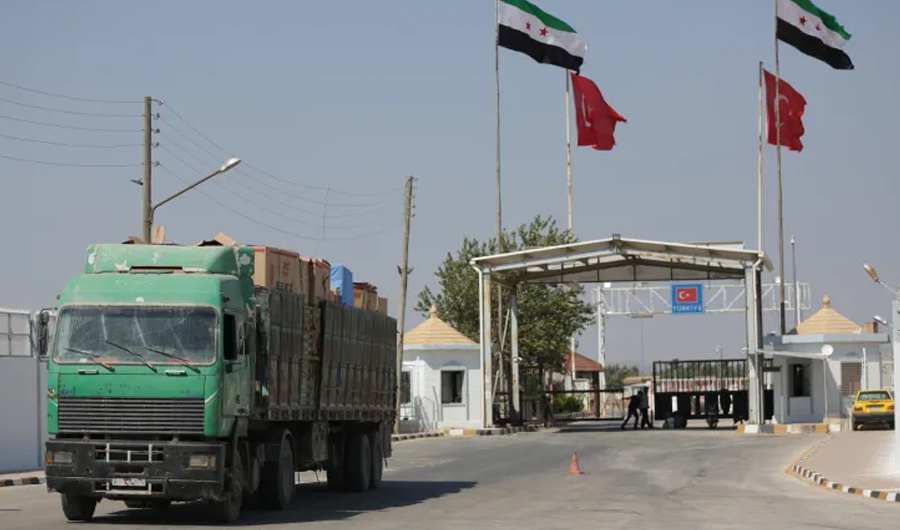
Turkish exports to Syria recorded strong growth during the first half of 2026, rising by 26.4% year-on-year, driven by an increase in trade volume and improved export flows. Data from the Turkish Exporters' Assembly, as
Translated by Qiyas from سرمد — Original source
Turkish exports to Syria recorded strong growth during the first half of 2026, rising by 26.4% year-on-year, driven by an increase in trade volume and improved export flows.
Data from the Turkish Exporters' Assembly, as reported by the Anadolu Agency, showed that the value of Turkish exports to the Syrian market reached $1.284 billion and 328 thousand dollars during the period from January to June 2026, compared to the same period last year.
In terms of volume, exports rose by 36.6% to reach 3 million, 182 thousand, and 61 tons of products, reflecting growing demand for Turkish goods in the Syrian market.
Milling products topped the list of most exported goods to Syria, with a value of $103.879 million, followed by cement exports valued at $102.256 million, and electricity and energy products totaling $80.107 million, indicating sustained demand for essential materials and inputs for reconstruction and infrastructure.
The Southeastern Anatolia region accounted for the largest share of total Turkish exports to Syria, valued at $461.823 million, recording growth of 11.4% in value and 34.6% in volume compared to the same period in 2025, reinforcing its status as a key hub for cross-border trade between the two countries.
Jalal Qadi Oglu, a board member of the Turkish Exporters' Assembly and head of its Syria office, stated that Turkish exports to the Syrian market achieved growth of approximately 70% in 2025, affirming that this positive momentum continues this year.
He added that integrating the Syrian banking system into the international financial system, alongside gradual improvements in the security situation, and preparations to operate the Birecik and Nusaybin border crossings at full capacity, will contribute to accelerating bilateral trade and facilitating the movement of goods between the two countries.
Qadi Oglu noted that the positive mutual steps taken by the leaderships of Turkey and Syria provide additional momentum to strengthen economic relations, creating a more favorable environment for expanding investments and trade in the coming period.
