Unhealthy Fast Food Causes Behavioral Disorders in Children - Sarmad
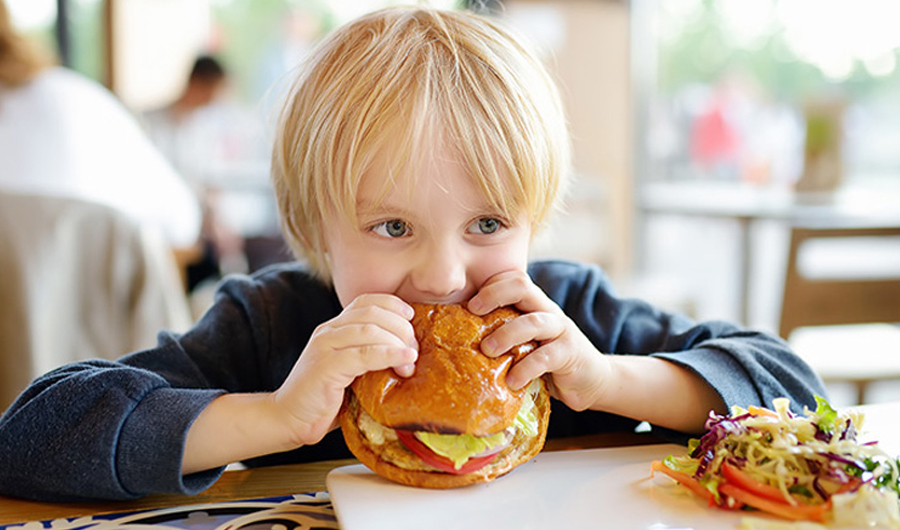
A recent study by researchers at the University of Agder in Norway, published on the university’s website for the first time in late May of this year, revealed clear links between the snacks and beverages children consum
Translated by Qiyas from سرمد — Original source
A recent study by researchers at the University of Agder in Norway, published on the university’s website for the first time in late May of this year, revealed clear links between the snacks and beverages children consume between main meals and their mental health during the preschool years, specifically starting from age four.
Snack consumption among children has increased in recent decades, particularly in wealthy countries, leading to a doubling in the intake of energy-dense, nutrient-poor foods. This shift in eating patterns is attributed to multiple factors, including both parents working, higher household incomes that provide greater opportunities for families to purchase food and drinks outside the home, fewer family meals eaten at home, and increased food availability coupled with lower prices.
The researchers noted that this dietary pattern has negatively impacted children’s health, both physiologically—such as higher rates of obesity and insulin resistance, and increased incidence of metabolic disorders like type 2 diabetes and high cholesterol—and psychologically, including higher rates of anxiety and behavioral problems such as aggression and a propensity toward violence.
Although numerous previous studies have examined the relationship between diet quality and mental health, most have focused primarily on adolescents and adults. Consequently, there has been insufficient data on the early impact of food quality on children’s behavior.
The researchers analyzed data from 363 children drawn from a prior Norwegian study titled “Early Food for Future Health.” The children were around four years old, with an approximately equal gender ratio. The primary objective of the data analysis was to determine the effect of these children’s diets on their behavior.
Each child’s diet was assessed by having parents answer questions regarding the frequency of consumption of specific food items on a daily and weekly basis, whether healthy or unhealthy. These items included vegetables, fruits, sweet and savory snacks, and soft drinks.
Each child’s behavior was evaluated through a parental questionnaire measuring two types of behavioral problems: internalizing behaviors, such as feelings of anxiety, sadness, withdrawal, and reluctance to participate; and externalizing behaviors, such as anger, aggression, restlessness, destructiveness, and difficulties with concentration.
The scientists controlled for all factors that could influence the outcomes, including the children’s sex, their surrounding environment, parents’ education levels, the family’s socioeconomic status, the mother’s mental health, and any family history of psychiatric illness.
The study found that higher consumption of vegetables and fruits among four-year-old children was inversely associated with introverted behavior; the more these healthy foods were consumed, the better the child’s social life and the more benign their behavior. Conversely, the consumption of sweet and savory snacks was positively associated with aggressive behavior; the greater the intake of these snacks, the more violent the child’s behavior became.
The researchers observed that the negative impact of unhealthy eating on children’s behavior was actually stronger than the protective effect of consuming fruits and vegetables, highlighting the severity of harmful dietary habits even when healthy meals are also consumed.
The study clarified that the link between healthy eating and mental well-being stems from the fact that fruits and vegetables contain essential nutrients such as antioxidants, folic acid, various vitamins, and minerals. All these elements can help protect the brain from inflammation, acting as natural antioxidants, thereby improving cognitive brain function—a factor of critical importance for a child in the early stages of life, particularly before entering school.
Conversely, consuming foods rich in sugars, fats, and salts can increase inflammation and negatively affect the brain, triggering disruptive behaviors. The real problem is that unhealthy foods (such as sweets) are more often readily offered to children who display aggressive behaviors, usually in an attempt to calm them down, thus trapping children in a vicious cycle of aggression.
It is well known that mental health issues among adolescents pose a significant health challenge in most developed societies. In Norway, for example, approximately one in five girls and one in ten boys suffer from high levels of psychological distress.
Most psychological research indicates that problems which often persist beyond adolescence and are difficult to resolve in the long term are those that emerge in the early years of a child’s life. Therefore, early intervention and prevention of these psychological and behavioral issues are crucial. Diet can be addressed as a supportive factor in preventing such problems, alongside psychological support and behavioral therapy.
The study warned against the dangers of neglecting the consumption of harmful snacks during the early stages of a child’s life in nurseries and schools, under the pretext that the primary focus at home is on healthy meals, since frequent consumption of unhealthy foods tends to shape a child’s dietary habits later on.