Trump hints at possibility of proxy ground campaign against Iran - Sarmad
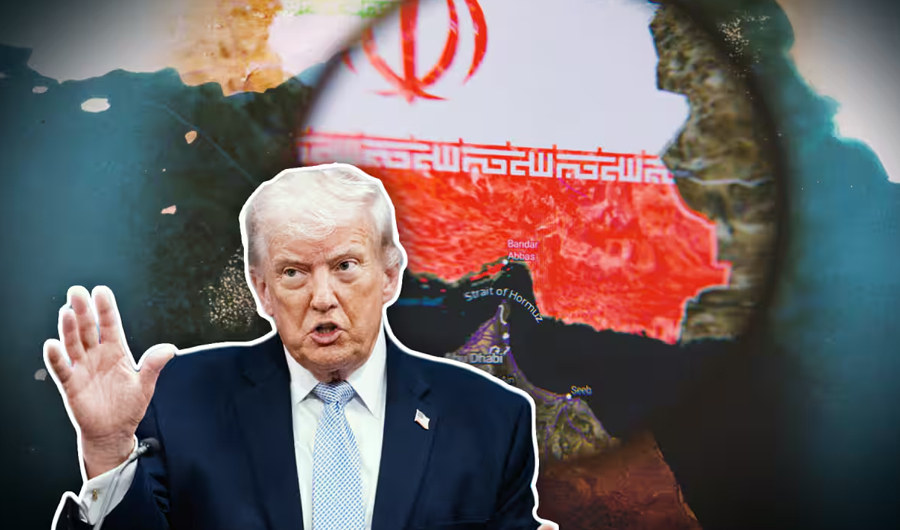
US President Donald Trump indirectly hinted at the possibility of launching a ground campaign against Iran, without providing any specific details regarding the nature or timing of such an operation. In an interview with
Translated by Qiyas from سرمد — Original source
US President Donald Trump indirectly hinted at the possibility of launching a ground campaign against Iran, without providing any specific details regarding the nature or timing of such an operation.
In an interview with Fox News, when asked about the prospect of a ground operation, Trump said, “I don’t want to do that,” but added a notable remark: “Sometimes a ground campaign is necessary, but we have other parties who will carry out the ground campaign on our behalf,” without revealing the identity of these parties or the nature of their role. This left the door open to speculation about whether the United States is seeking to involve regional allies in any potential ground confrontation with Iran.
Military analysts suggest that potential sites for such a ground campaign could include Kharg Island, Iran’s main oil export hub, or Iran’s southern coast along the Gulf, due to their strategic importance. However, analysts note that any amphibious landing on Iranian shores, whether carried out by US forces or those of another state, is an extremely complex and dangerous operation. It requires deploying sufficient troops to maintain a field presence, a task that is highly challenging given Iran’s pre-positioned defenses.
Because amphibious landings require specific land and sea conditions to ensure success, the defending side can concentrate its defenses at anticipated landing sites, granting it a significant strategic advantage. It can also mine approach routes for landing ships or block them with various obstacles, then direct fire from modern weapons—such as one-way attack drones (loitering munitions), traditional artillery, mortars, and light infantry weapons—at forces that manage to reach the shore, making any landing operation highly risky for attackers.
Analysts also point out that the logistical requirements to supply landed troops with ammunition, medical aid, food, and water expose supply ships to the same weapons faced by landing forces, further complicating the maintenance of supply lines and driving the costs of amphibious operations to very high levels. In this context, US Army Captain Daniel Hogustin wrote in the May-June issue of the Army’s *Military Review* that “the balance of power in coastal wars has shifted strongly in favor of the defender,” clearly referring to the difficulties any attacking force might face if it decides to launch an amphibious landing on Iranian shores.
Regarding US forces in the region, materials released by the US Department of Defense indicate that the 11th Marine Expeditionary Unit (11th MEU), typically comprising more than 2,000 personnel, is currently in the area aboard ships of the Amphibious Ready Group on the USS Boxer. These expeditionary units are usually employed in missions such as evacuations and amphibious operations requiring movement from ships to shore, including raids and military attacks. They include land and air combat elements, and some of their units receive specialized training for conducting special operations. Additionally, the US Army’s 82nd Airborne Division’s Quick Reaction Force can be deployed within hours to carry out tasks such as securing ports or airports, reflecting a high state of readiness among US forces in the region for any contingency.