Arab League: We will not remain neutral in the face of any aggression against any Arab state - Sarmad
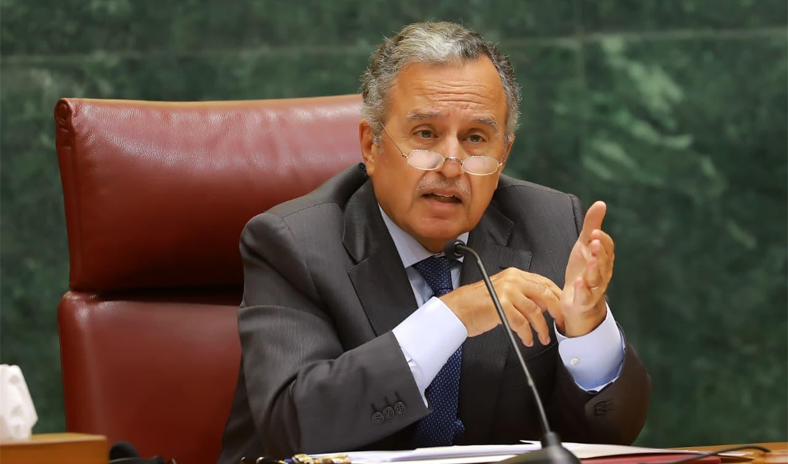
(KUNA) – Arab League Secretary-General Nabil Fahmy affirmed on Monday that the League would not remain neutral in the face of any aggression targeting an Arab state or infringing upon its sovereignty, calling for the ref
Translated by Qiyas from سرمد — Original source
(KUNA) – Arab League Secretary-General Nabil Fahmy affirmed on Monday that the League would not remain neutral in the face of any aggression targeting an Arab state or infringing upon its sovereignty, calling for the reform and development of the framework for joint Arab action to confront the challenges of the coming phase.
Speaking at a press conference marking his assumption of office, Fahmy said the upcoming period would witness more effective Arab League action across various Arab files, based on developing mechanisms for joint work, enhancing economic cooperation, and adopting a proactive approach to regional crises.
He pointed to the League’s continued support for the Palestinian cause and the rights of the Palestinian people, noting his desire to visit the occupied Palestinian territories as his first trip since taking office, but adding that the Israeli occupation’s refusal prevented this.
Regarding developments related to Iran, Fahmy clarified that the League is maintaining continuous communications with the foreign ministers of Arab states concerned with the Iranian file or those that have been subjected to Iranian aggression, reiterating the League’s position supporting Arab interests and rejecting any aggression against member states.
He stressed that the League would not be a neutral party in a case where an Arab party has been attacked, noting that any mediation role undertaken by the League requires a request from all parties and an Arab mandate that serves Arab interests.
The Secretary-General considered the agreement concerning Iran “still fragile” and noted that attacks have not ceased, necessitating a rational response to developments while preserving the constants of Arab national security.
He affirmed that stability in Lebanon begins with the withdrawal of the occupation from Lebanese territories and the restoration of the Lebanese state’s full control over all its lands, praising the wisdom of Lebanese political leaders.
On the reform of the League, Fahmy explained that reform means continuous development, and that any institution, regardless of its level of success, needs to continue developing its tools and operational mechanisms. He noted that the reform file is among the priorities for discussion with member states, as it has sent messages to Arab leaders and foreign ministers regarding a plan to develop the League and enhance its efficiency.
He emphasized the necessity of restoring the League’s pivotal role in engaging with Arab issues and taking the initiative in addressing regional crises, expressing concern over the increasing intervention of regional and international parties in Arab affairs alongside the decline of the League’s role.
The Secretary-General said that one of the most prominent challenges facing joint Arab action is convincing the Arab citizen of its utility, which requires demonstrating the scale of Arab economic cooperation and transforming agreements and policies into tangible results that citizens feel in their daily lives.
He added that enhancing economic cooperation contributes to increasing confidence in joint Arab action, which in turn reflects on Arab political work, affirming that the common good is the foundation for the success of any collective Arab effort.
Fahmy noted that the League would focus in the coming phase on the economic dimension and the Arab human element as the core of development, explaining that approximately 65 percent of the region’s population consists of youth who are looking for job opportunities and a decent life.
He affirmed that success in achieving the desired objectives depends on the existence of broad Arab consensus and support, stating that he would be “the owner of initiatives in coordination with Arab states.”
Fahmy expressed his belief in proactive diplomacy and the continuous assessment of situations before crises escalate, affirming that the space for the General Secretariat’s movement would expand as trust in its role among Arab states increases.
Responding to a question about the irregular holding of Arab summits, he explained that the region is going through complex conditions and crises that limit the movement of some leaders and officials, but he acknowledged the importance of holding the summit on schedule and preparing for it well to ensure outcomes that enhance joint Arab action.
He pointed out that Arab national security faces multiple challenges, emphasizing the necessity of preventing any party from interfering in Arab affairs in a manner that harms the Arab common good.
