“Greater Israel Will Not Be Realized”: Egyptian Foreign Minister Comments on Hegemony Efforts in the Region - Sarmad
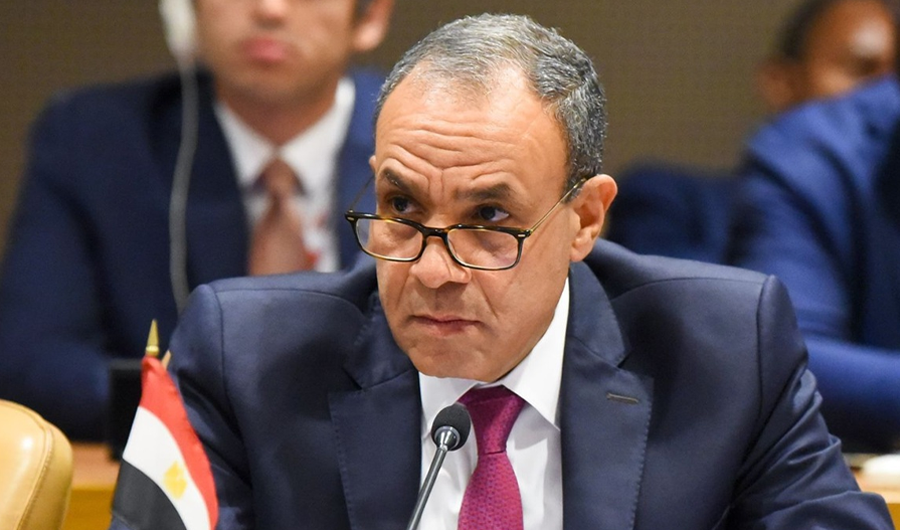
Egyptian Foreign Minister Badr Abdelatty affirmed that developments in the region since October 7, 2023, have proven that any attempts to impose hegemony or redraw the map of the Middle East unilaterally will not come to
Translated by Qiyas from سرمد — Original source
Egyptian Foreign Minister Badr Abdelatty affirmed that developments in the region since October 7, 2023, have proven that any attempts to impose hegemony or redraw the map of the Middle East unilaterally will not come to fruition.
The Egyptian minister stressed that any future regional arrangements must be based on consensus among the countries of the region, which include influential regional powers. No country, regardless of its status, can impose its will or hegemony over others through coercion or military force.
In response to a question regarding whether the idea of “Greater Israel” or the redrawing of the region has become unachievable, the Foreign Minister confirmed that any project based on unilateral imposition of will will fail, and that the collective will of the region’s countries is the foundation for any future arrangements.
Regarding what is known as the “Regional Quartet,” comprising Egypt, Saudi Arabia, Turkey, and Pakistan, Abdelatty clarified that a more accurate description is a “consultation and coordination platform” among four influential regional countries, rather than a military or political alliance.
He added that the platform aims to enhance cooperation among the four countries in various fields, alongside coordinating positions on regional issues, foremost among them the repercussions of the Iranian-Israeli war, the negotiation track, and post-conflict arrangements in the region.
He noted that Egypt is also conducting close coordination with Saudi Arabia, the United Arab Emirates, and the Gulf Cooperation Council (GCC) countries, with the goal of formulating a common Arab and regional vision regarding the future of the region. He emphasized that the door remains open for the participation of other regional parties, provided they adhere to the agreed-upon parameters.
The Foreign Minister revealed that the Regional Quartet has held four meetings so far, confirming the continuation of the consultation and coordination mechanism among the participating countries.
On the Palestinian issue, Abdelatty stressed that any arrangements concerning arms restriction must be conducted within a Palestinian framework, not through handing them over to Israel. He affirmed that Egypt is acting based on its national responsibility to preserve the Palestinian cause and prevent the continuation or expansion of the occupation.
The minister warned that the plan to displace Palestinians remains in place, noting that making life inside the Gaza Strip impossible could force residents to leave under the guise of “voluntary departure,” amid ongoing humanitarian, health, and environmental deterioration, and the lack of commencement of early recovery projects or rubble removal so far.
