UAE strengthens its global position in air transport with 6.1% growth in passenger numbers - Sarmad
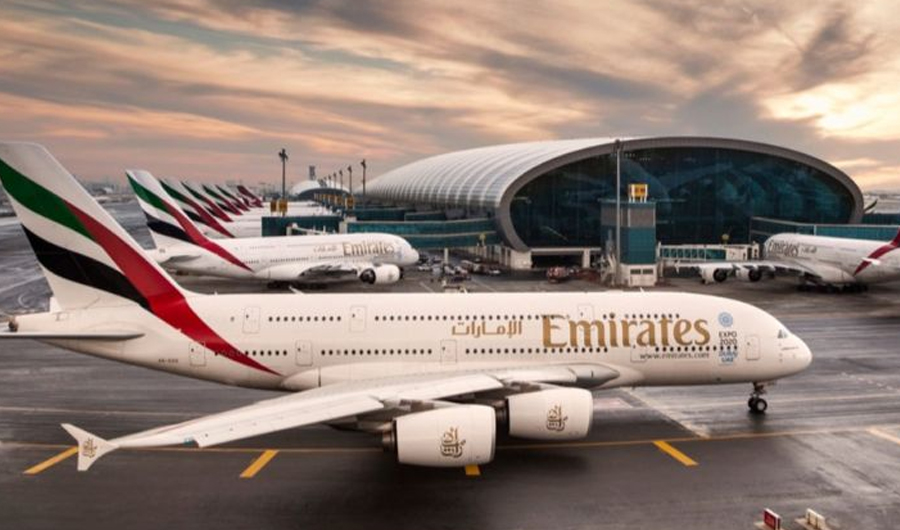
The United Arab Emirates has solidified its position among the world’s leading air transport hubs in 2025, as its airports recorded record-breaking performance that enhanced their capacity to accommodate the rapid growth in international travel and trade.
Data from the Federal Competitiveness and Statistics Centre showed that the total number of passengers passing through the country’s airports reached 156.8 million in 2025, up from 147.8 million in 2024, representing an increase of 9 million passengers and a growth rate of 6.1%. Total aircraft movements also rose to 855,300, compared to 801,000 in the previous year, achieving a growth rate of 6.8%.
These results reflect the success of continuous investments in airport development, infrastructure, and logistics, which have strengthened the UAE’s status as a global air transport hub and a strategic gateway linking global markets, alongside the sector’s role as a key driver of economic growth and sustainable development.
Abdullah bin Touq Al Marri, Minister of Economy and Tourism and Chairman of the Board of Directors of the General Civil Aviation Authority, emphasized that these results embody the success of the wise leadership’s forward-looking vision in building an advanced and sustainable national aviation system based on world-class airports and regulatory and operational frameworks that align with international best practices.
Regarding passenger movements, the number of arrivals increased to 44.2 million, up by 6.1%, while departures reached 43 million, a 3% increase. Transit passengers totaled 69.5 million, recording an 8% growth.
Dubai airports maintained their lead by welcoming 104.5 million passengers, followed by Abu Dhabi airports with 34.2 million, and Sharjah International Airport with 16.9 million. Ras Al Khaimah airport recorded a record growth of 56.8%, surpassing the one-million-passenger threshold for the first time, while Fujairah airport achieved the highest growth rate in the country at 170%.
Aircraft movements also showed continuous growth, with incoming flights rising to 414,300 and outgoing flights to 414,100, each representing a 7.3% increase, indicating the efficiency of infrastructure and the high operational capacity of the country’s airports.
The UAE strengthened its presence in global competitiveness indicators, topping the world in the “Air Transport Quality” index according to the Global Competitiveness Yearbook 2026. It ranked third globally in both the “Air Transport Services Efficiency” and “Seats Available per Kilometer per Week per Million Inhabitants” indices, eighth in the “Number of Operating Airlines” index, and tenth in the “Number of Air Services Agreements” index. Additionally, it secured sixth place globally in the “Air Connectivity” index.
