Technological and Developmental Integration in Kuwaiti Charitable Work: Between Digitizing Decision-Making and Funding Reconstruction
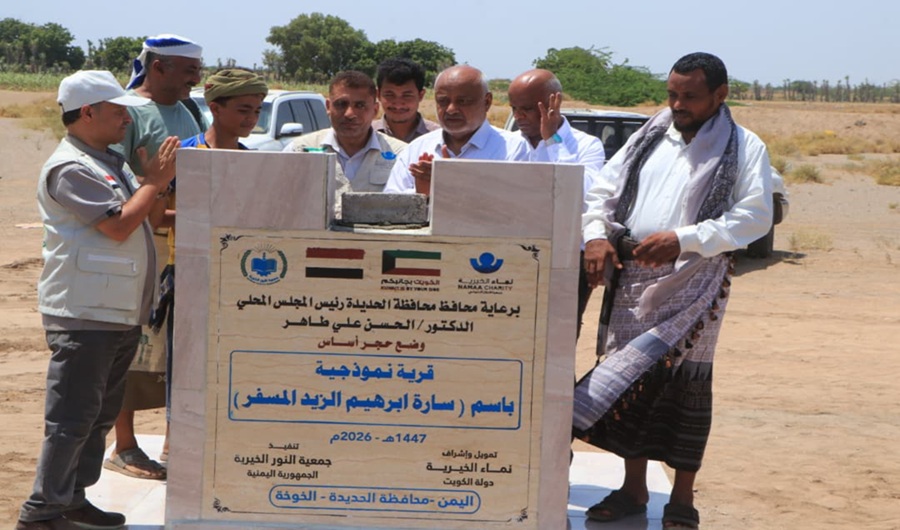
Integration of modern technologies with Kuwaiti humanitarian efforts to support decision-making and implement residential projects in Yemen.
Translated by Alqyas from Sarmad — Original source
(KUNA) – Through a unique synergy that integrates two complementary approaches, Kuwaiti charitable work continues to shape a new concept of giving that transcends temporary traditional aid, blending the use of modern technology with the construction of stable communities in a world where humanitarian crises are accelerating and development needs are increasingly intertwined.
This unique synergy between smart digital management and effective developmental reconstruction solidifies Kuwait’s position as a global hub for humanitarian action, one that does not merely provide relief to those in need but actively contributes to building a better future for them.
Kuwait’s pioneering spirit in the field of charity is evident in the integration of two complementary paths: the first is a forward-looking technical approach, manifested in the launch of a smart digital platform to support decision-making, aimed at governing data and directing financial and relief resources with the highest levels of precision and transparency. The second path is the developmental field sector, demonstrated by laying the cornerstone for a comprehensive residential village in western Yemen, lifting hundreds of displaced families from a harsh reality to stability in safe homes.
In this context, the Kuwait Institute for Scientific Research announced the completion of an advanced research and technical project to enhance humanitarian work, in collaboration with the Direct Aid Association, reflecting the State of Kuwait’s orientation toward leveraging technology and scientific research in the service of humanity.
The Institute stated that the project, supervised by the Science and Technology Sector under the title “Development of a Smart Web-Based Electronic System to Support Strategic Decision-Making in Charitable Institutions in the State of Kuwait – Phase One: Direct Aid Association,” aims to develop an integrated digital platform relying on geographic information systems, web applications, and artificial intelligence technologies.
It noted that this platform will effectively support decision-makers in charitable institutions, enhancing the efficiency of planning and managing humanitarian resources on a scientific basis and using accurate data.
The Institute explained that a spatial decision support system was developed to unify and manage data on the association’s projects and facilities within a coherent and documented geographic database. This database provides a comprehensive and up-to-date view of humanitarian operations, responding to the growing need for smart systems capable of managing and analyzing field data in real time.
It highlighted that the project included the development of smart field tools for data collection via mobile devices, enabling field teams to document sites and projects and attach data directly from work locations.
This contributed to creating an integrated information system that links the field with decision-making centers more quickly, accurately, and efficiently.
The Institute added that the project also involved creating an advanced electronic dashboard for managing and monitoring projects spatially and temporally, allowing for the display and visual analysis of data.
Regarding technical innovation, it clarified that advanced models of machine learning and artificial intelligence were integrated to analyze historical and demographic indicators and predict projects with the highest social impact.
On their part, those in charge of the project emphasized that this achievement marks an important milestone in the digital transformation of Kuwaiti charity, laying the foundation for a more transparent and efficient operational environment.
They noted that this collaboration embodies a successful model of partnership between scientific research and humanitarian action, establishing a scalable digital foundation to maximize the humanitarian impact of Kuwaiti initiatives worldwide.
In Yemen, the Governor of Al-Hudaydah, Hassan Taher, laid the cornerstone for a model residential village project in the coastal directorate of Al-Khoukha on the Red Sea coast in western Yemen. The project is funded and supervised by Namaa Charity under the Al-Isalah Social Association in the State of Kuwait, as part of the “Kuwait is by Your Side” campaign for its 11th consecutive year.
In a statement, Namaa Charitable Organization said that the Sara Al-Masfari Village project aims to provide a safe and stable living environment for displaced and most vulnerable families by constructing 30 integrated residential units and a mosque, thereby contributing to rebuilding the lives of affected families and providing them with the essentials for a dignified life and social stability.
Abdulaziz Al-Kandari, Deputy Chief Executive Officer of Namaa Charitable Organization, stated that the village project represents a model of sustainable humanitarian work that goes beyond providing immediate aid to building developmental solutions that restore people’s security and stability and preserve their dignity.
He added that providing suitable housing for displaced families is among the most critical basic needs that pave the way for their psychological and social stability, noting that Namaa Charitable Organization believes that building a safe home is the true beginning of rebuilding a family’s life and enabling it to resume its journey toward a more stable future.
He further emphasized that “the village is not merely a housing project, but a comprehensive humanitarian initiative aimed at creating a cohesive community that offers displaced families a suitable living environment and gives children, women, and the elderly a sense of security after years of suffering and displacement, leaving positive impacts that will extend to future generations.”
He pointed out that the project is part of a series of humanitarian and developmental initiatives implemented by Namaa Charitable Organization in Yemen, covering sectors such as housing, relief, health, education, and water, with the goal of improving living conditions and enhancing the capacity of local communities to face challenges.
On their part, Yemeni officials who attended the inauguration praised the project’s importance in alleviating the suffering of displaced families and providing housing that preserves their dignity and helps them start a more stable life. They also commended the humanitarian support provided by the State of Kuwait through Namaa Charitable Organization across various developmental and relief fields, highlighting that these efforts represent a pioneering model of solidarity and humanitarian giving.
