'Pizza Index' Near the Pentagon Rises After Trump Cancels Talks with Iran
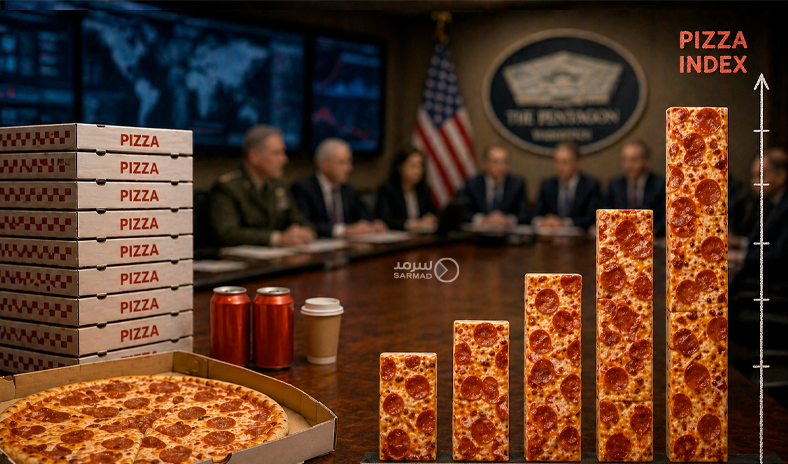
The Pizza Index rose after Trump canceled talks with Iran.
Translated by Alqyas from Sarmad — Original source
Tehran: We will not accept hardline demands from Washington
The “Pizza Index” near the Pentagon building hit a record high after US President Donald Trump canceled talks with Iran and refused to allow envoys Jared Kushner and Steve Witkoff to hold peace negotiations with Tehran.
The index, which is based on the number of pizza orders in the vicinity of the US Department of Defense building, recorded an 185% increase.
For years, the “Pizza Index” has been linked to increased military activity or emergency security meetings in Washington, where large spikes in orders indicate the US administration’s readiness to launch military operations or make urgent decisions.
US President Donald Trump on Saturday canceled a visit to Islamabad that was scheduled for two American envoys to hold meetings in Pakistan, which is mediating the war with Iran. This came after Iranian Foreign Minister Abbas Araghchi left the Pakistani capital following talks, marking a new setback for peace prospects.
Trump stated in a social media post that he canceled the planned visit for both Steve Witkoff and Jared Kushner, attributing the decision to what he described as severe confusion within the Iranian leadership.
Trump added, “A lot of time has been wasted traveling, and there is a lot of work to do! Furthermore, there is internal fighting and immense confusion within their ‘leadership.’ No one knows who is in charge, including themselves. We have all the cards, while they have none! If they want to talk, all they have to do is call!!!”
Iranian Foreign Minister Abbas Araghchi had previously left Islamabad without any signs of a breakthrough in talks with Prime Minister Shehbaz Sharif and other senior officials.
Araghchi later described his visit to Pakistan as “highly productive,” adding in a social media post that he “presented Iran’s position on an actionable framework to permanently end the war against Iran. We still need to know whether the United States is truly serious about diplomatic efforts.”
Iranian media reported that Araghchi traveled to the Omani capital Muscat, quoting him as saying he would meet with high-ranking officials “to discuss and exchange views on bilateral relations and regional developments.”
Tehran rules out holding a new round of direct talks with the United States, while an Iranian diplomatic source stated that Tehran will not accept “hardline demands” from Washington.
Deadlock
Relations between Washington and Tehran have reached a deadlock at a time when Iran is largely closing the Strait of Hormuz, through which five shipments of global oil and liquefied natural gas typically pass, while the United States continues to curb Iran’s oil exports.
The conflict, which is currently subject to a ceasefire, began with US-Israeli air strikes on Iran on February 28. Since then, Tehran has launched attacks on Israel and US and Gulf bases. The war has pushed energy prices to their highest levels in several years, fueling inflation and casting a shadow over global growth prospects.
A statement published on Araghchi’s official Telegram account stated that he “explained Iran’s initial positions regarding the latest developments related to the ceasefire and the complete end of the war imposed on Iran.”
When asked about Tehran’s reservations regarding US positions during the talks, an Iranian diplomatic source in Islamabad told Reuters, “In principle, the Iranian side will not accept hardline demands.”
White House spokesperson Karoline Leavitt said that the United States has observed some progress from the Iranian side in recent days and hopes for further advances during talks at the beginning of the week. She noted that U.S. Vice President JD Vance is also prepared to travel to Pakistan. Vance led an initial round of unsuccessful talks with Iran in Islamabad earlier this month.
