Reuters: Tehran Considers Attending Peace Talks with US in Pakistan
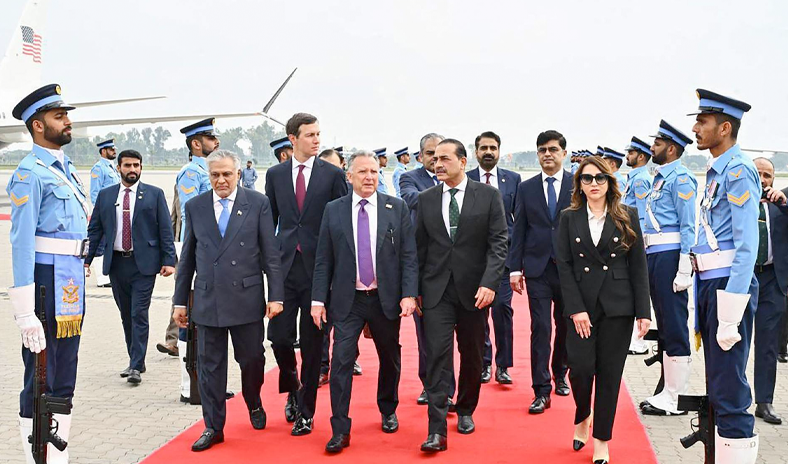
Iran is considering participating in peace talks with the US in Pakistan amid tensions in the blockade.
Translated by Alqyas from Sarmad — Original source
• Trump: Vance and the U.S. delegation will arrive in Pakistan within hours
A senior Iranian source told Reuters on Monday that Tehran is considering attending peace talks with the United States in Pakistan, following Islamabad’s efforts to end a U.S. blockade on Iranian ports—a major obstacle to Iran’s return to peace efforts.
However, the official stressed that Iran has not yet made a decision.
As the two-week ceasefire nears its end, a senior Iranian official said Tehran is “positively considering” its participation, but no final decision has been made. These remarks signal a clear shift in tone compared to previous statements that ruled out participation and vowed retaliation against U.S. aggression.
The Iranian official noted that Pakistan, acting as a mediator, is making positive efforts to end the U.S. blockade and ensure Iran’s participation.
The ceasefire between the United States and Iran appeared to be in jeopardy on Monday after Washington said it had detained an Iranian cargo ship that attempted to breach the blockade on the ports of the Islamic Republic, which had threatened retaliation.
Ismail Baghai, spokesperson for Iran’s Ministry of Foreign Affairs, said Washington had shown it was “not serious” about pursuing a diplomatic process, and that Tehran would not change its demands.
The United States had hoped to restart negotiations in Pakistan before the imminent end of the two-week ceasefire. The Pakistani capital, Islamabad, had seen massive security preparations, but Baghai said the U.S. was “insisting on some illogical and unrealistic positions.”
A senior Iranian source told Reuters that Iran’s “defensive capabilities,” including its missile program, were not up for negotiation.
Ceasefire
A Pakistani security source said Army Chief Asim Munir told U.S. President Donald Trump that the blockade was an obstacle to talks, and that Trump replied he would take that advice into consideration.
Trump announced a two-week ceasefire with Iran on April 7, without specifying an exact end date.
A Pakistani source involved in the talks said the truce would end at 8 p.m. U.S. Eastern Time tomorrow Tuesday, which is midnight GMT or 3:30 a.m. Wednesday in Iran.
Trump responded to a question earlier in the week about the possibility of extending the ceasefire by saying, “I don’t know. Maybe not. Maybe I won’t extend it. But the blockade will remain.”
The United States continued its blockade of Iranian ports, while Iran lifted its blockade on maritime navigation through the Strait of Hormuz before reimposing it. Typically, about one-fifth of global oil and liquefied natural gas supplies pass through the strait.
Oil prices retreated from record highs recorded earlier, standing at an increase of roughly three to four percent during the session, as traders remained cautious about the collapse of the truce. Shipping data indicated that traffic through the Strait of Hormuz remained almost completely halted, with only three ships passing in 12 hours.
Marines board Iranian vessel
The U.S. military said it fired on a cargo ship flying the Iranian flag as it sailed toward the Iranian port of Bandar Abbas on Sunday, following a six-hour standoff that saw the ship’s engines disabled.
U.S. Central Command released a video showing Marines boarding the vessel from helicopters.
State media reported that the Iranian military stated the vessel was coming from China and accused the United States of “armed piracy.” The military added that it was prepared to confront U.S. forces in response to this “blatant aggression,” but was deterred by the presence of crew members’ family members aboard the ship.
China, the main buyer of Iranian crude oil, expressed concern over the “forced interception” of the vessel. Xinhua News Agency reported that Chinese President Xi Jinping called for the resumption of normal ship passage through the strait and for finding a solution to the war through political and diplomatic channels.
Earlier, Trump warned Iran that the United States would destroy all of Iran’s bridges and power plants if Tehran rejected his terms, continuing a pattern of threats he has employed recently. Iran stated it would strike power plants and desalination facilities in Gulf states if the United States attacked its civilian infrastructure.
Preparations for Talks That May Not Take Place
Trump told the New York Post that his vice president, J.D. Vance, would arrive in Islamabad within hours leading a U.S. delegation. Vance led the American delegation in the first round of talks two weeks ago, which also included Trump’s envoy Steve Witkoff and Trump’s son-in-law Jared Kushner.
Pakistan, acting as the main mediator, appeared to be preparing for the talks despite Iran’s previous statements that it would not attend.
A government and security source said that approximately 20,000 police, paramilitary, and army personnel had been deployed across the capital.
Mohammad Bagher Qalibaf, head of the Islamic Consultative Assembly and leader of the Iranian negotiating team, stated earlier that both sides had made progress but remained far from reaching an agreement on nuclear and strait-related issues.
European allies, who have been repeatedly criticized by Trump for not providing support for his military efforts, fear pressure from the American negotiating team to reach a quick and superficial deal, which would require months or even years of subsequent technically complex negotiations.
Thousands have been killed in U.S.-Israeli airstrikes on Iran and in the Israeli incursion into Lebanon, which occurred alongside the war that erupted in Iran on February 28. A ceasefire is also currently in effect in Lebanon.
Iran has responded to the attacks by launching missiles and drones against Israel and neighboring Arab countries hosting U.S. bases.
