IMF warns: Middle East conflict could ignite global inflation
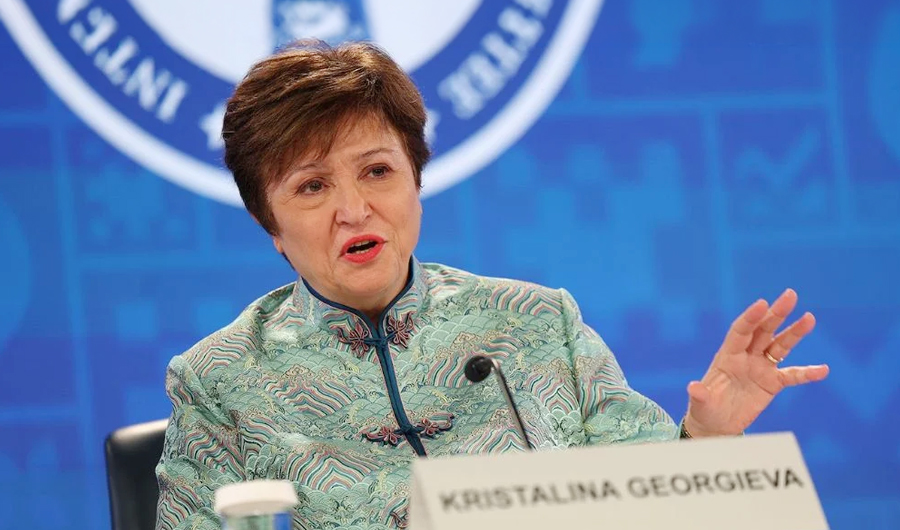
The IMF Managing Director warned of the conflict's repercussions on inflation and growth.
Translated by Alqyas from Sarmad — Original source
International Monetary Fund Managing Director Kristalina Georgieva warned that the global economy is facing a new and severe test of its resilience amid escalating conflict in the Middle East, describing the current economic landscape as “fluid” and calling for unconventional policy strategies.
Speaking at the “Future of the Global Economy” seminar in Tokyo, Georgieva provided a rule of thumb for estimating the impact of energy market disruptions, explaining that every 10 percent increase in oil prices—if sustained for most of the year—would have direct and tangible consequences:
• On inflation: A 40 basis point (0.4 percent) increase in the global annual inflation rate.
• On growth: A decline in global GDP ranging between 0.1 percent and 0.2 percent.
Georgieva highlighted the scale of the on-the-ground risk, noting that shipping traffic through the Strait of Hormuz—a vital artery carrying one-fifth of global oil and one-quarter of liquefied natural gas trade—has dropped by 90 percent. She stressed that this disruption is not merely a temporary blip but a threat to global energy security, as Asia relies on this corridor for approximately 60 percent of its oil imports, presenting policymakers with a dual challenge: protecting economic growth and curbing rising inflation driven by higher energy costs.
Amid a world experiencing successive shocks, Georgieva issued a decisive message to policymakers worldwide: “Think about what cannot be thought of, and prepare for it.”
To achieve such preparedness, she called for focusing on three key pillars to regain control:
• Investing in institutions: Building robust policy frameworks, such as central bank independence and fiscal rules, to ensure a solid foundation for a private-sector-led economy.
• Building financial buffers: Leveraging good times to accumulate sufficient financial reserves, enabling governments to maneuver during crises and support stimulus policies when needed.
• Resilience: Demonstrating agility in responding to changing economic data and available opportunities, such as enhancing regional trade integration, particularly in Asia, to offset disruptions in global supply chains.
Georgieva concluded her remarks by emphasizing that the IMF is currently collecting and analyzing data to provide an accurate risk assessment in its upcoming World Economic Outlook report. She underscored that while the global economy has shown notable resilience in the face of past crises, it now faces challenges that require international cooperation and prudent leadership to navigate this period marked by turbulence and continuous volatility.
