Health Minister: Robotic Surgery a Key Pillar for Developing Kuwait's Surgical System
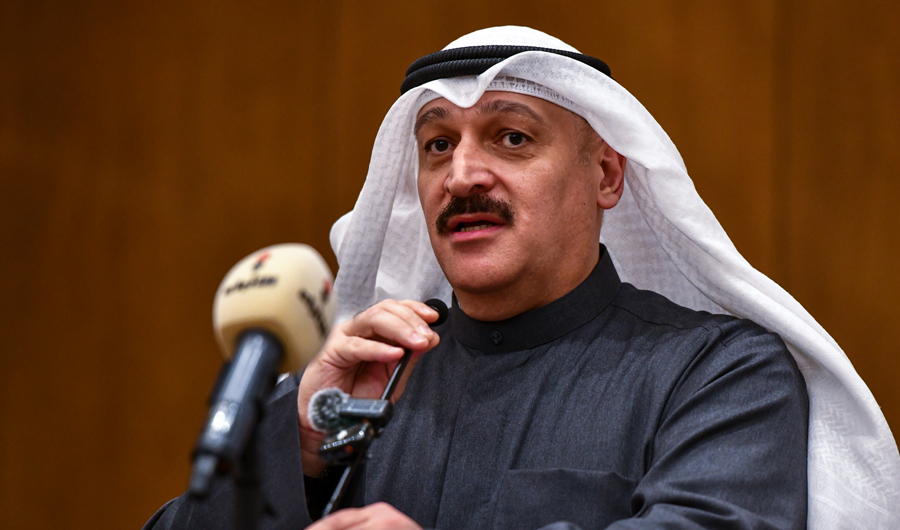
The Health Minister affirmed that robotic surgery enhances precision and safety in complex surgeries in Kuwait
Translated by Alqyas from Sarmad — Original source
(KUNA) — Kuwait’s Minister of Health, Dr. Ahmed Al-Awadi, affirmed on Saturday that robotic surgery has become a cornerstone of the country’s surgical development system, owing to its high precision, improved control, reduced complications, faster patient recovery, and enhanced surgical safety, particularly in complex procedures and oncological surgeries.
This statement was made during his opening address at the 21st Congress of Surgeons, held concurrently with the 10th Congress of the Kuwaiti Society of Surgeons under the theme “Innovation, Precision, and Multidisciplinary Care in Upper Gastrointestinal Surgery.” The three-day event brings together a distinguished group of experts from Kuwait and abroad, along with healthcare professionals, surgeons, and resident physicians.
Dr. Al-Awadi noted that the congress ranks among the most prominent scientific conferences in the field of surgery and is one of the country’s most prestigious medical events across all specialties. He emphasized that the Ministry of Health continues its efforts to support and advance surgical services by training national healthcare personnel, fostering multidisciplinary collaboration among surgery, endoscopy, oncology, internal medicine, and radiology, adopting the latest medical technologies, and expanding early detection programs for cancers and upper gastrointestinal disorders.
He clarified that the goal of this scientific and technological advancement is to improve patients’ quality of life, as the ministry strives to deliver precise, safe, and rapid-recovery healthcare grounded in global best practices and the latest medical innovations.
For his part, Dr. Musa Khorshid, Chairman of the Organizing Committee, stated that the congress covers important topics, particularly upper gastrointestinal surgery, with participation from a group of specialists from various countries. It discusses the latest diagnostic methods for benign and malignant diseases and modern treatment approaches.
Khorshid added that the congress includes several workshops, such as robotic surgery demonstrations at Al-Farwaniya Hospital and two workshops at the Faculty of Medicine, aimed at training 35 resident physicians in diagnosing and managing benign and malignant conditions of the esophagus and stomach, as well as in diagnosing acid reflux, pressure or sphincter dysfunction, and removing superficial tumors via endoscopy.
He praised the Ministry of Health’s role in supporting such conferences over the past years, as well as its backing of doctors, scientists, and researchers in the healthcare field, noting that the congress continues its 21st consecutive year as part of an ongoing and distinguished academic journey.
