Egypt and Qatar Sign MoU for Long-Term LNG Supply
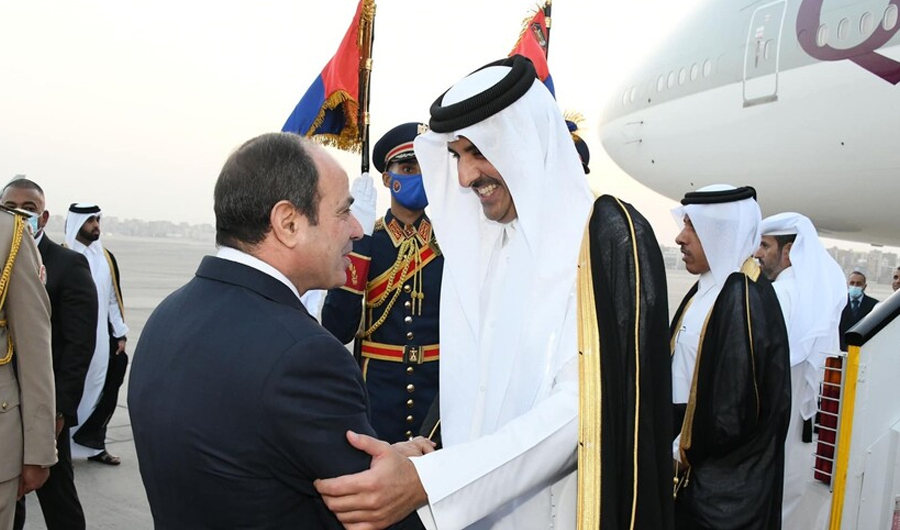
MoU between Egypt and Qatar to enhance long-term LNG supply
Translated by Alqyas from Sarmad — Original source
Egypt and Qatar have signed a memorandum of understanding to enhance bilateral cooperation in the energy sector, with a primary focus on the long-term supply of liquefied natural gas (LNG) from Qatar to Egypt.
The memorandum was signed on the Egyptian side by Minister of Petroleum and Mineral Resources Karim Badawi, and on the Qatari side by Minister of State for Energy Affairs and Chairman and Managing Director of QatarEnergy, Engineer Saad bin Sherida Al Kaabi.
The memorandum serves as a strategic framework paving the way for deepening the partnership. It already includes an executive agreement with the Egyptian Natural Gas Holding Company (EGAS) for the supply of up to 24 cargoes of LNG during the summer of 2026, to meet the high seasonal demand for electricity and industry in Egypt.
Minister Al Kaabi emphasized that the memorandum “strengthens bilateral relations and supports Egypt’s economic and industrial growth by providing additional reliable supplies of LNG,” noting that the agreement builds on previous successful cooperation between the two sides.
He clarified that the memorandum enhances bilateral ties and aims to provide additional LNG supplies from QatarEnergy to Egypt to meet the country’s growing long-term energy demand and support its active economic and industrial growth.
The Qatari official expressed his anticipation for further cooperation with the Egyptian Ministry of Petroleum and Mineral Resources and with all partners in Egypt to deepen collaboration and meet Egypt’s future LNG needs.
The memorandum paves the way for continued cooperation in the energy sector, including the long-term supply of LNG from QatarEnergy to Egypt, following an agreement reached between QatarEnergy and EGAS for the supply of up to 24 LNG cargoes during the summer of 2026.
Egypt faces fluctuations in energy demand, particularly during the summer months when electricity consumption peaks due to high temperatures and industrial usage.
Despite major gas discoveries in the Mediterranean, such as the Zohr field, which temporarily made Egypt a gas exporter during certain periods, recent declines in domestic production and rising internal demand have driven the country to resume importing LNG cargoes.
For its part, Qatar is the world’s largest exporter of LNG and is seeking to increase its production capacity to 126 million tons annually by 2027, and to 142 million tons by 2030, through the expansion of the North Field.
