“Galaxy Ring”: First Smart Ring to Detect Sleep Apnea
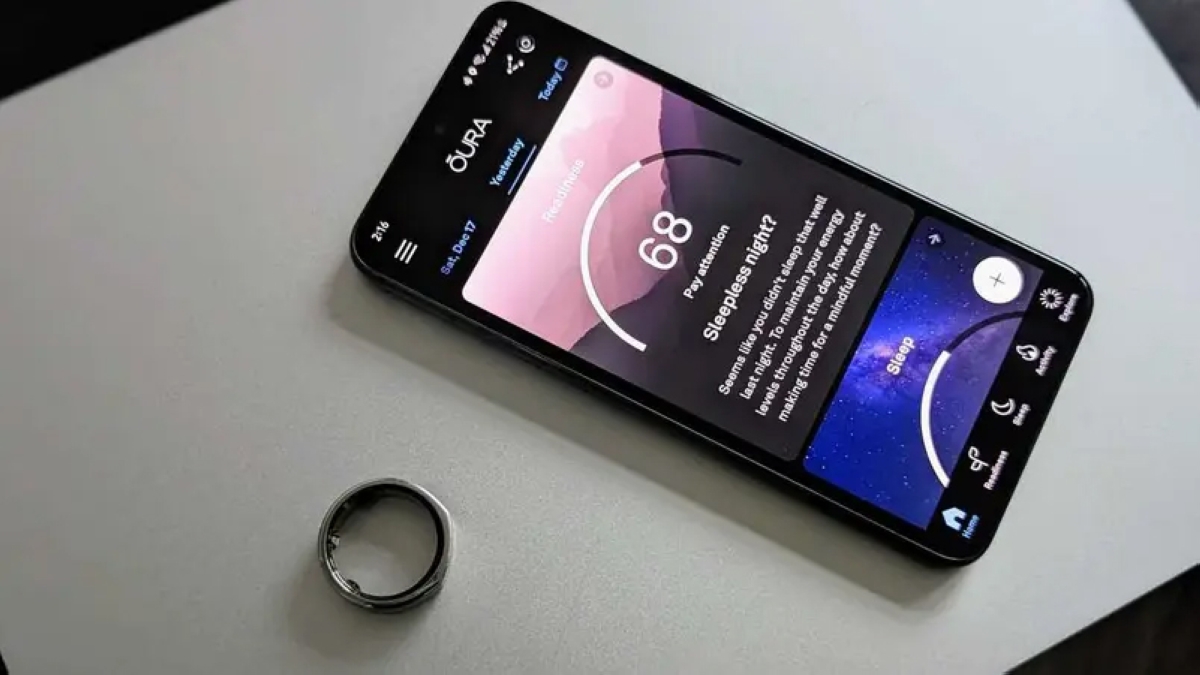
Smart rings are no longer just tools for counting steps or measuring heart rate, as Samsung prepares to launch one of the most significant health upgrades in this sector. The company has announced that the Galaxy Ring will become the first smart ring in the world to receive approval from the U.S. Food and Drug Administration (FDA) to monitor indicators of sleep apnea, a disorder affecting millions of people, many of whom are unaware they have it, according to Android Central.
Sleep apnea, medically known as Obstructive Sleep Apnea, is one of the most common sleep disorders. It causes repeated stops or reductions in airflow during sleep, leading to decreased oxygen levels and forcing the body to wake up briefly to restore breathing.
Estimates from the American Academy of Sleep Medicine indicate that approximately 30 million people in the United States suffer from sleep apnea, yet only a limited portion are diagnosed, making early detection one of the biggest medical challenges. The condition is also associated with an increased risk of high blood pressure, heart disease, arrhythmias, and stroke, according to the American Academy of Sleep Medicine (AASM).
The Galaxy Ring relies on a suite of microscopic sensors that operate throughout the night without user intervention. It monitors heart rate, blood oxygen saturation (SpO2), skin temperature, body movement during sleep, as well as sleep duration and its various stages.
Rather than relying on a single reading, the ring collects data over several nights, which are then analyzed by artificial intelligence algorithms to detect patterns that may indicate sleep breathing disorders.
The key difference between the Galaxy Ring and many competing smart rings, such as Oura and RingConn, is that Samsung has obtained FDA approval for this feature. This means the algorithm has undergone regulatory evaluation as a tool to help monitor suspected cases, rather than serving merely as a general indicator of sleep health.
Although some competitors provide data on sleep breathing, they do not yet hold similar approval for this function.
In the event of an alert, the final diagnosis still relies on clinical sleep studies (polysomnography) or home tests prescribed by a physician.
Wearable technology experts believe the ring may be more suitable for sleep tracking than smartwatches, as many users remove their watches at night due to size or the need for charging. The ring, by contrast, is lightweight and can be worn throughout the night without discomfort, allowing for more continuous and accurate data collection.
It also consumes less power, helping to extend battery life compared to smartwatches.
This move reflects Samsung’s accelerating trend of transforming wearable devices from tools for monitoring physical activity into aids for the early detection of health issues.
After introducing the sleep apnea monitoring feature to Galaxy Watch devices, the company is now bringing it to the smart ring, a step that could intensify competition with companies like Oura, especially as consumer interest grows in regulatory-approved health devices.
