Strengthening the Labor Market... and Empowering National Talent
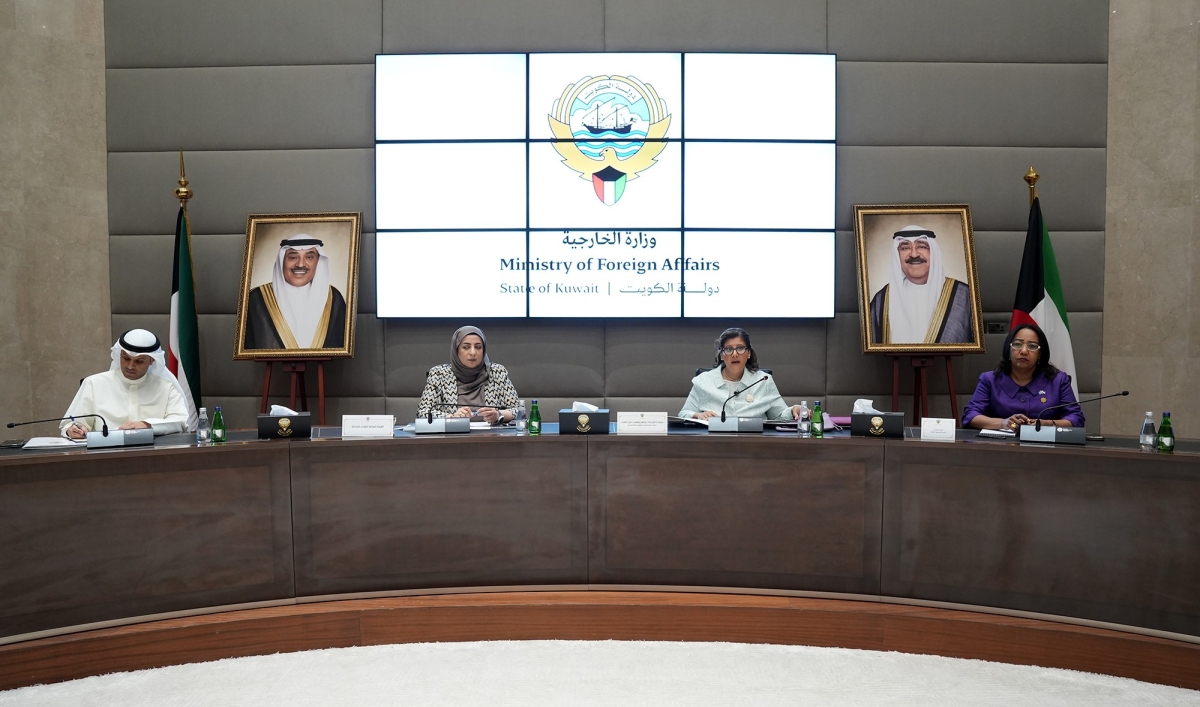
The file of labor in the country has witnessed integrated moves at both the local and international levels, focusing on enhancing the protection of workers’ rights, developing the work environment, and supporting the par
Translated by Qiyas from الراي — Original source
The file of labor in the country has witnessed integrated moves at both the local and international levels, focusing on enhancing the protection of workers’ rights, developing the work environment, and supporting the participation of national talents in the labor market, alongside expanding cooperation with labor-exporting countries.
In this context, the Ministry of Foreign Affairs, represented by the Human Rights Affairs Department, held a joint coordination meeting on Monday with the Public Authority for Manpower and the Public Prosecution, with the participation of relevant United Nations agencies, to discuss mechanisms for enhancing cooperation in the fields of protecting workers’ rights and decent work.
This meeting is the first of its kind to bring together relevant national authorities with the UN system operating in Kuwait and concerned with labor and human trafficking issues, thereby laying the foundation for a new phase of institutional coordination and strategic partnership.
Assistant Minister of Foreign Affairs for Human Rights Affairs, Ambassador Sheikha Jawaher Ibrahim Al-Duwaikh Al-Sabah, emphasized that the meeting is part of Kuwait’s efforts to strengthen its partnership with the UN and develop joint work mechanisms. She highlighted the importance of supporting programs for worker protection, combating human trafficking, and building national capacities, in line with international commitments and the Sustainable Development Goals.
Regarding national labor, Abdullah Al-Muhaini, the Job Opportunities Monitor at the National Labor Development Department of the Public Authority for Manpower, stated that the regulation for Kuwaitizing government contracts has contributed to enhancing job stability for Kuwaitis by transferring workers on expired contracts to new contracts while maintaining or increasing their salaries.
Al-Muhaini explained in an interview on the “Street Pulse” program on Kuwait Television that the focus is on continuous contracts in the fields of operations, maintenance, and management to ensure that employees do not experience interruptions in their work.
He noted that the “Fakhrana” platform represents a supportive pathway for employing job seekers in the private sector, affirming that the sector now offers stable opportunities and advanced career paths, and calling for a change in the traditional perception that links job security solely to government employment.
