Aoun anticipates Trump-Netanyahu summit with an “indictment” against Israel’s violations of the “Framework Formula”
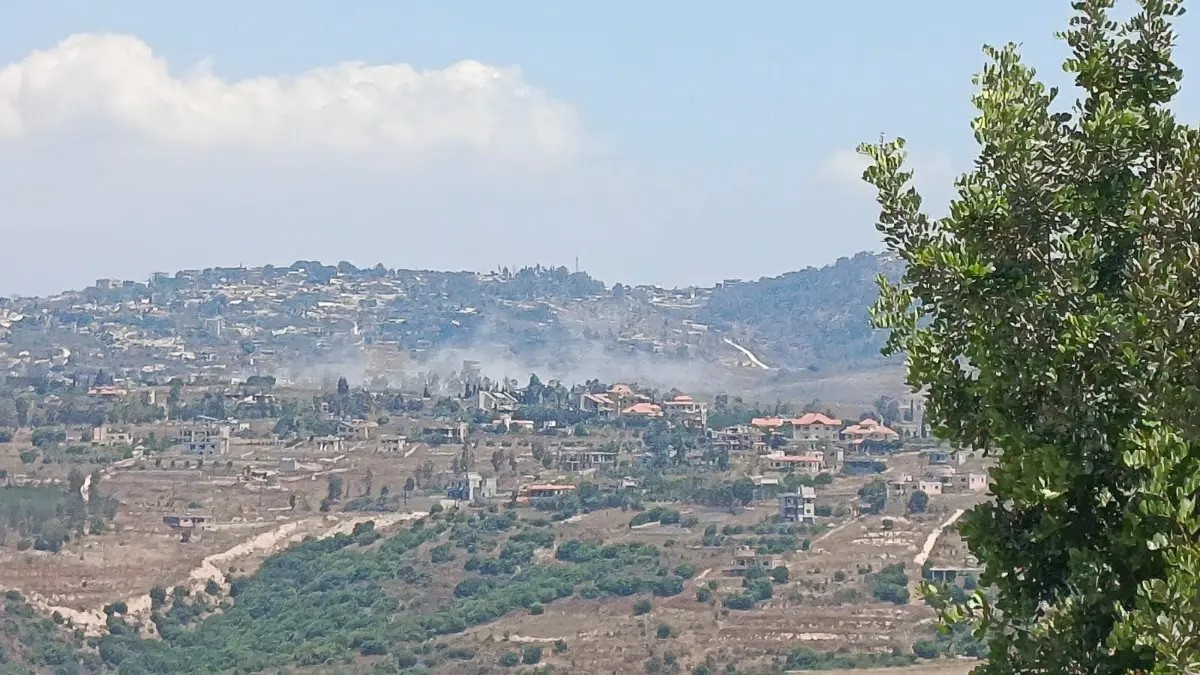
As the region faces the “window” left open by President Donald Trump to attempt reaching a “transitional” understanding with Tehran on managing the Strait of Hormuz—thereby enabling the resumption of negotiations—Beirut
Translated by Qiyas from الراي — Original source
As the region faces the “window” left open by President Donald Trump to attempt reaching a “transitional” understanding with Tehran on managing the Strait of Hormuz—thereby enabling the resumption of negotiations—Beirut finds itself drawn to this front, seeking to disentangle itself from the “rope tightening” around its neck through the diplomatic track it has pursued in the context of its direct negotiations with Tel Aviv, under US sponsorship. These talks have yielded a roadmap—outlined by the “Framework Formula”—based on “security for Israel and sovereignty for Lebanon,” involving withdrawal from the south and the disarmament of Hezbollah.
One week after Trump’s summit with Lebanese President General Joseph Aoun in Washington, Israeli Prime Minister Benjamin Netanyahu arrives at the White House on Tuesday as a guest. Lebanon will be one of the main agenda items, alongside the war with Iran, which the US President is currently managing by increasing military pressure on the “Islamic Republic” to bring it to the negotiating table on his terms, without provoking a full-scale explosion that might remain one of the “last resorts.”
Aoun emerged from the summit with Trump with US backing for the “Framework Formula,” reinforced by Washington’s pressure on Tel Aviv to launch the experimental phase in three areas: two of which are under Israeli fire, and the third (Western Zour) whose sides are occupied and located north of the Litani River (an event that occurred on the eve of the presidential meeting). Additionally, the US is paving a “promise-laden” path of investments that would further empower the state to face the “day after” in Lebanon, including orders to resume air flights to Beirut. Meanwhile, Netanyahu visits the White House amid a Lebanese “bill of indictment” that has expanded in recent hours regarding Israeli violations of the “Framework,” not to mention the incomplete links in the verification mechanism for clearing the withdrawal areas and dismantling Hezbollah’s military infrastructure within them, which must be built upon.
This mechanism, which is expected to be discussed in Beirut in the coming days, led by US Central Command (CENTCOM) commander Brad Cooper or General Joseph Kelclief, represents one of the problematic issues in the experimental phase. Israel prefers to have a role in verification, citing that the previous experience of implementing the November 27, 2024 agreement and the Lebanese Army’s declaration of control over the south of the Litani proved ineffective. Beirut rejects such involvement on sovereign grounds, while remaining open to a formula based on its army, under US supervision, and possibly involving UNIFIL and friendly countries to fill the gap after the expiration of the international force’s mandate (end of 2026).
At a time when the mechanism and subsequent phases of the “experimental areas” are expected to be the focus of the second round of Lebanese-Israeli negotiations under Washington’s sponsorship, hosted in Rome on August 4, and which has become an executive platform for the Framework Formula (signed on June 26 between the three parties in Washington)—whose essence is Israel’s gradual withdrawal from southern Lebanon in parallel with Hezbollah’s disarmament—Beirut is monitoring whether Trump will succeed in urging Netanyahu to proceed with sequential withdrawals, without downplaying the importance of what will follow the summit on the Iran front, where the President alone holds the “control buttons.” It is rumored that the Prime Minister is bringing to the White House a “box of secrets” named “sensitive information” regarding it.
On Monday, Aoun informed UN High Commissioner for Human Rights Volker Türk that Israel’s continued destruction of homes and bulldozing of villages in the areas it occupies in the south constitute a direct violation of human rights and a blatant breach of international laws and norms, necessitating international action to halt and prevent the continuation of the destructive plan previously implemented in Gaza.
He stressed that Lebanon, which signed the “Framework Agreement” as a result of negotiations in Washington, is committed to its implementation. However, he expressed concern that Israeli practices could undermine its effectiveness, particularly since Lebanon would not accept the continued violation of its provisions and the disregard for international support demanding its respect.
On the eve of the White House summit, the “thread of collusion” between Israel and Hezbollah once again became apparent, as both sides converge on their respective considerations to stall the initial “Framework Agreement.” Israel’s prime minister does not wish to enter elections with “broken wings,” which would be formed by withdrawal from Lebanon, while the party recognizes that this path ultimately leads to closing the chapter on its arsenal—a outcome Tehran cannot accept, especially as it wages a “war of survival” requiring the management of its arms according to its imperatives and the fortification of its front in the near and long term, in case the regime slips from its grasp.
Channel 12 reported that Netanyahu would express his opposition during his meeting with Trump to the US demand for withdrawal from southern Lebanon and Syria. In Beirut, the riddle of which comes first—complete withdrawal or complete disarmament—was revived, with opponents of Hezbollah pointing to the non-hidden intersection between the party and Tel Aviv.
Most indicative of this reality was Hezbollah’s focus, through the positions of its MPs, on the fact that the “malicious and ignorant authority” has not secured any guarantee of withdrawal. They added that complete withdrawal would be contingent solely on restricting weapons to the state south of the Litani River, with weapons north of the river remaining subject to internal dialogue on defensive strategy. This allows Tel Aviv to market the argument that there is no guarantee of the Lebanese state’s ability to dismantle Hezbollah’s arsenal nationwide, a condition it places on comprehensive withdrawal.
Hezbollah MP Ali Fayyad went further, accusing the “Lebanese authority” of treating the occupation as an opportunity to be seized and maximized to radically reshape the Lebanese reality through peace with the enemy, ending or weakening Hezbollah’s status, and containing it, while altering internal balances at the expense of the Shia component. He highlighted a major issue for the party: the “Framework Agreement” abolishes the distinction between the south and north of the river regarding its weapons.
Meanwhile, following his visit to Baghdad under the theme of “Strategic linkage and integration with regional countries across various sectors, particularly energy, telecommunications, and transport, to capitalize on opportunities presented by current transformations,” Prime Minister Najib Mikati contacted Syrian Foreign Minister Asaad al-Shibani, emphasizing the importance of enhancing regional connectivity for mutual benefit.
In response, Foreign Minister Youssef Raji asserted that Hezbollah is “Iranian in essence,” noting that it does not describe itself as “Lebanese resistance” but rather adheres to an ideology that transcends the national framework. He stressed that the military and political wings of the party cannot be separated prior to disarmament, affirming that the priority remains for the state to reclaim its monopoly on legitimate arms.
In parallel, and following his visit to Baghdad under the banner of “strategic linkage and integration with the countries of the region across various sectors, particularly energy, telecommunications, and transport, thereby enabling the exploitation of opportunities presented by current transformations,” Prime Minister Nawaf Salam contacted Syrian Foreign Minister Asaad al-Shaybani, emphasizing “the importance of strengthening regional connectivity for the mutual benefit of all.”
After the ministerial meeting chaired by Salam, Information Minister Paul Maroun announced: “The meeting featured discussions on linking Lebanon, as a result of this visit, to the Basra–Tripoli pipeline, given the shared benefits and Lebanon’s substantial storage capacity, alongside plans to establish a new refinery, all in light of Iraq’s determination to increase oil production. Additionally, the establishment of a Lebanese–Iraqi technical committee to examine these issues and advance them was discussed, particularly regarding cooperation in the special economic zone.”
