Al-Jalahma: Kuwaiti support for innovation and youth empowerment
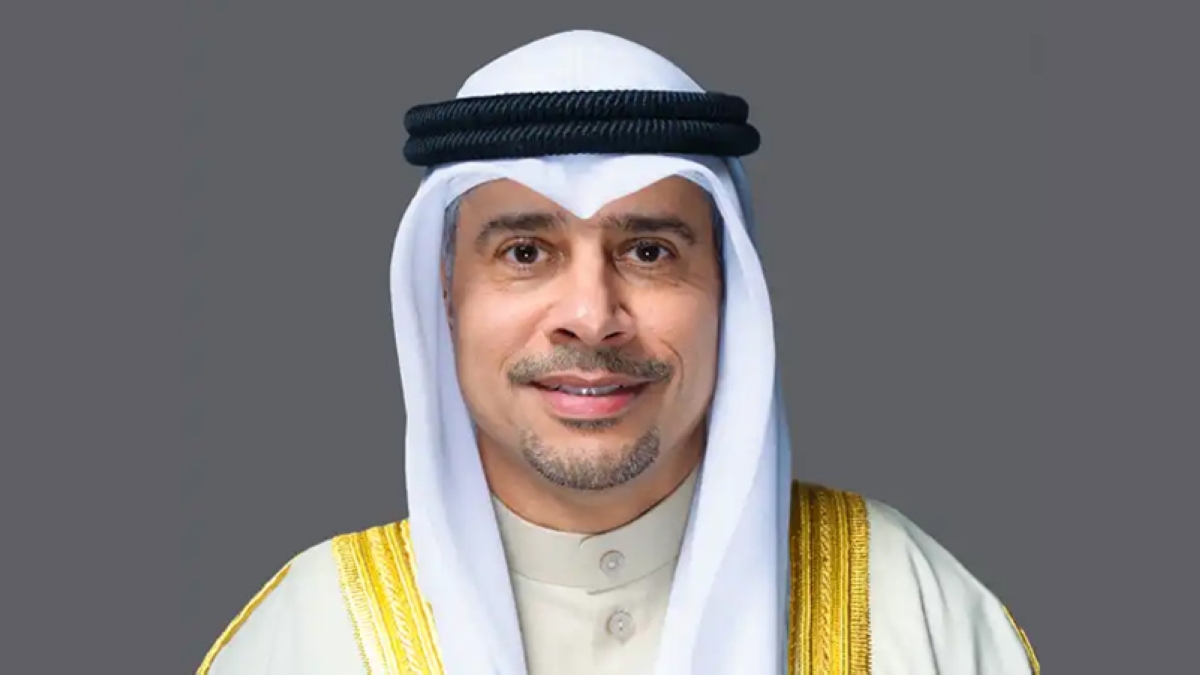
State Minister for Youth and Sports Affairs, Dr. Tariq Al-Jalahma, affirmed that Kuwait attaches great importance to supporting innovation, empowering youth, and fostering entrepreneurship, in line with the “Kuwait 2035”
Translated by Qiyas from الراي — Original source
State Minister for Youth and Sports Affairs, Dr. Tariq Al-Jalahma, affirmed that Kuwait attaches great importance to supporting innovation, empowering youth, and fostering entrepreneurship, in line with the “Kuwait 2035” vision and the conviction that investing in human capital is the fundamental pillar for achieving sustainable development and building a knowledge-based economy.
This statement was made by Minister Al-Jalahma during his opening address at the Seventh Gulf Virtual Conference on “Techno Innovation, Techno Entrepreneurship, and Techno Artificial Intelligence for Economic Diversification.” The event, held under his patronage and lasting two days via the Zoom platform, features more than 100 local, Gulf, and international experts, leading figures, inventors, and 10 startups, and includes 18 panel discussions.
Minister Al-Jalahma added that this aligns with the statements made by His Highness the Amir of Kuwait, Sheikh Meshal Al-Ahmad Al-Jaber Al-Sabah, in the final communique of the 45th Gulf Cooperation Council (GCC) Summit, which emphasized the necessity of focusing on economic diversification and innovation as two core pillars for achieving sustainable growth.
He clarified that these directions serve as a catalyst for continuing joint Gulf efforts, exchanging expertise, and adopting initiatives that enhance the innovation ecosystem, open new horizons for youth and entrepreneurs, and contribute to the development and prosperity of the GCC member states and their peoples.
For her part, Conference Chair Dr. Hanadi Al-Mubarak stated in her address that the conference is committed to unifying Gulf and Arab efforts, exchanging expertise, and building effective partnerships between the public and private sectors to create an environment that stimulates innovation and smart digital production, enabling GCC countries to rank among the world’s leading economies in this field.
She noted that the conference stems from the Arab-Gulf Initiative for Economic Diversification launched in 2020, which intersects with the country’s vision to strengthen the digital transformation infrastructure, particularly in the government sector, to facilitate operations and services, increase private sector participation, and develop non-oil sectors. She also highlighted the aspiration to launch joint initiatives in investing in smart infrastructure, supporting the innovation and entrepreneurship ecosystem, promoting fair free trade, and stimulating small and medium-sized enterprises.
Al-Mubarak stressed the need to create an integrated and resilient Gulf economy capable of meeting youth aspirations through diversifying income sources, as well as enabling Gulf and Arab visions that address the hopes and ambitions of our peoples. This underscores the importance of empowering joint Gulf and Arab efforts and advancing cooperation across all levels, including educational, health, technological, environmental, cultural, and commercial fields.
Community entrepreneur and CEO of Al-Mahira Education Company, and former Chair of the Arab Women Authority in Saudi Arabia, Princess Duaa bint Mohammed, emphasized in her speech at the conference that the synergistic relationship between educational technology, financial technology, and artificial intelligence constitutes the fundamental pillars of the future economy.
Princess Duaa added that investing in educational technology and smart training is a strategic investment in building human capital and preparing qualified cadres to lead the financial technology sector. She noted that the future economy will not be driven by material resources alone, but by minds capable of innovation and adapting to changes.
Mohamed Ben Omar, Secretary-General of the Arab Organization for Information and Communication Technology in the Republic of Tunisia, emphasized the importance of holding the conference at a time when the world is undergoing one of its greatest economic and technological transformations. He stressed that the rapid advancement of artificial intelligence is laying the foundation for a new global economy, where concepts of productivity and the rules of competition are changing.
During his speech, Engineer Ben Omar clarified that artificial intelligence has become a strategic benchmark for measuring countries’ readiness for the future and fostering innovation. He pointed out that economic diversification in the Arab region has become an urgent necessity, requiring investment in the knowledge economy and entrepreneurship, as well as the development of digital systems that transform data into added value.
His Highness Sheikh Salem Al Qasimi, Member of the Executive Council and Head of the General Civil Aviation Authority in Ras Al Khaimah, praised the significance of the conference in his opening address. He noted that the United Arab Emirates has chosen to make investment in human capital, knowledge, and innovation a steadfast approach, viewing technology as a partner in development, a means to enhance quality of life, and a driver for building a more diversified and sustainable economy. As a result, the UAE has, within a few years, solidified its position as a global hub for business, innovation, and investment. It has provided a flexible legislative and regulatory environment, advanced digital infrastructure, and an integrated system that supports the new economy, attracting global companies, entrepreneurs, talents, and skilled professionals from around the world.
He further explained that the UAE has paid great attention to developing artificial intelligence applications, accelerating digital transformation, supporting research and development systems, empowering startups, and preparing national cadres capable of leading the future economy. This is driven by a firm conviction that investing in minds is the most valuable and sustainable form of investment.
Sheikha Fajr bint Ali Al Khalifa, Founder and Chairperson of the Al Fajr Self-Development Foundation and Vice President of the Arab Advisory Council in the Kingdom of Bahrain, highlighted the necessity of making economic diversification and technological innovation two fundamental pillars for achieving sustainable development in the region.
Sheikha Fajr affirmed that rapid global transformations have made economic diversification an urgent necessity, no longer classifying it as a future option. She stressed that technology acts as a driving force for reshaping economies, strengthening productive sectors, and creating new growth opportunities.
In her speech, she pointed out that the true power of technological progress multiplies when coupled with awareness, regional cooperation, and innovation, thereby contributing to elevating individual well-being and societal prosperity. Building competitive economies requires direct investment in knowledge, human capacity development, and the creation of stimulating environments for creativity that can adapt to challenges. Moreover, looking toward the future requires treating technology and the economy as essential partners in building a balanced reality that benefits everyone.
