Do Not Disturb the Eurasian Eagle-Owl
While the Public Authority for Environment has successfully documented and monitored the Eurasian Scops Owl, a migratory bird visiting Kuwait, the Authority has urged the public not to disturb or capture it, as it stops
Translated by Qiyas from الراي — Original source
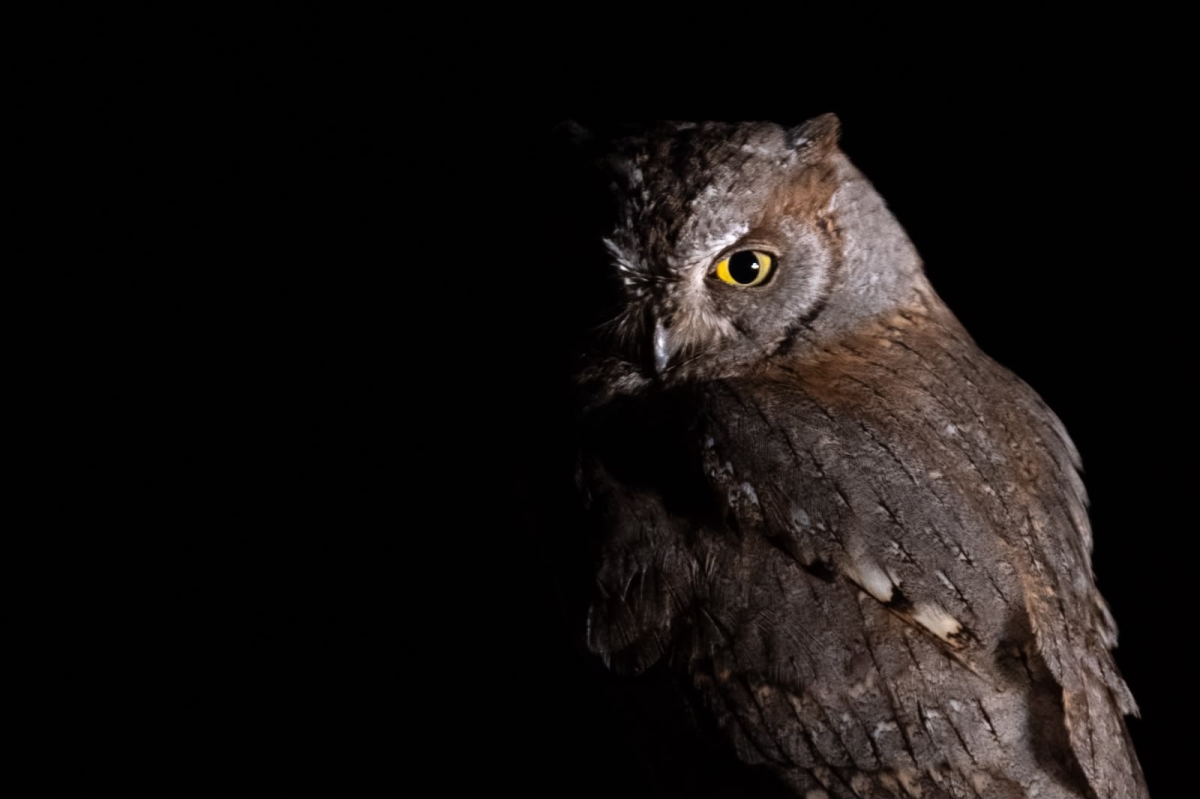
While the Public Authority for Environment has successfully documented and monitored the Eurasian Scops Owl, a migratory bird visiting Kuwait, the Authority has urged the public not to disturb or capture it, as it stops in Kuwait to rest before continuing its journey.
The Authority told Al-Rai that the owl visits Kuwait twice a year, first in September and October, and again in March and April. It noted that the bird flies short distances at low altitudes, making it visible in parks, residential areas, and near homes.
The Authority emphasized that environmental protection laws prohibit hunting or harming birds and wildlife. It added that if an injured bird is found, the public should report it by calling the hotline at 157 or through the social media accounts of the Public Authority for Environment.
This owl is distinguished by its exceptional camouflage and self-defense capabilities. It has brownish-gray feathers with intricate patterns that closely resemble tree bark. It employs a behavior known as the “twig mimicry,” where, upon sensing danger or a predator, it stretches its entire body and sways slowly to appear like a dry, broken tree branch, thereby avoiding detection.
The Eurasian Scops Owl is a nocturnal bird. It remains completely motionless during the day in farms or gardens and becomes active after sunset.
Unlike larger owls that hunt mice, this small owl feeds primarily on large insects, such as grasshoppers, crickets, and beetles, and occasionally on small lizards.
This species is nicknamed “nest robbers” because it does not build its own nest. Instead, it lays its eggs in natural tree cavities or uses abandoned nests of other birds, such as crows.
The Eurasian Scops Owl breeds in summer in southern Europe and parts of Asia, then undertakes long-distance migrations in winter to spend the warmer season in sub-Saharan Africa. Kuwait serves as a vital resting stop for the bird during this arduous journey.
