China: We reject targeting the sovereignty of states and civilian facilities
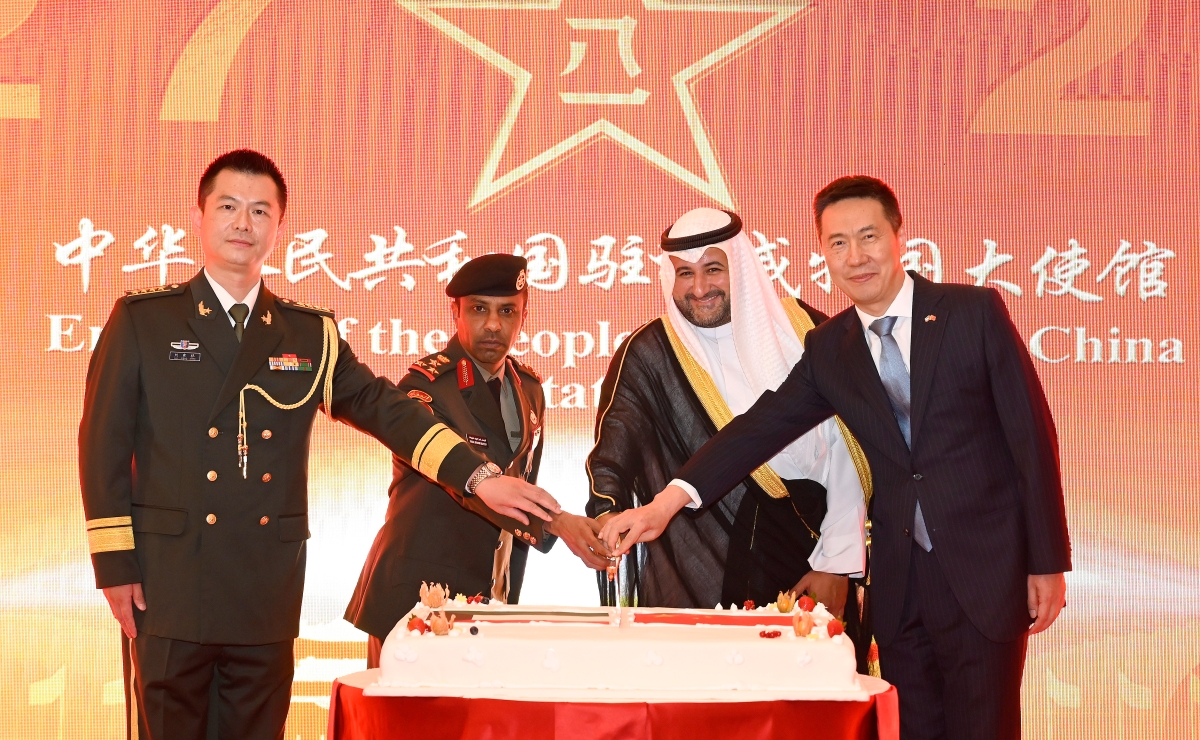
The Chinese Ambassador to Kuwait, Yang Xin, affirmed that his country is closely monitoring the rapid security developments in the Gulf region, expressing concern over the resumption of escalation and emphasizing the nec
Translated by Qiyas from الراي — Original source
The Chinese Ambassador to Kuwait, Yang Xin, affirmed that his country is closely monitoring the rapid security developments in the Gulf region, expressing concern over the resumption of escalation and emphasizing the necessity of respecting the sovereignty of all states and protecting civilians and civilian infrastructure.
Speaking on the sidelines of celebrations marking the 99th anniversary of the founding of the Chinese People’s Liberation Army on Tuesday, Ambassador Yang Xin, who was attended by Undersecretary of the Ministry of Defense Sheikh Dr. Abdullah Mishaal Al-Sabah, Representative of the Chief of the General Staff of the Army and Commander of the Artillery Corps Brigadier General Faiq Al-Ajil, and a number of heads of diplomatic missions and international organizations in the country, stated that China is deeply concerned about what he described as violations of the memorandum of understanding between the United States and Iran.
He reaffirmed Beijing’s firm stance calling for respect for the sovereignty and security of all countries, including Kuwait, and for not targeting civilians or non-military facilities.
He clarified that China is doing “its utmost” to end hostilities as soon as possible, noting that diplomatic efforts are not always public, as some take place away from the spotlight, and expressing hope that these initiatives would soon bear fruit and that the region would regain security and stability.
Regarding military cooperation between Kuwait and China, Ambassador Yang Xin affirmed that the two countries are linked by a strategic partnership encompassing various fields, including security and military cooperation, pointing out that this cooperation has been in place for years and is not a product of recent developments in the region.
He added that there are tangible results of this cooperation that will be showcased during ongoing events, and that the Chinese military attaché can provide further details on the aspects of military cooperation between the two countries.
In response to a question about whether Kuwait had requested China to supply it with weapons or military equipment, the Ambassador clarified that cooperation and consultations between the two sides in this field have been ongoing for a long time, prior to the outbreak of the current escalation, without going into further details.
He stressed his country’s firm rejection of targeting infrastructure and civilian facilities, including water and electricity utilities, affirming that such attacks constitute a violation of the UN Charter, international law, and the fundamental rules of international relations.
He also considered the targeting of oil tankers and civilian facilities unacceptable, affirming that they fall under civilian objects that must be protected under international law.
In response to a question about the impact of continued attacks on peace prospects, the Ambassador stated that China continues to work to bring all concerned parties back to the negotiating table, without commenting on potential scenarios.
For his part, the Chinese Military Attaché at the Chinese Embassy, Liu Zongchen, affirmed his country’s commitment to enhancing military cooperation with Kuwait and joint efforts between the two armies to contribute to protecting the common interests of both countries and maintaining security and stability in the region.
Liu stated that Chinese-Kuwaiti relations are witnessing continuous development, particularly in the military field, thanks to the care and attention given by Chinese President Xi Jinping and His Highness the Amir of Kuwait, Sheikh Meshal Al-Ahmad Al-Jaber Al-Sabah, to the strategic partnership between the two countries.
He affirmed that the Gulf region stands at an important crossroads between war and peace, which opens new opportunities to enhance military and security cooperation between China and Kuwait, expressing his aspiration to work hand in hand with the Kuwaiti Army to implement the agreements reached by the leaders of the two countries and to enhance cooperation in various fields, thereby contributing to consolidating regional security and stability.
