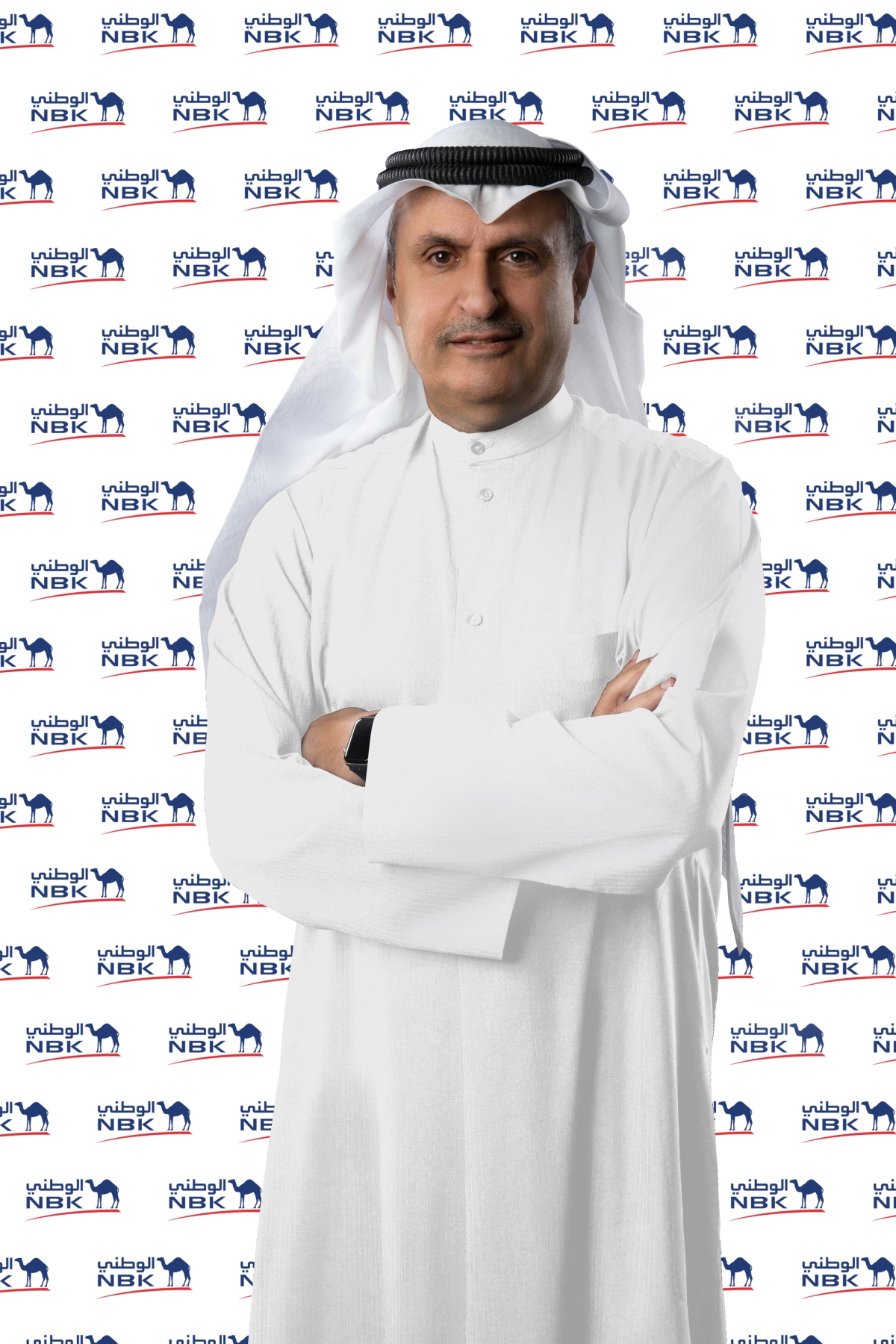
Issam Al-Saqqa: Al-Watani's results in the first half reflect its ability to achieve balanced and sustainable performance under various circumstances
- Al Ahli’s relationships with the public and private sectors enable it to play a leading role in investment plans and infrastructure projects. - The Group continues to focus on advancing its digital transformation agend
Translated by Qiyas from الراي — Original source
- Al Ahli’s relationships with the public and private sectors enable it to play a leading role in investment plans and infrastructure projects.
- The Group continues to focus on advancing its digital transformation agenda and enhancing its innovation capabilities.
- We follow a balanced approach between dividend distributions and maintaining strength and resilience to support future growth.
- The government’s commitment to infrastructure development and reforms supports the gradual recovery as conditions return to normal.
- Al-Roumi:
- The issuance of dinar-denominated treasury bonds supports the gradual growth of interest-bearing reserves at the Central Bank.
- We expect loan growth to continue in 2026 within a mid-to-high single-digit range.
Essam Al-Saqqa, Vice Chairman and Chief Executive Officer of Kuwait National Bank (KNB) Group, stated that the Group continued to deliver strong financial and operational performance in the first half of 2026, benefiting from the strength of its diversified business model and wide geographic footprint. This enabled it to sustain growth momentum and enhance operational resilience amid an economic and geopolitical environment characterized by elevated uncertainty levels.
Speaking on the sidelines of the H1 2026 Analyst Conference, Al-Saqqa noted that the Bank’s results over the first six months reflected the resilience of the Group’s diversified business model and its ability to achieve balanced and sustainable performance across various conditions.
He emphasized that diversification remains a key priority for the Group, supported by its strong presence in regional and international markets. Meanwhile, Al Ahli Wealth and Boubayan Bank, the Islamic banking arm of the KNB Group, continued to support the Group’s efforts to diversify its growth sources.
Strategically, Al-Saqqa reported that the Group is continuing to advance its digital transformation agenda and strengthen its innovation capabilities by further developing its digital channels, expanding mobile-based services, and offering a broader range of banking solutions to customers.
He pointed out that the Group updated its Environmental, Social, and Governance (ESG) strategy this year to better align with evolving market trends and leading sector best practices. It also continued to increase its sustainable assets, achieving 60% of its targeted $10 billion sustainable financing goal by 2030, alongside launching a new sustainable financing framework to further support clients in their sustainability journeys.
Regarding capital and dividends, Al-Saqqa affirmed that the Group’s capital position remains robust, continuing to support its strategic objectives and growth aspirations. He noted that KNB has successfully maintained a disciplined and rewarding dividend policy, grounded in prudent capital management that ensures strong levels compliant with regulatory requirements and supports its long-term growth strategy.
Al-Saqqa added that this approach reflects the Group’s ongoing commitment to enhancing shareholder value, while striking a careful balance between dividend distributions and maintaining the financial strength and resilience necessary to support future growth.
Looking ahead, Al-Saqqa confirmed that the Group remains well-positioned to build on its momentum and reinforce its market leadership in Kuwait, supported by its strong fundamentals, solid balance sheet, and diversified operational model. Furthermore, its trusted relationships with the public and private sectors continue to provide significant opportunities for the Group to play a leading role in Kuwait’s investment plans, infrastructure projects, and economic transformation programs.
He added that diversification will remain a core pillar of the group’s strategy, alongside continued investment in digital capabilities, innovation, and sustainability, thereby supporting sustainable growth and enhancing long-term value for shareholders.
Regarding the mortgage financing law, Al-Saqer clarified that, in light of recent geopolitical developments, no further updates have emerged concerning the legislation. He noted that the latest draft of the law was submitted to the Council of Ministers after being reviewed by the Fatwa and Legislation Department, and it is now advancing through the final stages of the legislative issuance process. The draft has also been referred to the Central Bank of Kuwait for review, given its role as the regulatory authority.
He pointed out that the Minister of State for Housing Affairs recently reaffirmed the government’s commitment to moving forward with this file, describing it as a crucial step toward enacting the residential mortgage financing law. He emphasized that passing such legislation would significantly benefit the economy by supporting economic activity, providing broader financing solutions for citizens, and stimulating several sectors linked to residential activity.
For his part, Sujit Rongy, Chief Financial Officer of the National Group, affirmed that the group’s performance in the first half of the year reflects its flexibility and adaptability, leveraging its diversified business model to ensure uninterrupted operational continuity even under the most challenging, complex, and volatile conditions.
He explained that the group achieved a net profit of 324.8 million dinars, an increase of 9.5 million dinars compared to the same period last year, representing 3% growth. Furthermore, the second-quarter net profit exceeded the corresponding period in 2025 by 4.5%, supported by strong operational performance and lower tax costs, which helped mitigate the impact of the relative increase in net credit loss provisions and impairment losses.
Rongy noted that the continued issuance of government treasury bills denominated in dinars contributed to a gradual rise in interest-bearing reserves at the Central Bank of Kuwait, positively impacting net interest income and net interest margin. He stated that the National Group looks forward to the ongoing issuance of debt instruments, which would enable the deployment of liquidity into higher-yielding assets at the Central Bank of Kuwait.
He highlighted that total loans and advances grew by 2.3 billion dinars, or 8.9% year-on-year, reaching 27.8 billion dinars at the end of the first half. Growth from the beginning of the year stood at 3.6%, reflecting the impact of adverse geopolitical developments in the region since late February.
He added that the growth recorded during the second quarter was primarily driven by the expansion of the corporate lending portfolio in Kuwait and across the group’s international business network. Meanwhile, securities investments rose to 9.2 billion dinars, up 6.4% annually.
Rongy pointed out that customer deposits—defined as deposits from non-banks and financial institutions—reached 27 billion dinars, marking a 13.1% annual increase. He emphasized that the stability of the funding base in recent months, despite regional disruptions, reflects the high level of confidence customers have in the bank, underpinned by long-standing relationships, a strong brand, and high credit ratings.
Regarding asset quality, Rongy clarified that the bank has not received any unusual requests for payment deferrals since the outbreak of the war. He added that, in the normal course of business, limited requests may occasionally arise, but the past months have not witnessed any unusual developments in this regard.
He added that non-performing loan indicators improved as a result of the Bank’s conservative provisioning policy, which enabled the off-balance-sheet transfer of fully provisioned loans.
He noted that first-half results benefited from the release of a portion of tax provisions following the settlement of several tax assessments, expecting the impact of these settlements to extend to full-year results, leading to an effective tax rate lower than usual in 2026. He added that after this effect subsides, the base tax rate is expected to return to a range of 16% to 17%.
Ronghi concluded his remarks by reaffirming the Group’s cautiously optimistic outlook for the remainder of 2026, despite ongoing challenges and uncertainty. He stated that loan growth forecasts remain in the mid-to-high single digits, supported by the strength of the Group’s active lending portfolio across its network spanning 13 countries, as well as a robust and diversified pipeline of credit opportunities at both regional and international levels.
Regarding the Kuwaiti economy, Al-Saqer clarified that after a temporary moderation in economic activity following the partial easing of geopolitical tensions, the recent escalation poses a headwind to the economic recovery trajectory.
He added that following strong momentum at the beginning of the year, project award activity moderated in the second quarter, with total awarded projects reaching approximately KD 2.3 billion in the first half. He noted that while the implementation timelines for some projects are expected to be delayed into the second half of 2026 and 2027, the government’s continued commitment to infrastructure development and advancing reforms linked to Kuwait Vision 2035 will support a gradual recovery in project activity as conditions normalize.
On the level of Gulf Cooperation Council (GCC) countries, Al-Saqer emphasized that despite ongoing geopolitical risks amid existing disruptions, the GCC economies have demonstrated resilience and possess a strong position to withstand external shocks, supported by robust sovereign financial positions, ample liquidity, and strong financial safety margins.
