Should bananas be washed before peeling?
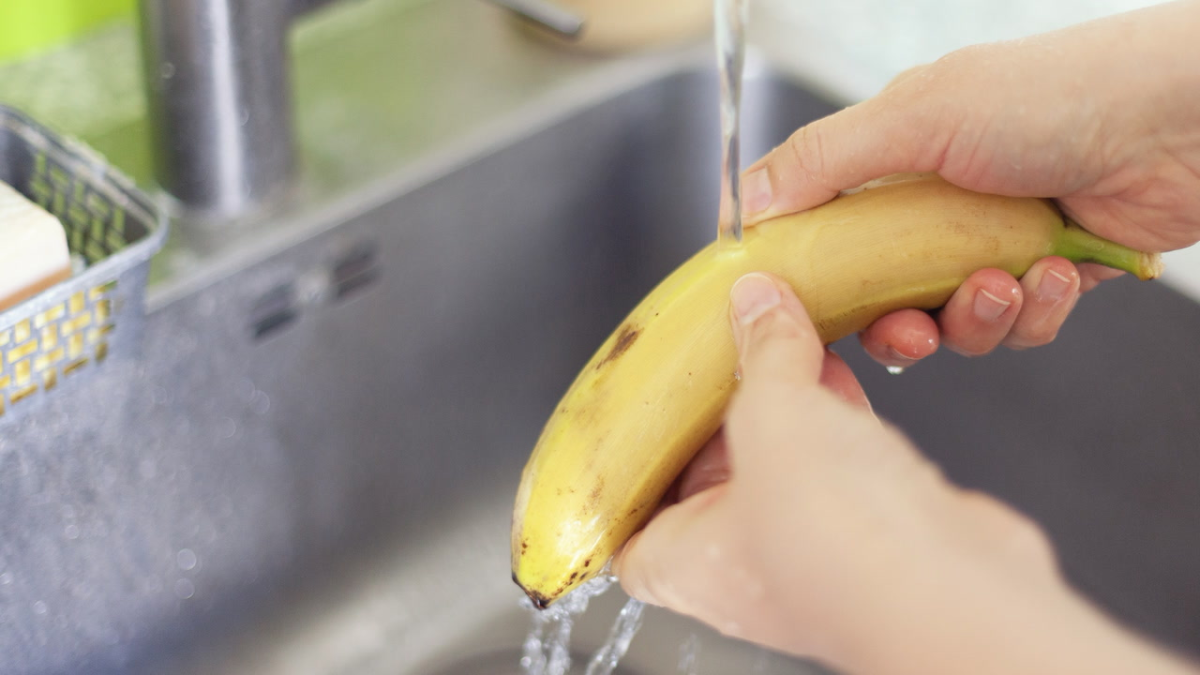
A report published by Southern Living, a website dedicated to home and cooking, warned that ignoring the practice of washing bananas before consumption—a step often overlooked by many consumers—can lead to the transfer of pesticide residues and bacteria from the outer peel to the edible inner flesh during peeling. The report noted that while bananas are classified as fruits with relatively thick peels, this does not prevent surface contamination from reaching the hands and subsequently the pulp via knives or fingers during preparation.
The website relied on the opinions of food safety experts who confirmed that the outer peel of bananas can pick up pathogens during transportation, storage, and display in stores, where they come into contact with multiple surfaces and numerous hands before reaching the end consumer.
Experts pointed out that bacteria such as Listeria and Salmonella, in particular, may be present on the surface of the peel. If bananas are not washed thoroughly before peeling, these microbes can easily transfer to the fruit via hands or knives, especially when slicing bananas to add to cereals, yogurt, or fruit salads.
The website emphasized that washing bananas does not require complex techniques or special cleaning agents; rather, it can be effectively carried out by following specific steps that ensure maximum removal of contaminants without damaging the fruit’s quality. In this regard, the report provided the following practical guidelines:
- Thorough drying before storage: After washing, bananas should be dried well with a clean paper towel, as leaving moisture on the peel accelerates fruit spoilage and increases the likelihood of mold growth.
- Wash only the required amount: It is recommended to wash only the bananas that will be consumed immediately, as pre-washing stored quantities removes the thin natural waxy layer that protects the fruit, thereby reducing its shelf life.
The report noted that this recommendation extends to other types of fruits with peels, such as oranges, watermelons, avocados, kiwis, and cantaloupes, where a knife or cutting tool can push contaminants from the outer surface to the inside during the opening process. Experts confirmed that washing with water alone is sufficient to remove most residues, and that using soap or non-food-grade detergents is unnecessary and may leave undesirable chemical residues on the peel.
The website quoted Dr. Kimberly Baker, a food extension specialist at Clemson University, stating that “the golden rule in handling any fresh product is to wash it immediately before consumption,” adding that this step is not limited to leafy greens and berries but includes all products consumed fresh. The report concluded that adding banana washing to the daily kitchen routine takes no more than a few seconds, yet it constitutes a simple and effective preventive measure that protects families from the risks of food poisoning and maintains safety standards in handling fresh produce.
