US President leans toward imposing a steep price... Israel prepares for his decision
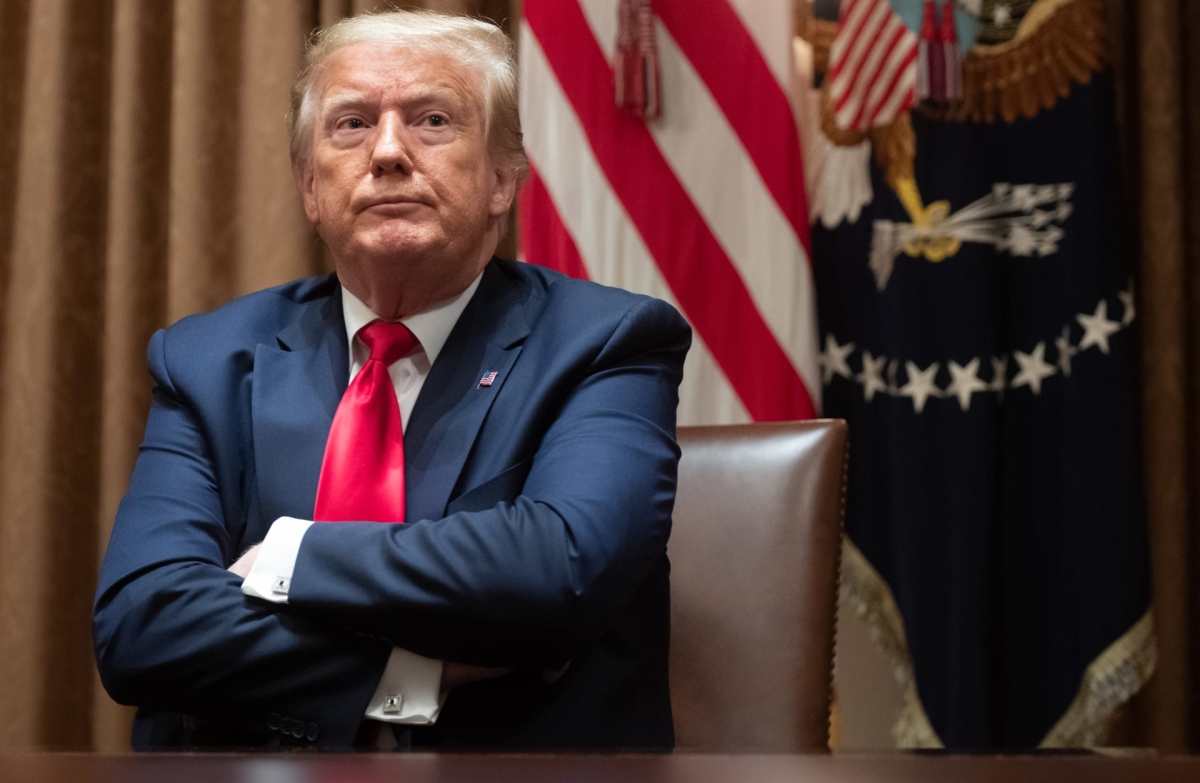
Senior U.S. officials say President Donald Trump will decide within the next few days between two options, according to Israel’s Channel 12: accept the mediators’ proposal for a 10-day ceasefire in an attempt to organize
Translated by Qiyas from الراي — Original source
Senior U.S. officials say President Donald Trump will decide within the next few days between two options, according to Israel’s Channel 12: accept the mediators’ proposal for a 10-day ceasefire in an attempt to organize transit through the Strait of Hormuz—a proposal Tehran is likely to accept—or return to a broad war aimed at subduing Iran on the issues of Hormuz and its nuclear program.
In this context, Israel’s cabinet held a meeting on Monday that lasted about six hours to discuss various escalation scenarios. During the session, Prime Minister Benjamin Netanyahu left to speak with U.S. Secretary of State Marco Rubio, and the two engaged in an extensive discussion of different scenarios in light of shared interests.
For its part, Iranian leadership sees no need to make concessions, believing that Trump will ultimately back down and allow Tehran to control the Strait of Hormuz, according to the Israeli channel.
For his part, a senior Israeli official emphasized that “our interest in this battle depends solely on its nature. We do not want to find ourselves entering a new conflict, only to be asked to stop after a few days.”
He added that, based on available information, the political leadership was informed that Trump has not yet made a final decision but is inclined to “impose a heavy price” on Iran, leading estimates to indicate a significant rise in the likelihood of escalation.
Western officials maintain that the U.S. president dislikes temporary proposals, viewing them merely as a “band-aid” that does not address the root of the problem with Tehran.
Tel Aviv also assesses that Supreme Leader Mojtaba Khamenei wants to see different proposals, although Western officials believe the current proposals lean in Iran’s favor.
Trump also indicated on Tuesday that he is not interested in holding negotiations at this stage, stating that Iranians are desperate to arrange a meeting, but the United States is not interested in that at present.
This sends a signal that he is moving toward escalation, when he said that “the work on Iran is not yet finished,” and that the next target is “Mount Aso.”
Israel estimates that time is short before the U.S. president is forced to make a decision, and therefore it wants to be at the highest state of readiness when that moment arrives.
The IDF Radio reported that estimates indicate “Mount Aso,” a heavily fortified facility built deep underground near the Natanz nuclear complex, contains all the necessary components for constructing an underground uranium enrichment facility.
An Israeli source confirmed that during the interval between the “Lion’s Claw” and “Lion’s Roar” operations, Iran likely transferred several thousand centrifuges to this secret site for storage, although they have not yet become operational and have not been used so far as a uranium enrichment site.
He added that the main problem is that it is unclear whether the bombs possessed by the United States are capable of penetrating this site.
According to estimates, the bombs used against the uranium enrichment facility at the Fordow nuclear plant will likely also fail to penetrate this site, so the fundamental question revolves around the effectiveness of any potential attack on it, given the belief that destroying it would be extremely difficult, if not impossible.
