Development Fund: $3 Million Grant to UNDP
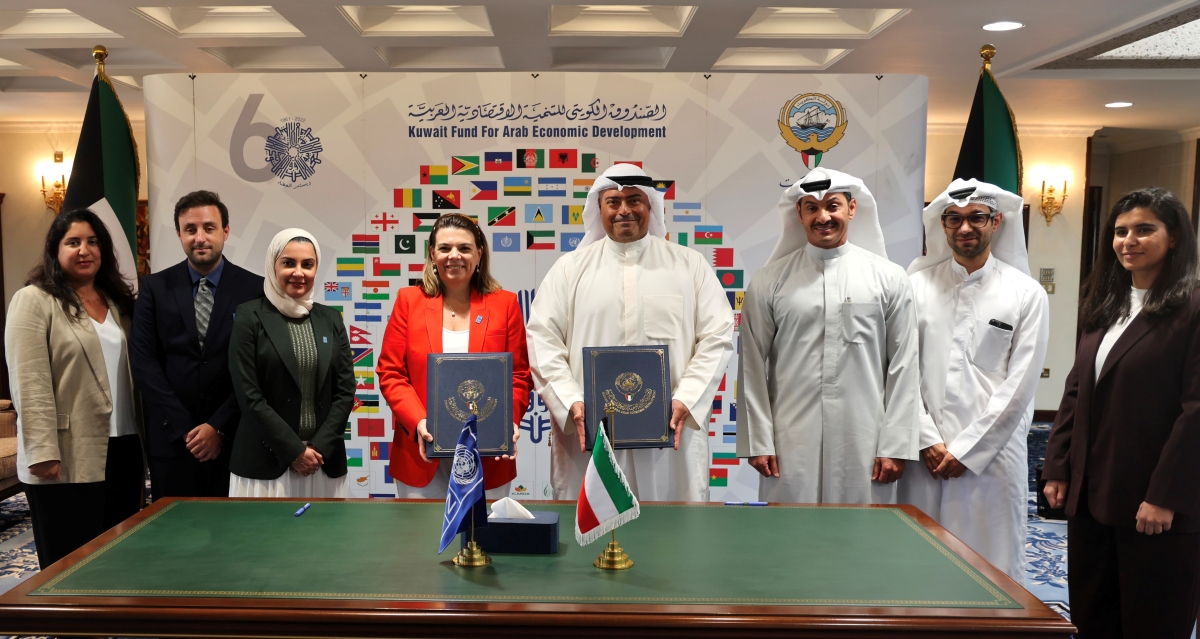
The Kuwait Fund for Arab Economic Development signed a grant agreement with the United Nations Development Programme (UNDP) on Tuesday, valued at $3 million, to help finance a project aimed at enabling public services th
Translated by Qiyas from الراي — Original source
The Kuwait Fund for Arab Economic Development signed a grant agreement with the United Nations Development Programme (UNDP) on Tuesday, valued at $3 million, to help finance a project aimed at enabling public services through solar energy in the Lebanese Republic.
The agreement was signed by Rashid Al-Badr, Acting Director General of the Kuwait Fund, and Emma Morley, UNDP Resident Representative in Kuwait. Speaking to KUNA, Al-Badr stated that the project aims to enhance the sustainability and reliability of electricity supply in several priority public institutions in the Lebanese Republic by installing photovoltaic solar energy systems and improving energy efficiency.
Al-Badr added that the project contributes to reducing reliance on diesel generators, lowering operational costs, and improving the continuity of essential public services, while also helping to cut emissions from traditional energy sources and promoting sustainable energy use. Its implementation includes several key components, such as installing photovoltaic solar systems in beneficiary institutions and carrying out measures to improve energy efficiency, along with providing related equipment and facilities.
He emphasized that this grant aligns with the Fund’s commitment to supporting sustainable development efforts in Arab countries, noting that signing this agreement with UNDP reflects the long-standing and fruitful strategic partnership between the Fund and international organizations. He reaffirmed the Fund’s firm commitment to supporting its brothers in the Lebanese Republic amid current challenges.
Al-Badr noted that the energy sector is a fundamental pillar for the continuity of public services, explaining that through this grant, in collaboration with UNDP, the Fund seeks to support practical, sustainable, and environmentally friendly solutions by leveraging photovoltaic solar technology.
He highlighted the Fund’s strong confidence in UNDP’s ability to implement the project efficiently and effectively, stressing that investing in energy efficiency and building the institutional capacity of staff is a key pillar for ensuring the sustainability of project outcomes and achieving the shared sustainable development goals supported by both parties.
For her part, Morley told KUNA that partnerships are a fundamental pillar for addressing global development challenges, noting that the partnership between the two parties contributes to strengthening public institutions, supporting climate action, and delivering sustainable economic, social, and environmental benefits.
