Egypt on Nile Waters: We Have the Right to Life... and Ethiopia Has the Right to Development
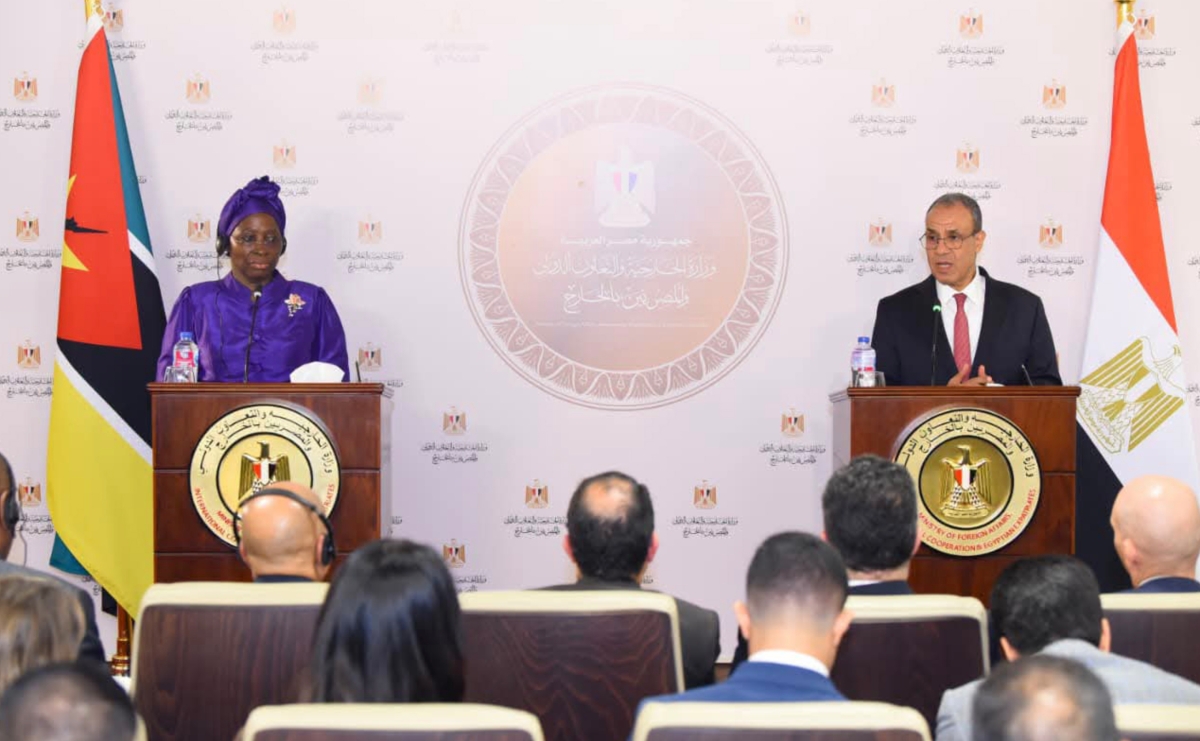
- Cairo reaffirms commitment to strengthening human rights and continuing dialogue with international partners - Political consultations held between Egypt and Mozambique in Cairo - Milatovic visits Al-Azhar and St. Mark
Translated by Qiyas from الراي — Original source
- Cairo reaffirms commitment to strengthening human rights and continuing dialogue with international partners
- Political consultations held between Egypt and Mozambique in Cairo
- Milatovic visits Al-Azhar and St. Mark’s Coptic Cathedral: “Our country is a model of peaceful coexistence”
- Nuclear plants deny negligence of safety procedures at the El Dabaa facility
Egyptian Foreign Minister Badr Abdelatty stated that “Ethiopia continues to act unilaterally on the Grand Ethiopian Renaissance Dam (GERD) file, without coordination with the downstream countries—Egypt and Sudan—and in a manner that disregards their interests and the rules of international law governing transboundary waterways.”
Speaking at a joint press conference with Mozambican Foreign Minister Maria Manuela Lucas on the sidelines of the first round of political consultations in Cairo, Abdelatty said, “International law is clear regarding the management of international rivers. However, Ethiopia has managed the GERD in a politicized manner over the past years, without any coordination. This has negatively impacted water flows, and the unilateral impoundment of water has led to a decline in the levels of the Nile River, thereby affecting efforts to provide drinking water to citizens.”
He emphasized that “Egypt does not oppose Ethiopia’s right to development, but it rejects that this come at the expense of the rights of the downstream countries. Ethiopia has the right to development, and Egypt has the right to life.”
Abdelatty also noted that “achieving security and stability in the Middle East will not be possible without granting the Palestinian people their legitimate rights.”
He viewed the two-state solution as “the only way to achieve just and lasting peace,” adding that Egypt supports and backs the peace plan proposed by US President Donald Trump, calling for the completion of the first phase of implementation before moving on to negotiations regarding the second phase.
At the conclusion of the first round of political consultations, Egypt and Mozambique agreed to activate the work of technical and legal committees to expedite the review of pending memoranda of understanding between the two sides.
In a separate development, Abdelatty reaffirmed on Tuesday his country’s commitment to strengthening the comprehensive human rights framework and continuing constructive dialogue with civil society and international partners. During his meeting with a delegation from the European Parliament’s Committee on Human Rights, led by Committee Chairman Manon Satouri, he stressed the importance of engaging with European parliamentary circles, given the momentum in Egypt-Europe relations, particularly following their upgrade to a strategic and comprehensive partnership. He expressed hope that the visit would contribute to enhancing the exchange of expertise and allowing the delegation to learn about Egypt’s efforts in the field of human rights.
For his part, the European delegation praised the development of strategic relations with Egypt, describing it as a key partner for the European Union in supporting regional stability. They emphasized the importance of strengthening parliamentary cooperation and intensifying mutual visits. The delegation also expressed appreciation for Egypt’s efforts in hosting a large number of refugees and acknowledged the economic and regional challenges the country faces.
In a separate context, Grand Imam of Al-Azhar Ahmed al-Tayeb stated during his reception of Montenegrin President Jakov Milatović and his spouse at the Grand Imam’s office on Monday evening that “Al-Azhar works to establish peace among all people. It has taken practical steps, locally exemplified by the establishment of the Egyptian Family House, which is co-chaired alternately every six months by the Grand Imam of Al-Azhar and the Pope of the Coptic Orthodox Church (Tawadros II).”
He affirmed that Al-Azhar “works to consolidate national brotherhood and, globally, through close relations with the Vatican and the signing of the Document on Human Fraternity. Al-Azhar has opened itself to religious and cultural institutions in the East and the West.”
For his part, Milatovic affirmed his country’s appreciation for the Grand Imam of Al-Azhar’s efforts in “consolidating the values of peaceful coexistence and human brotherhood,” noting that “Montenegro is a multi-ethnic and multi-national state, and Islam constitutes an integral part of its national fabric, with everyone living in peace.”
Pope Tawadros II, during his reception of Milatovic and his wife at the Mar Girgis Cathedral in central Cairo, stated that “Egypt enjoys a unique civilizational heritage shaped by Pharaonic, Christian, Islamic, Arab, African, Greek, and Roman civilizations, which has granted it a distinguished position among nations, and that Egyptians live in one homeland characterized by a spirit of citizenship and love.”
Meanwhile, the Egyptian Nuclear and Radiological Regulatory Authority (ENRRA) denied “inaccurate” claims circulating regarding the safety procedures during the installation of the reactor pressure vessel for the second unit at the El Dabaa Nuclear Power Plant in the North Coast region, which had been published on websites and social media platforms.
The Authority reaffirmed its “full commitment to applying the highest standards of quality, safety, and nuclear security throughout all stages of the project’s implementation,” and called on media outlets and social media users to exercise precision, refer to and rely on information issued by the relevant official authorities, and avoid being swayed by unsubstantiated conclusions.
