They lost... but Kuwait did not
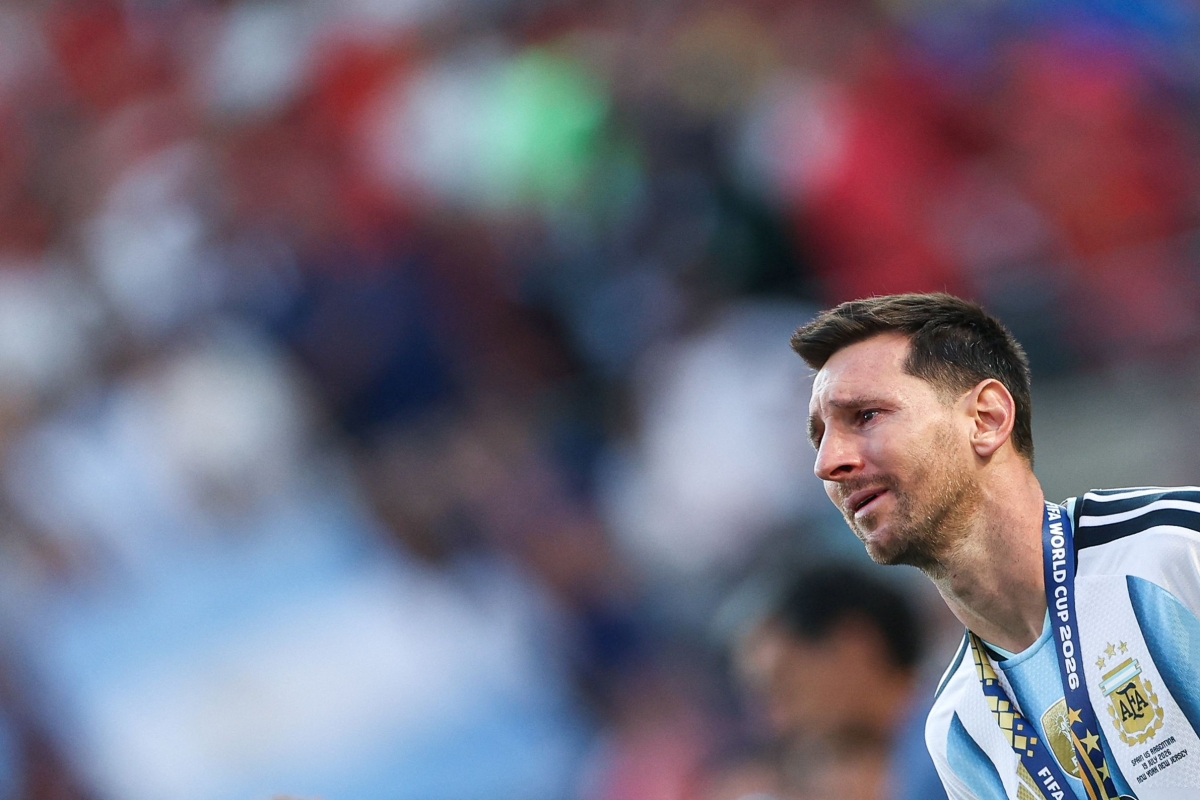
As photographers’ lenses on the floor of MetLife Stadium in New Jersey, USA, tracked the celebrations of the Spanish national team players after their match against Argentina in the 2026 World Cup final and their victory in their second title in history, a large number of these photographers were searching for a player who had withdrawn to a corner of the pitch, barely holding back his tears.
Lionel Messi, captain of Argentina and the star of the current era, returned to the circle of sorrow after four years in which he established himself as the king of world football, having led his national team to win the 2022 World Cup title in Qatar.
Months before the launch of the 2026 World Cup, Messi shrouded his participation in the most prestigious tournament in much mystery, and did not explicitly declare whether he would perform his final dance in North America or not, until coach Lionel Scaloni dispelled that uncertainty by announcing that the Argentine national team’s squad for the tournament would be led by Messi.
Many saw Messi’s participation in the World Cup as akin to the final months of a senior executive in his job before retirement: greater calm, less effort, and enjoyment of the work.
What happened next was largely surprising: Messi struck powerfully, scoring hat-tricks and braces, and then found himself in the midst of a fierce competition for the top scorer title of this edition and the all-time World Cup top scorer, alongside players more than 10 years younger than him and with more supporting elements at their disposal. The ambition ceiling for the Argentinians rose again, similar to what happened in Qatar.
At the age of 39, Messi continued to carry Argentina on his shoulders, match after match, stage after stage, delivering dazzling performances. The final minutes of the Albiceleste’s matches against Egypt and England in the round of 16 and quarter-finals, respectively, saw him leave an “ingenious” mark on World Cup history, adding to previous instances of genius witnessed by the tournament, such as Brazilian Pelé’s goal against Sweden in the 1958 final, Dutchman Johan Cruyff’s goal against Argentina in 1974, and the iconic goal by Argentine Diego Maradona against England in 1986.
Things deteriorated, and Argentina headed toward defeat and elimination from the tournament. Messi, under the watch of his opponents, moved to the right side of the pitch and then began creating chances and goals.
After receiving the silver medal, amidst the crowd singing their famous song “Soy Argentino” (I am Argentine), Messi could not hold back his tears, and photographers’ lenses captured the long-awaited shot: Messi crying in his final appearance on the World Cup stage, as if he wanted to repeat the same journey Maradona went through in the tournament: failure, then a dazzling triumph, followed by loss in the final match after a lackluster performance by the national team and two faces wet with tears.
Within 24 hours, Messi lost two achievements: the World Cup’s all-time top scorer title, which went to Frenchman Kylian Mbappé by a single goal (22 versus 21), before losing the next day the most important title... the World Cup.
On the eve of the final match, Messi appeared with an unprecedented statement. The star, who never boasted about his achievements, confirmed that he had “finished the game” four years ago in Qatar: “Your professional career is like a video game; you progress by unlocking levels to reach the final... and I already finished the game in the last World Cup.”
Messi knew that winning the World Cup was the only thing missing from his brilliant career, which he managed to achieve in Qatar, and everything that would come after would be like a cherry on top of the cake.
On the night of Sunday-Monday, Messi did not lose, but Argentina did, and it must now search anew for a new heir, a mission that may take decades and may never succeed.
