National Company for Resources: Growth in AI and data center infrastructure presents an opportunity to reposition real estate assets
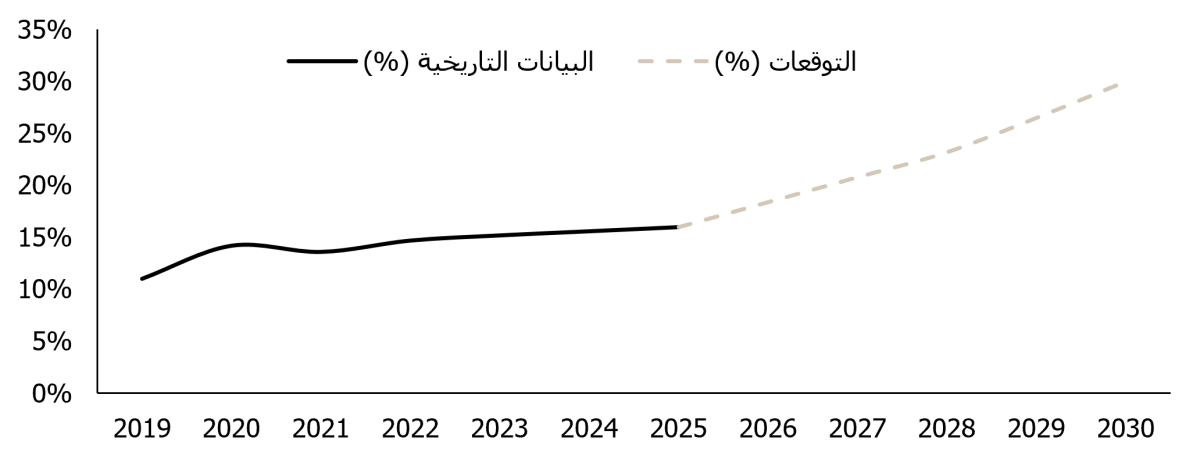
Al Watani for Wealth Management, in its latest report as part of the Thought Leadership series, noted that real estate investment has long relied on contractual income, with values primarily driven by fundamentals rather
Translated by Qiyas from الراي — Original source
Al Watani for Wealth Management, in its latest report as part of the Thought Leadership series, noted that real estate investment has long relied on contractual income, with values primarily driven by fundamentals rather than daily fluctuations in public markets. This characteristic has made this asset class a reliable component within diversified investment portfolios. However, this reality has shifted as central banks raised interest rates at the fastest pace in decades, leading to the repricing of real estate assets and a slowdown in transaction activity. Nevertheless, while short-term capital value declines can affect asset prices, they do not fundamentally alter the sustainability of income.
This highlights a fundamental principle: asset prices can deviate from underlying fundamentals. In the real estate sector, Net Operating Income (NOI) serves as the primary performance metric. While valuation multiples and market sentiment influence short-term pricing, NOI remains the main driver of returns over the long-term investment horizon.
The report pointed out that the real estate sector’s performance has become increasingly fragmented across industries and geographic regions. As traditional core sectors undergo structural redefinition, alternative assets such as data centers, senior living facilities, and self-storage facilities have emerged as important sources of stable, long-term income. Building a resilient real estate portfolio requires moving beyond traditional assumptions and exploiting valuation dislocations between public and private markets.
It noted that private and public real estate are not interchangeable; rather, each plays a distinct role within an investment portfolio. Private real estate offers direct asset control, flexible structures, and opportunities to generate excess returns (alpha) through active management, albeit at the cost of lower liquidity and reliance on appraisals-based valuations.
Conversely, public real estate, through Real Estate Investment Trusts (REITs) and Exchange-Traded Funds (ETFs), provides liquidity, transparent pricing, and efficient access to specific sectors and regions. However, the trade-off involves increased exposure to equity market sentiment and higher short-term volatility.
The report emphasized that understanding the relationship between private and public real estate is essential for building resilient and diversified portfolios. Strategic allocation to both helps combine the complementary strengths of each structure within a broader wealth management strategy. Consequently, portfolios can benefit from the liquidity of public markets alongside the control and flexibility offered by private investments.
It also observed that real estate income exhibits a contractual nature, historically demonstrating resilience against inflation through lease repricing, rent escalations, and rising replacement costs. Supported by these stable fundamentals, the real estate sector has contributed to diversification and reduced volatility compared to public markets. However, 2022 demonstrated that valuations in private markets are not immune to repricing, and part of their stability reflects a lag in appraisal processes. Therefore, combining public and private investment tools enables the achievement of long-term value while maintaining tactical flexibility.
The report highlighted a wide range of real estate investment strategies, each playing a different role within the portfolio and varying in terms of risk and return sources, ranging from owning income-generating assets to developing new assets to create additional income streams. These strategies include:
- Core Strategy: Invests in stable, fully leased assets with the aim of achieving stable, low-volatility income, where returns are primarily derived from contractual rent rather than value creation. Target total returns typically range between 6% and 10% (Preqin).
- Core-Plus Strategy: Builds on the fundamentals of the Core strategy through limited leasing, asset management initiatives, and income enhancement efforts, accepting modest execution risk in exchange for additional returns. Target total returns typically range between 8% and 12% (Preqin).
- Value-Add Strategy: Shifts the source of return from ownership to execution, as managers renovate poorly managed assets, re-lease them, or reposition them to increase net operating income and asset value. Outcomes are largely dependent on the operator’s skill. Target total returns typically range between 11% and 15% (Preqin).
- Opportunistic & Distressed Strategy: Targets assets requiring significant redevelopment, conversion, or financial restructuring. Returns are derived from value creation rather than existing income, and outcomes depend on management execution and market conditions. Target total returns can exceed 15% (Preqin).
The report considers demographic demand to be one of the most sustainable drivers of the real estate sector. The senior housing sector clearly exemplifies this idea; as a growing number of the baby boomer generation in the United States enters their eighties, demand for this type of asset is increasing, without a corresponding growth in supply. This favorable supply-demand balance provides a supportive environment and positive outlook for the sector.
The report also pointed to other market forces affecting the sector over shorter time horizons. The continued growth of e-commerce is one of the most prominent examples. With the increasing prevalence of online shopping, demand for modern logistics facilities has risen, as e-commerce companies require significantly larger storage and warehouse spaces compared to traditional retailers. This supply-demand imbalance has created opportunities to redevelop underperforming commercial assets, including weak-performing shopping malls and department stores, converting them into distribution centers and logistics facilities that meet the needs of the growing digital economy.
1 - Dynamics of Public vs. Private Real Estate: Public real estate offers liquidity and tactical flexibility, while private markets provide direct asset control and the potential for long-term excess returns (alpha) through active asset management.
3 - Structural Hedge Against Inflation: Lease structures, escalating rent increases, and rising replacement costs help preserve purchasing power during periods of inflation.
