World Cup 2030 44 days... and 6 host countries
The curtain fell last night on the largest edition in the history of the FIFA World Cup, as speculation has already begun regarding a potential further expansion of the tournament for the 2030 edition. This edition was h
Translated by Qiyas from الراي — Original source
The curtain fell last night on the largest edition in the history of the FIFA World Cup, as speculation has already begun regarding a potential further expansion of the tournament for the 2030 edition.
This edition was held for the first time across three countries: the United States, Mexico, and Canada, featuring 48 national teams instead of 32, which increased the number of matches from 64 to 104.
Four years later, six countries will host the tournament, and FIFA President Gianni Infantino stated that they are exploring the possibility of increasing the number of participating teams to 64.
Here are the key things to know about the 2030 World Cup:
Most of the matches will be held in Spain, Portugal, and Morocco. However, to mark the centenary of the first World Cup held in Uruguay in 1930, one match will be played in each of Argentina, Paraguay, and Uruguay.
These three matches are scheduled to take place at the beginning of the tournament, allowing the participating teams sufficient time to adjust after traveling to Europe and Africa, with their second match taking place approximately 11 to 12 days after the opening game.
According to the current schedule, the tournament will run from June 8 to July 21, making it the longest World Cup in history, lasting 44 days.
So far, increasing the number of teams by an additional 16 was viewed as logistically nearly impossible, as a tournament with 64 teams would require 128 matches—an increase of 24 matches over the current format and double the number of matches in the 2022 Qatar edition.
This would necessitate hosting more matches in South America, increasing travel and logistical requirements. However, Infantino confirmed during the current tournament in North and Central America that this idea deserves study after the tournament concludes, emphasizing that the dream of participating in the World Cup should be available to the entire world, not just Europe and South America.
Several parties, particularly from South America, have called for expanding the tournament to 64 teams. Infantino’s recent remarks may also reflect his desire to demonstrate that he has explored all possible options.
The FIFA President had previously attempted to increase the number of teams from 32 to 48 for the 2022 Qatar World Cup, but that effort was unsuccessful.
Current plans indicate that matches will be held in six stadiums in Morocco, three in Portugal, and 11 in Spain.
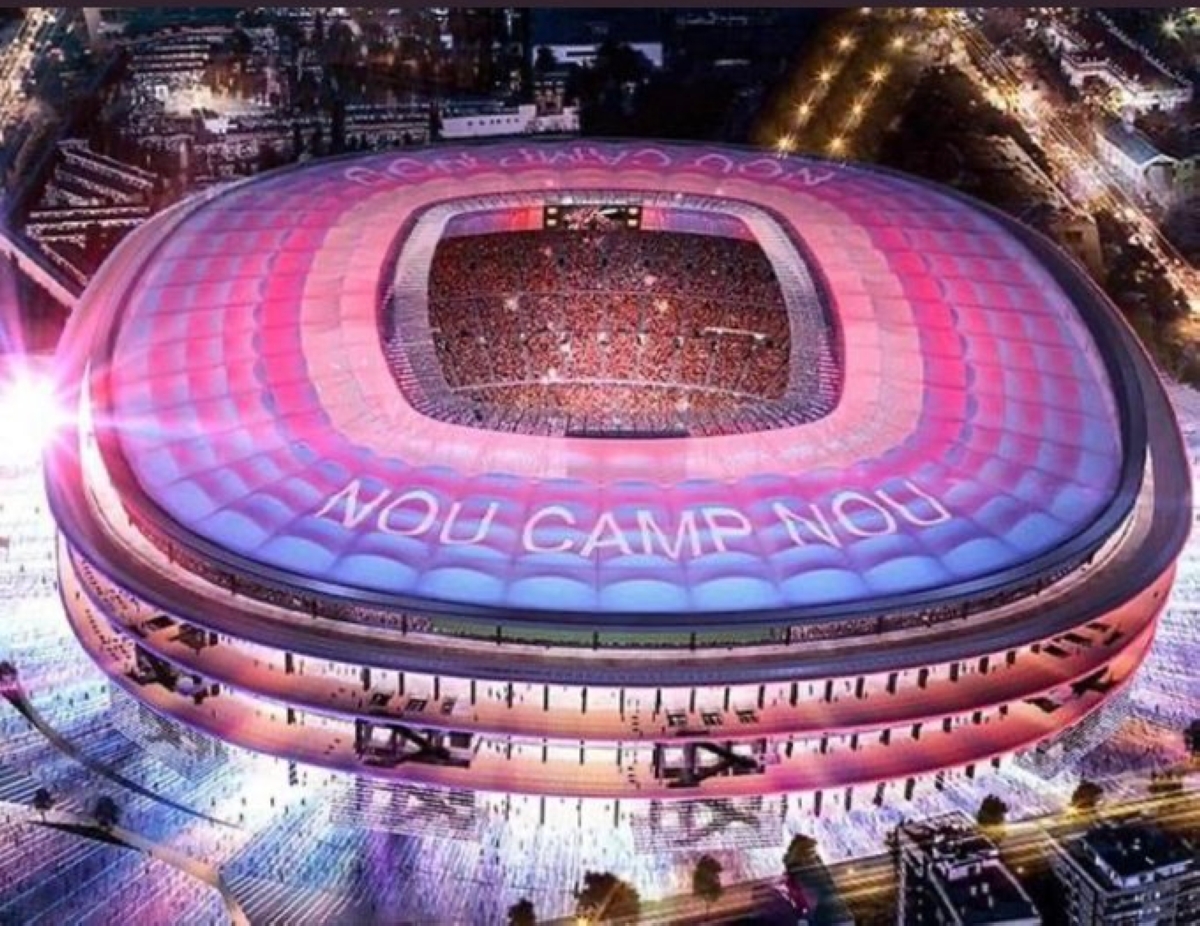
Barcelona’s Camp Nou, which will have a capacity of 103,000 spectators after renovation works are completed, and the new Hassan II Stadium near Casablanca, with a capacity of 115,000, will be the two largest football stadiums in the world.
In Europe, the qualification system for the 2030 World Cup will undergo radical changes to align with the league format used in European club competitions.
Currently, national teams compete in groups of four or five teams, playing home-and-away matches. The group winner qualifies directly for the World Cup, while the runner-up has a chance to qualify through playoff matches.
Under the new system, the top 36 national teams in the UEFA Nations League will be distributed into three groups of 12 teams each. Each team will play six matches against six different opponents, with teams ranked in a league table within each group.
The top-ranked teams will qualify directly for the World Cup, while the remaining spots will be decided through playoff matches, with UEFA to determine the details of their allocation at a later stage. Meanwhile, national teams that do not finish among the top 36 will also compete in a league format. The six host nations will automatically qualify for the finals, and the qualification process in other continental confederations may also undergo adjustments if the 64-team format is adopted.
