Hamas and the “Trump Deal”: Conditional Approval or Tactical Engagement?
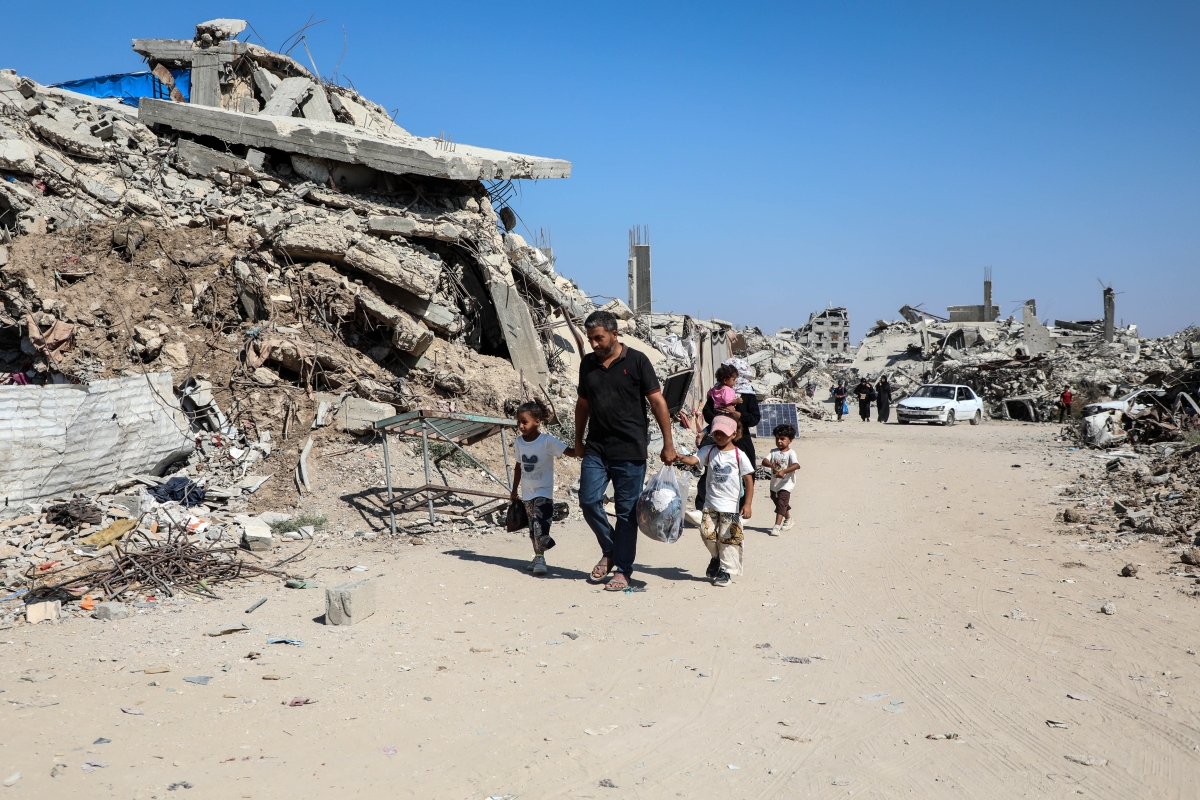
- The Israeli war on Gaza has not stopped... Hamas’s position is one of partial, not full, agreement from the outset!
- The Palestinian landscape is heading toward more complex stages that require unity of ranks and the building of a comprehensive national strategy to confront projects of liquidation and displacement.
Amid rapid regional and international transformations, the Palestinian scene emerges as a battleground where political calculations clash with the national constants of Palestinian resistance, amidst repeated American attempts to reshape the conflict’s equations in a manner that serves Washington’s agenda and its Israeli ally. Against the backdrop of the plan sponsored by US President Donald Trump regarding the Gaza Strip, Hamas was placed under a precise test that demands a careful reading of the nature of its position, far removed from superficial impressions and divergent statements.
Did Hamas sign Trump’s plan in its entirety, or was what occurred a limited approval subject to conditional national safeguards? Can one speak of a “ceasefire” in Gaza given the continuation of Israeli bombardment and the expansion of aggression into the West Bank?
On October 3, 2025, Hamas issued its official statement clarifying its position on Trump’s plan, confirming its agreement on specific points, which included:
However, the movement referred the fundamental issues concerning the future of Gaza and Palestinian national rights to a broader national position, emphasizing that this is not a matter exclusive to Hamas alone, but a decisive issue requiring comprehensive Palestinian consensus. This clear distinction revealed the essence of Hamas’s stance: conditional, phased approval, rather than full submission to a 20-point plan, as some media circles had promoted.
The Hamas position was translated on October 9, 2025, when Hamas and resistance factions signed in Sharm El-Sheikh the details of the first phase of the agreement, which were limited to:
Trump himself acknowledged that the signature was for the first phase only, not the entire plan, reflecting an American awareness of the tactical nature of the Palestinian position, which did not offer strategic concessions regarding disarmament or the liquidation of national rights.
Hamas and resistance forces focused on four red lines concerning the second phase and the day after Gaza:
- Providing the Strip’s needs with aid and reconstruction, with international guarantees to prevent any political blackmail in exchange for humanitarian necessities.
These lines reflect a strategic awareness among the resistance that any unconditional approval could lead to emptying the national project of its substance, turning Gaza into a model similar to other experiences in the region that did not lead to just solutions.
The US administration showed notable flexibility toward Hamas’s position, which was manifested in three key milestones:
On October 3, Trump wrote on the “Truth Social” platform: “Based on the statement just issued by Hamas, I believe they are ready for permanent peace. Israel must immediately stop bombing Gaza, so we can get the hostages out safely and quickly!”
On October 8, Trump announced the signing of the first phase, describing it as “first steps toward a strong and lasting peace.”
On October 14, Trump announced, “Together we achieved what everyone said was impossible – finally, we have peace in the Middle East. The war in Gaza is over.”
However, these statements, which carried a celebratory tone, collided with a different field reality, where Israeli aggression did not cease but rather transformed into a continuous pattern of intermittent bombardment and collective punishment, under a political and diplomatic cover.
- Immediate approval of the first phase, with readiness to implement it, as announced by Prime Minister Benjamin Netanyahu’s office on October 3.
- Insistence on disarming Hamas as a fundamental condition for any future arrangements, which contradicts the red lines drawn by the resistance.
This contradiction reflects Tel Aviv’s attempt to capitalize on any interim agreement while retaining its military options to impose its terms later, which explains the continuation of military operations in Gaza and the West Bank.
Despite announced agreements, the military machine continued to bomb the Gaza Strip, with the number of martyrs surpassing 600 since the so-called ceasefire was reached. This figure—representing post-truce victims—serves as irrefutable evidence that the war has not ended, but rather transformed into a different pattern of continuous killing and destruction.
Israeli media, including military channels, have been publishing daily reports on the continuation of military operations in the Strip, with occupation aircraft carrying out near-daily air strikes targeting homes, residential buildings, and infrastructure. Furthermore, the army’s announcements regarding the targeting of “cells” or “rocket launch sites” constitute an implicit acknowledgment that a state of war persists, rather than a cessation of hostilities.
The crimes were not confined to Gaza; they escalated to the occupied West Bank, where the occupation intensified its settlement activities, leading to the displacement of more than 36,000 Palestinians over the past year.
The West Bank also witnessed a sharp rise in settler attacks and field executions carried out by occupation forces, the latest of which involved the shooting of four Palestinian civilians on March 15, 2026.
What Hamas signed was nothing more than a limited interim agreement, which in no way implies acceptance of all provisions of the Trump plan, nor does it mean abandoning the fundamental principles of resistance or national rights.
The movement has demonstrated tactical flexibility in managing humanitarian and relief affairs, while maintaining its strategic red lines, foremost among which is the right of resistance to confront the occupation, the rejection of any project aimed at liquidating the Palestinian cause or stripping the Palestinian people of their legitimate means of struggle, and the occupation’s insistence on displacement, settlement, and expansion into the Palestinian heartland.
Regarding the “cessation of hostilities,” the reality on the ground remains the ultimate arbiter: the Israeli war on Gaza has not stopped; it has continued at a criminal pace and extended to the West Bank, confirming that Israeli and American political rhetoric is merely an attempt to temporarily freeze the aggression and reposition it politically, while the occupation continues to kill, starve, and displace Palestinians in both Gaza and the West Bank.
It appears that the Palestinian landscape is heading toward more complex phases, requiring Palestinian unity of front and the construction of a comprehensive national strategy to confront liquidation projects, relying on the utilization of political maneuvering without compromising fundamental principles, and preparing for any scenarios, including the continuation or expansion of the aggression.
