Mating Season... in Kubbar
Al-Zidan to “Al-Rai”:
- The availability of nesting sites and the richness of the waters surrounding the island with food facilitate breeding.
- Four main species of terns inhabit the island during the summer season.
- They feed on small fish such as sardines, small squid, and marine crustaceans.
- Their presence contributes to achieving ecological balance through their role in transferring nutrients.
Environmental affairs activist Dr. Abdullah Al-Zidan observed the breeding season of terns on Kubbar Island, which begins in May and continues until August. He noted that “terns arrive at the island starting in March and leave it heading south at the beginning of September.”
Al-Zidan told “Al-Rai” that “despite the harsh environmental conditions these birds face, such as temperatures that may exceed 50 degrees Celsius, direct exposure to sunlight, and the lack of freshwater sources, they continue to breed in large numbers due to the availability of suitable nesting sites and the richness of the waters surrounding the island with food.”
He pointed out that “Kubbar Island has been one of the most important breeding sites for seabirds in Kuwait and the Arabian Gulf since ancient times. It hosts large colonies of terns and is characterized by a suitable environment for seabird breeding, featuring low sandy shores, Suaeda vegetation (Suaeda), as well as surrounding coral reefs.”
He mentioned that “this island, covering an area of approximately 140,000 square meters, is one of the most important safe havens for tern breeding,” highlighting “the presence of four main species of terns that inhabit it during the summer: the Little Tern, the White-cheeked Tern, the Little Crested Tern, and the Large Crested Tern.”
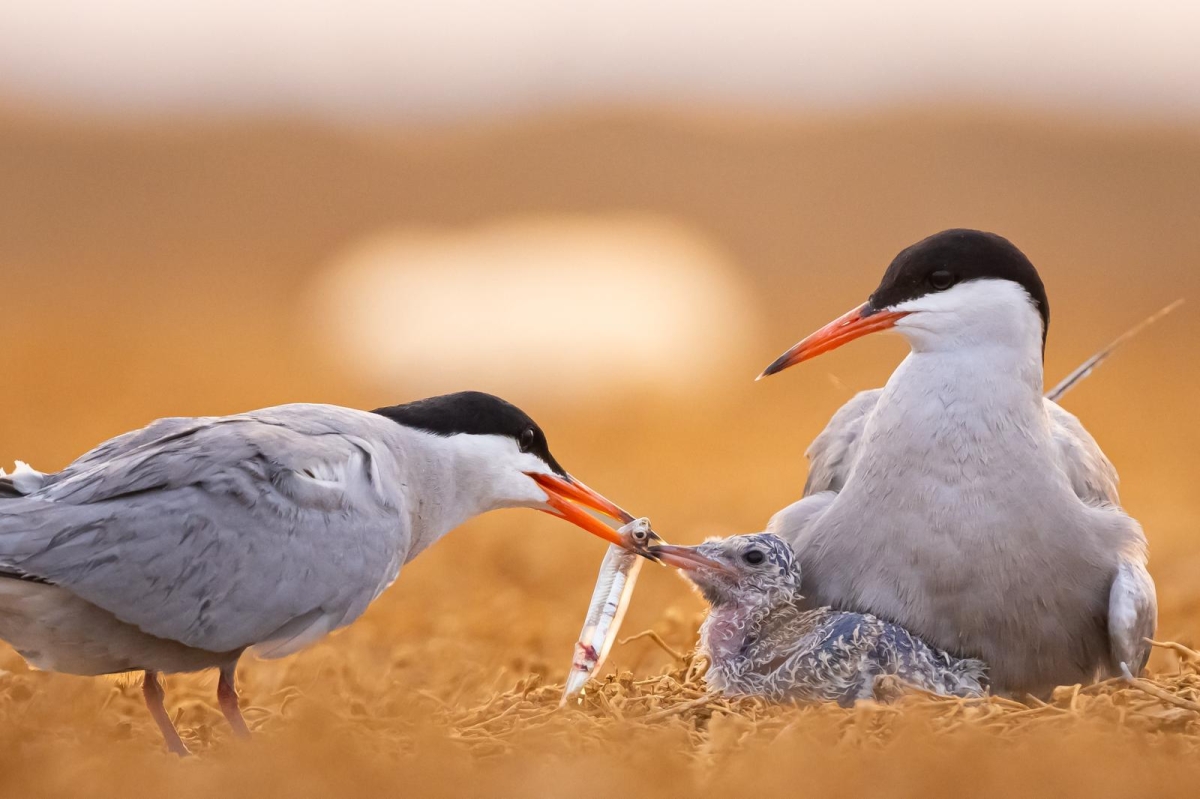
He added, “Adult terns build their nests according to their species; they may be solitary or within large, closely spaced colonies, which provides them with collective protection and reduces their chances of being exposed to birds of prey and predators. Some tern species also guide their chicks from nesting areas toward the island’s coast and the sea, helping them familiarize themselves with the surrounding environment, while one parent is responsible for foraging for food and feeding the young.”
Regarding their feeding habits, he noted that “terns primarily feed on small fish, such as sardines, as well as small squid and marine crustaceans. They obtain their food by flying over the sea surface and then diving rapidly to catch prey from the water, where the marine environment surrounding Kubbar Island provides important food sources that help these birds survive and breed.”
He considered that “their presence contributes to achieving ecological balance through their role in transferring nutrients between different ecosystems, linking marine and terrestrial areas they pass through during migration routes,” emphasizing that “Kuwait’s interest in these birds reflects its commitment to regional and international agreements concerning environmental protection and natural habitats in the Gulf Cooperation Council countries.”
