Appreciating Ukraine's Persistence in the War: Europe Pays, America Supplies, and NATO Coordinates
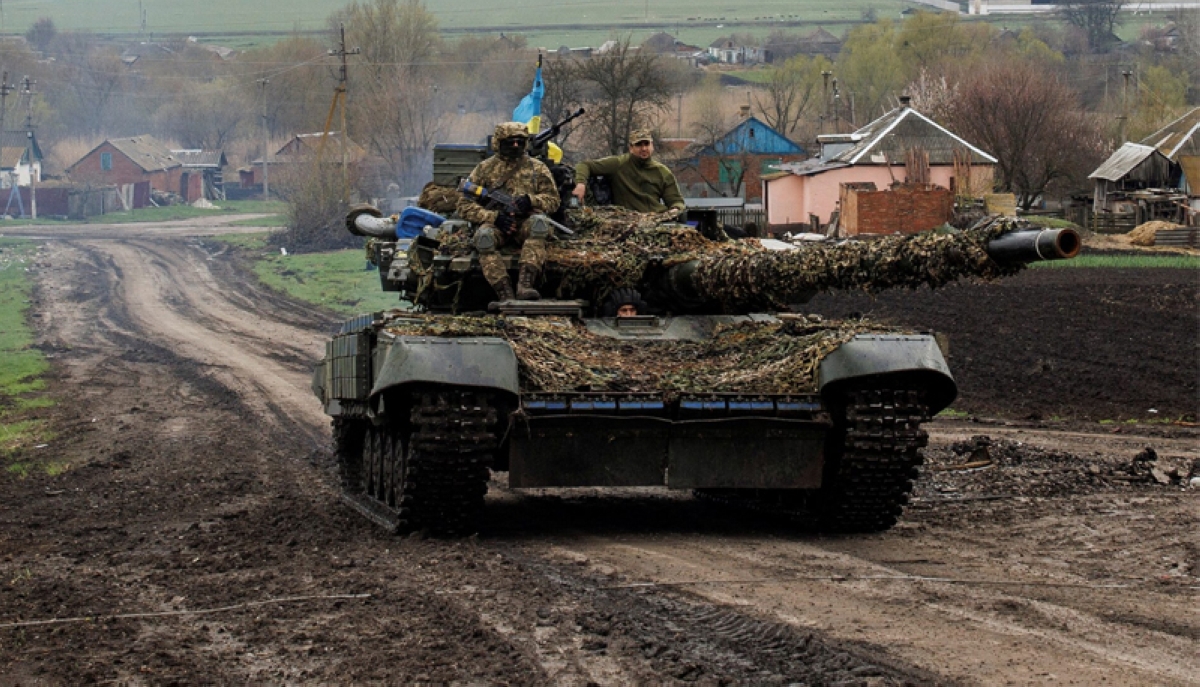
Since Russia’s full-scale invasion in February 2022, Ukraine has endured not only thanks to its military, mobilization, intelligence network, and domestic resilience, but also because the United States, Europe, and NATO
Translated by Qiyas from الراي — Original source
Since Russia’s full-scale invasion in February 2022, Ukraine has endured not only thanks to its military, mobilization, intelligence network, and domestic resilience, but also because the United States, Europe, and NATO members have transformed the war into one of the largest externally funded military efforts in modern history. The funds did not come from a single source; they arrived in the form of weapons, budget grants, loans, ammunition, intelligence support, training, refugee assistance, industrial contracts, air defense packages, and programs to replenish Western stockpiles.
Consequently, it is difficult to express the total in a single precise figure, as institutions differ in their calculations. Official U.S. figures include appropriations, commitments, payments, U.S. stockpile replenishments, agency programs, and funds that are not necessarily transferred directly to Kyiv. European Union figures, meanwhile, encompass military, financial, and humanitarian aid, as well as the costs of supporting Ukrainian refugees within the EU.
According to U.S. government calculations, Congress has allocated $195.03 billion since February 2022 for Operation Atlantic Resolve and the response to Ukraine. By March 31, 2026, $177.76 billion had been committed, and $116.02 billion had been disbursed.
The same oversight data indicate that Washington has committed to providing $67.8 billion in defense materials and services through mechanisms such as the Presidential Drawdown Authority, Foreign Military Financing, and the Ukraine Security Assistance Initiative. This does not mean that $195 billion was provided to Ukraine in cash; rather, it means that the United States established a framework to support the war that includes military transfers, U.S. stockpile replenishment, defense production, financial support, humanitarian programs, and the broader U.S. military presence in Europe.
Europe, along with member states plus the United Kingdom, Norway, Iceland, and Switzerland, has allocated approximately €214.8 billion, including around €102.2 billion in military aid, €93.4 billion in financial aid, and €19.3 billion in humanitarian assistance. When considering commitments, Europe’s figure rises to approximately €389.7 billion, compared to about $119 billion for the United States. These figures illustrate a strategic shift: Washington established the early military support line, but Europe has become the dominant long-term funder.
The European Union’s accounts are more comprehensive. The European Commission indicates that EU support for Ukraine since the start of the war has reached €215.2 billion. This includes more than €110.4 billion in economic, financial, social, and humanitarian support; €77 billion in military aid; up to €17 billion for EU member states hosting Ukrainians; €7.1 billion under the Ukraine Support Loan; and €3.8 billion from revenues generated by frozen Russian assets. This does not equate to NATO funds, nor does it equate to national bilateral aid, but it demonstrates how the war has been integrated into the EU’s financial, military, and social infrastructure.
NATO itself is not a treasury comparable to Washington or Brussels. The Alliance typically does not provide aid in the manner that individual states do. Its role is limited to coordination, standardization, training, political commitment, and military logistical support.
Nevertheless, NATO has become a central platform for sustaining the war. At the 2024 Washington Summit, Allies pledged to provide Ukraine with at least €40 billion in security assistance over the following year, and NATO later announced that Allies had contributed more than €50 billion in 2024, with nearly 60% coming from European Allies and Canada.
By June 2026, the NATO Comprehensive Assistance Package Trust Fund had received more than €1.4 billion. NATO also established the Security Assistance and Training for Ukraine structure to coordinate donations, logistics, repair, and maintenance, emphasizing that this support does not make NATO a direct party to the war.
The most significant new mechanism is the Priority Ukraine Requirements List (PURL). Under this model, Ukraine’s urgent military needs are identified. Under an organized arrangement, NATO coordinates aid packages, while Allies pay for U.S.-made weapons and ammunition transferred to Ukraine. This provides the Trump administration with a means to continue arming Ukraine while minimizing new direct U.S. financial exposure. NATO notes that by 2026, more than two-thirds of Allies, along with Australia and New Zealand, had funded U.S. military equipment worth more than $6 billion through the PURL program, including ammunition and air defense systems. U.S. oversight reports separately recorded Allied contributions of $4.15 billion to the U.S. Department of Defense via the PURL program by the end of March 2026.
This context explains the €70 billion figure announced at the NATO Ankara Summit held on July 7–8, 2026. This figure should not be understood as a new U.S. aid package, nor as new money added to all previous commitments. The Ankara Declaration issued by NATO confirmed Allies’ pledge to provide €70 billion in military equipment, assistance, and training to Ukraine in 2026, and reaffirmed their commitment to maintaining at least a similar level in 2027.
This figure includes national military assistance, training, equipment, multilateral mechanisms, and European financing instruments. The announcement formalizes a European- and Canadian-led burden-sharing model, in which Washington reduces its direct financial exposure while the U.S. industry continues to supply key systems through Ally-funded channels, such as the PURL program.
Thus, this shift is as political as it is financial. Trump pressured Europe to shoulder more burden, and Europe responded by increasing defense spending, purchasing U.S. weapons for Ukraine, and attempting to demonstrate that the Alliance would not collapse if Washington reduced direct grants.
The 2025 NATO commitment in The Hague obligated Allies to move toward spending 5% of GDP on defense and security by 2035, including at least 3.5% on core defense. In Ankara, this burden-sharing logic was applied directly to Ukraine: European and Canadian funds will finance the pipeline, U.S. industry will supply key systems, and NATO will manage coordination.
This model aligns with Trump’s political rhetoric. It allows him to claim that the United States is no longer providing unlimited financial aid, while simultaneously permitting Ukraine to receive Patriot interceptor missiles, advanced munitions, and other systems that can only be widely supplied by the United States. The U.S. Defense Appropriations Act for Fiscal Year 2026 allocated $400 million to the Ukraine Security Assistance Initiative and strengthened reporting on the PURL program, explicitly framing the mechanism as a means to ensure that support for Ukraine remains primarily funded by European allies. Compared to previous supplementary U.S. aid packages, this represents a significant reduction in new direct U.S. assistance, but it does not constitute a complete strategic withdrawal.
Europe’s calculus is different. For Poland, the Baltic states, the Nordic countries, Germany, the United Kingdom, and others, the war is treated as Europe’s frontline defense. The strategic objective is not merely to keep Ukraine alive; it aims to prevent Russia from translating its battlefield successes into a new European security architecture. Continuous aid gives Europe time to rearm, expand its defense production, weaken conventional Russian forces, and keep Ukraine in a strong negotiating position rather than one of collapse. For this reason, European aid has continued even as U.S. policy has shifted toward greater pragmatism. A 2026 Kiel Report concluded that European countries maintained high levels of military support, particularly drone-related aid, even as financial and humanitarian allocations slowed due to delays in EU funding.
The military logic is one of attrition and deterrence. Western support is designed to provide Ukraine with air defense, artillery, drones, long-range strike systems, armored vehicles, munitions, training, and maintenance. The goal is to prevent Russia from achieving an operational breakthrough, degrade Russian logistical and energy infrastructure, and sustain Ukraine as an effective military and state actor. NATO clearly emphasizes that supporting Ukraine aims to strengthen Kyiv on the battlefield, thereby ultimately enhancing its negotiating position.
This does not mean the West believes Ukraine can easily reclaim all occupied territories by force in the near future. Rather, it means that NATO and Europe are betting that Russia may be depleted faster than it can achieve a decisive victory, although this remains an assumption rather than a certainty. For this reason, air defense, deep strikes, drone production, repair facilities, and munitions supply lines are far more important than symbolic statements. The war has become a test of industrial endurance.
Yet this does not mean that Ukraine is immune to pressure. Kyiv is also facing a labor shortage, public mobilization fatigue, concerns over corruption, political pressures, infrastructure depletion, and reliance on external supply chains beyond its control. Reuters reported that Ukraine’s mobilization system has been marred by allegations of abuse of power and corruption, exacerbating public anger and diminishing enthusiasm for military service, alongside shortages in frontline units, a decline in voluntary enlistment, and exhaustion among long-serving personnel. Western funds can keep the military equipped, but they cannot fully replace soldiers, restore public morale, or ensure that Ukrainian society can absorb an open-ended war without intensifying internal tensions. Thus, Western calculations are not based on the premise that Ukraine is infinitely strong, but rather on the view that Russia’s borders could become more strategically constrained if Ukraine continues to receive supplies for a sufficient period.
The situation on the front lines in early July 2026 partially confirms this interpretation. Russia still occupies vast areas of eastern and southern Ukraine and continues to attack on multiple axes. However, the pace of its advance has slowed. Russian forces captured or penetrated approximately 30.42 square kilometers in June 2026, significantly less than the more than 481 square kilometers seized in June 2025. This is a war of meters, small settlements, infiltration units, glide bombs, drones, and attritional pressure, rather than large-scale maneuver warfare.
Russia’s problem is that slow gains are costly. The International Institute for Strategic Studies has warned that Russia faces increasing constraints on manpower and industry, and that Moscow may soon have to decide whether to radically conscript its economy and society or scale back its war aims. A previous IISS analysis described Russia as approaching a turning point in recruitment and production, where casualties, replacement needs, and labor shortages have become increasingly difficult to manage.
The July 2026 drone strike on the Omsk refinery, Russia’s largest, highlighted the breadth of Ukraine’s strike campaign. Reuters reported that the refinery halted operations following the attack, that the damaged units accounted for a significant portion of production capacity, and that the disruption could worsen fuel shortages. Reuters also noted that the Saratov refinery ceased operations after a drone attack two days later.
These strikes do not defeat Russia alone, but they multiply the pressure on it. They force Russia to defend its deep rear areas, repair oil refineries, protect railway lines, secure supply routes to the Crimean Peninsula, replace air defenses, and absorb economic disruptions, all while continuing to supply the front lines with troops and ammunition. This is the imbalance that NATO and Europe seek to exploit: Ukraine bears the human cost of the land war, while Russia bears the cumulative cost of fighting a heavily supported, constantly evolving adversary backed by Western finance, intelligence, industry, and technology.
Thus, Ankara’s commitment, formally reaffirmed in the Ankara Declaration issued by NATO, represents more than just another accounting entry. It is a strategic message conveying that Europe and Canada are prepared to fund Ukraine’s war effort at approximately 70 billion euros annually, while the United States provides key systems through a paid-transfer model. This signals to Moscow that waiting for the West to exhaust itself may not be sufficient. It tells Kyiv that support will continue even if Washington becomes more cautious. It informs Trump that Europe is footing the bill. And it reassures European public opinion that Ukraine has now become part of the continent’s defensive perimeter.
The bottom line is clear. Since 2022, the United States has allocated approximately $195 billion to support Ukraine and European security operations. Europe has committed more than €214 billion, according to Kiel Institute figures, and is seeking €215.2 billion in EU-level support under the broader European Commission accounts. NATO has coordinated tens of billions of dollars in military aid to allies, established logistical and training infrastructure, and helped transform the PURL program into a bridge between European funds and American weapons. The Ankara figure, officially set at €70 billion for 2026, marks the next phase: a European-led war-support system backed by the United States, designed to keep Ukraine in a state of combat, prevent a Russian victory, and force Moscow to negotiate.
This is not charity, but a resilience-based proxy war. The West is not paying merely to ensure Ukraine’s survival, but to shape the future balance of power in Europe. Yet this strategy carries risks. Russia can still fight through 2027 and beyond, while Ukraine faces mounting human, economic, and social pressures. There is no full consensus among NATO capitals regarding how long this situation should last, its cost, or its intended political outcome. What Ankara affirms is not certainty of victory, but a willingness to prolong the conflict: Europe and Canada are increasing the financial burden, the United States is moving toward a paid-supply model, and NATO is transforming Ukraine’s war effort into a long-term industrial and strategic project.
Consequently, the war is no longer judged solely by territory gained or lost. The outcome will be determined by who can endure pain longer, who can replace losses at a faster pace, and who possesses the ability to convert financial resources into battlefield resilience.
