Lebanon 'stands firm' behind Trump in its push against Netanyahu
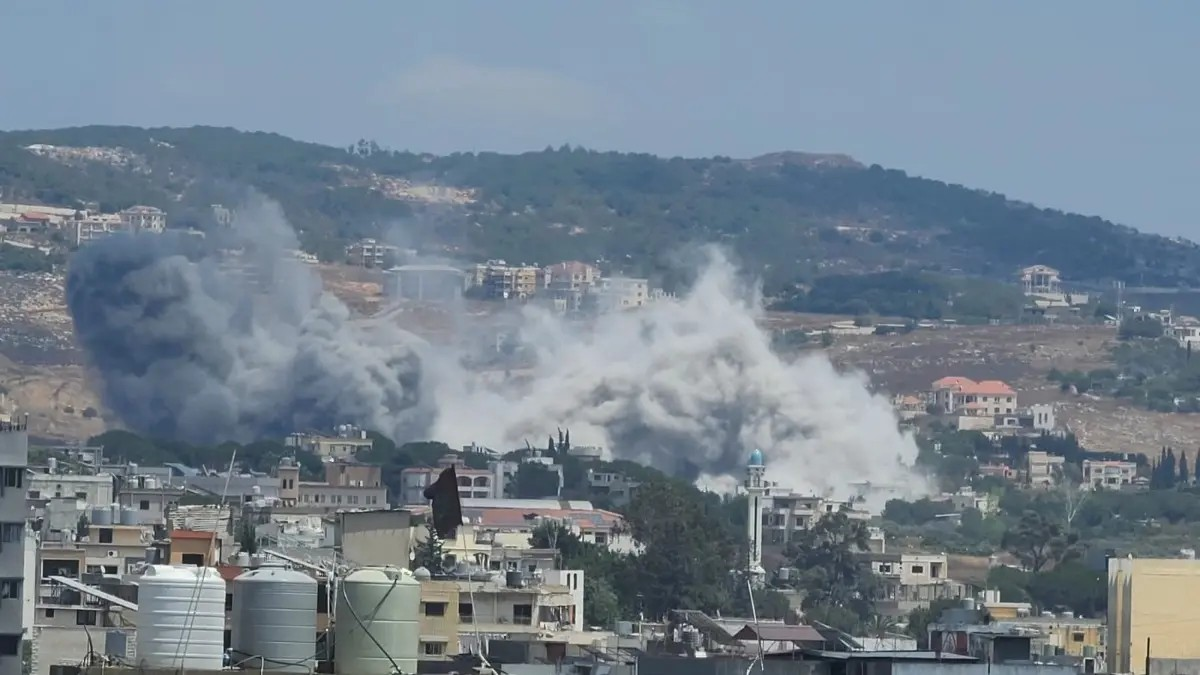
Amid the rapid military “marshaling of forces” along the Iran front, the Lebanon front is facing intense pressure that will test not only the direct military arena, which is under the complete “control and command” of He
Translated by Qiyas from الراي — Original source
Amid the rapid military “marshaling of forces” along the Iran front, the Lebanon front is facing intense pressure that will test not only the direct military arena, which is under the complete “control and command” of Hezbollah and, behind it, Tehran, but also the “protection walls” formed by the negotiation track between Beirut and Tel Aviv for the Lebanese state against any new “storm of fire,” as it has launched a train of sustainable solutions subject to a diplomatic dynamic in which Washington plays the role of overseer and regulator. Regardless of delays, it is destined to reach the finish line.
At a time when President of the Republic General Joseph Aoun is preparing his dossiers in preparation for his upcoming visit to Washington, where he will meet President Donald Trump on Tuesday, a stop that crowns the exceptional attention Washington pays to Lebanon—which has been bolstered by the conduct of the authorities in Beirut, adding elements that have repeatedly served as triggers for the “anger” of the White House host toward Prime Minister Benjamin Netanyahu—efforts are intensifying to finalize arrangements regarding the start of the first experimental phase of the Israeli withdrawal from southern Lebanon, in exchange for the deployment of the Lebanese Army and the withdrawal of Hezbollah’s weapons, preventing their return to the towns covered by the agreement, as agreed upon during the two rounds of executive negotiations for the framework formula signed between the two countries under US sponsorship on June 26.
While Aoun is expected to arrive in Washington on Sunday, holding several meetings at multiple levels on Monday ahead of the summit, there is a desire for the Israeli withdrawal to begin concurrently with or on the eve of the meeting, within the framework of the first experimental phase. This would consolidate the direct negotiation track between Lebanon and Israel as capable of achieving the goal of reclaiming land through diplomacy, albeit on a basis that has become dominant across the entire Lebanese file: the withdrawal of Hezbollah’s weapons.
In this context, a virtual meeting is scheduled for tomorrow, Friday, between the Lebanese and Israeli sides to agree on the mechanism for initiating the implementation of the first experimental zone, and to determine its scope, which is expected to include Western Zouitar, where the Israeli army is deployed along its northern border with the Litani River, as well as five towns south of the river: Ghendourieh, Faroun, Sarafand, Qlaouieh, and Bourj Qlaouieh. These are areas not under occupation, and the meeting will also set the implementation date.
The Lebanese Army’s announcement that it is deploying patrols and establishing checkpoints and observation posts in Faroun, Ghendourieh, Qlaouieh, Bourj Qlaouieh, and Kfar Dounine – Bint Jbeil, Qaaqaa al-Jisr – Nabatieh, and Sarafand – Sidon, is not trivial. While this move was seen as confirming Lebanon’s readiness to proceed with the first experimental phase, it also highlighted the growing “negative charges” in the relationship between Washington and Netanyahu. These were expressed not only by Netanyahu’s failure to meet with Trump, but also by the statements of US Vice President J.D. Vance in the days leading up to the Lebanese president’s visit to the White House, which resembled an indictment of Tel Aviv.
The absence of alignment between Washington and Netanyahu on more than one file, including Lebanon, even though they are undoubtedly still in the “same trench,” has been viewed as an additional window for Beirut to further capitalize on the unprecedented momentum in its relationship with an American administration, to extract gains for the state, and to “tame” any aggressive intentions from Tel Aviv along the lines of “Ghazneh Lebanon,” ensuring its complete withdrawal from the south, albeit after some time. Meanwhile, observers paused at a report by Maariv newspaper stating that the Israeli army has begun constructing a new line of permanent military positions in southern Lebanon, a move described as significantly strengthening Israel’s grip on the area and potentially leading to a political clash between Trump and Netanyahu.
While the newspaper noted that Trump “needs at this stage to achieve a political accomplishment or an agreement that consolidates stability in the region, and sees a partial Israeli withdrawal from Lebanon or Syria as potentially achieving this goal,” the same circles considered that both figures being in an “electoral zone” exposes Netanyahu, should the reality of him becoming a burden on what Trump envisions (and the speed at which he desires it) become entrenched, to “headwinds” blowing from Washington. Since the post-Operation Al-Aqsa Flood phase and the fall of Syria’s “Berlin Wall” amid the collapse of the Assad regime, Washington has faced an unprecedented reality in which the newly reshaped region appears to be entirely within its sphere.
In parallel, the attack launched by Hezbollah on the Lebanese President from beneath the parliamentary dome, voiced by MP Hassan Fadlallah, was not incidental. It appeared to be a new attempt to “stop the hands of the clock” regarding the Washington track and to cement Lebanon’s subordination to Iran’s front, both in war and through its diplomatic track with Washington. This also involved issuing an unsurprising “red card” against the executive track of the experimental phase, which resembles a race between Israel and Hezbollah over “who will fail it first.” Israel aims to halt its subsequent escalation, particularly before elections, while Hezbollah refuses the process outright and deems it impossible to accept any arrangements involving its weapons north of the Litani River.
Fadlallah accused Aoun of “transforming into a political party that consolidates the existing division among Lebanese, rather than being a symbol of national unity as stipulated by the Constitution, and turning Baabda Palace into a partisan platform for known entities in its history and orientations.” He declared that the “fateful agreement (the Framework Formula) is unviable and that Zionists will not be able to impose its implementation, and that our people will nullify its effects on the ground.”
Paris has requested Beirut to arrest three of Assad’s officers. The Distinguished General Prosecutor, Judge Ahmad Ramy Al-Hajj, received a communication from the French judiciary, requesting that Lebanese authorities arrest three officers from Bashar Assad’s regime, believed to be present in Lebanon.
