What is the Rosetta Stone... and why is Egypt demanding its return?
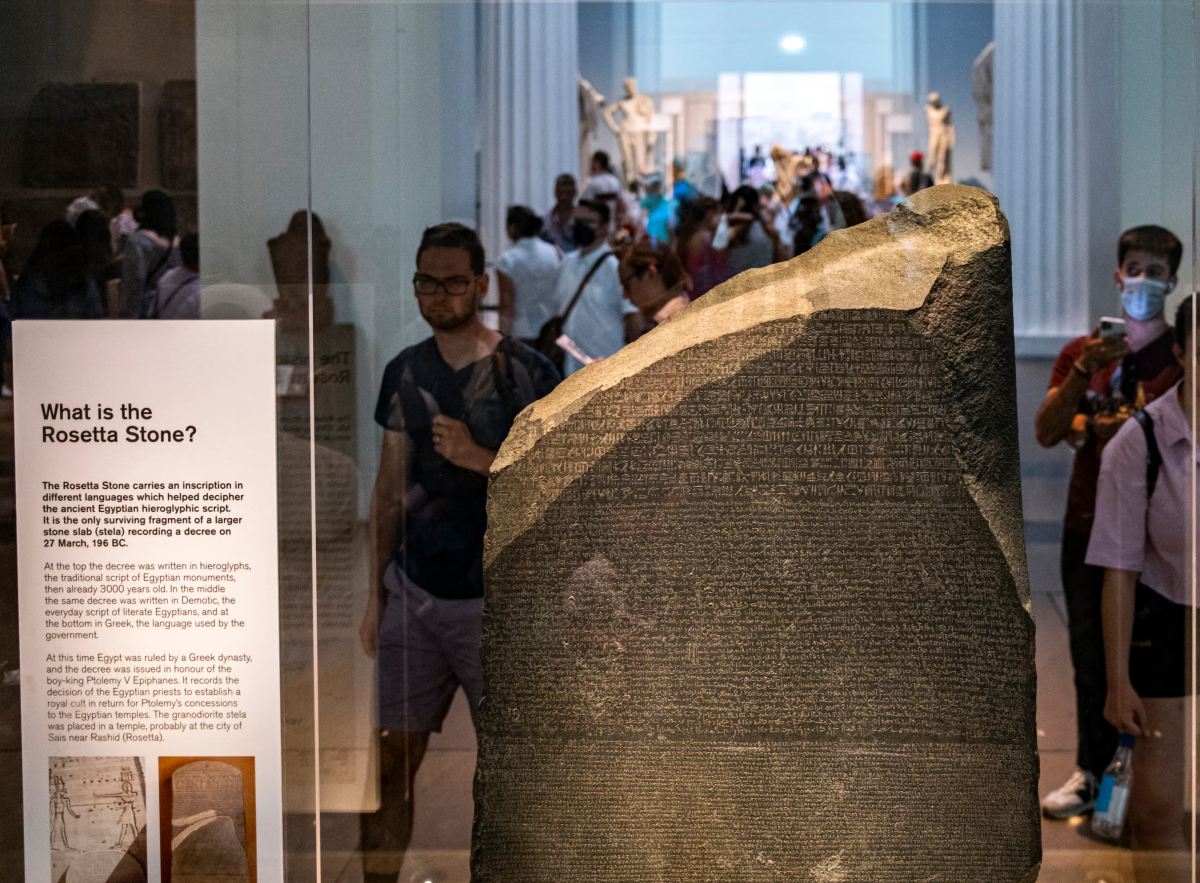
This week marks the 227th anniversary of the discovery of the “Rosetta Stone,” one of the world’s most famous artifacts. It was found by French soldiers near the Egyptian city of Rashid in 1799 during Napoleon Bonaparte’s French campaign in Egypt. Following the defeat of French forces by the British in 1801, the stone, along with more than ten other artifacts, was transferred to the British side under the terms of the surrender agreement. It has been on display at the British Museum in London since 1802 and remains there to this day.
Dating back to 196 BC, the Rosetta Stone is a fragment of a large stele made of granodiorite. It bears a single decree inscribed in three different scripts: Egyptian hieroglyphs at the top, Demotic in the middle, and Ancient Greek at the bottom. Its English name, “Rosetta,” is a European distortion of the name of the Egyptian city of Rashid, while in Arabic it is known as the “Rashid Stone.”
The inscribed text contains a decree issued by Egyptian priests to glorify King Ptolemy V, who was still in early adolescence at the time. The decree praised his support for Egyptian temples, his reduction of certain taxes, and his resilience against his enemies. Thus, it is closer to a political document aimed at consolidating the legitimacy of the young king than to a sacred religious text.
The stone marked a turning point in the history of Egyptology. For decades, deciphering hieroglyphic writing remained a perplexing mystery until the French scholar Jean-François Champollion successfully cracked its code in 1822, leveraging his knowledge of the Coptic language. This achievement opened the door to a comprehensive understanding of the ancient Egyptian language for the first time.
In recent years, calls from Egypt and internationally for the return of the stone to its country of origin have intensified. Former Egyptian archaeologist Zahi Hawass is leading an electronic petition campaign for this purpose. The Egyptian newspaper *Al-Shorouk* reported that the petition, launched in 2022, had gathered approximately 350,000 signatures to date. Key arguments presented in this debate include:
• The “Rosetta Stone” was taken from Egypt under colonial conditions and a military agreement in which Egyptians had no voice or genuine representation.
• The British Museum Act of 1963 legally prohibits the museum from disposing of or relinquishing its collections, making any legal pathway for the stone’s repatriation complex.
To date, the British Museum has stated that it has not received any official request from the Egyptian government for the return of the “Rosetta Stone.” Observers suggest that, in the near term, the most realistic option is to develop a partnership between the museum and Egyptian authorities rather than pursuing full repatriation.
